The Jakarta Post
Please Update your browser
Your browser is out of date, and may not be compatible with our website. A list of the most popular web browsers can be found below.
Just click on the icons to get to the download page.


Popular Reads
Top Results
No results found. Please check your search term and try again
Can't find what you're looking for?
View all search results
Popular Reads
Top Results
No results found. Please check your search term and try again
Can't find what you're looking for?
View all search resultsThe new normal: Japan’s place in reconfigured US-China orbit
Behind the superficial stability of the latest United States-China summit blitz lies an enduring systemic rivalry, leaving an isolated Tokyo to step into the vacuum and anchor a fracturing international order.
Change text size
Gift Premium Articles
to Anyone
Share the best of The Jakarta Post with friends, family, or colleagues. As a subscriber, you can gift 3 to 5 articles each month that anyone can read—no subscription needed!
 Set as preferred source
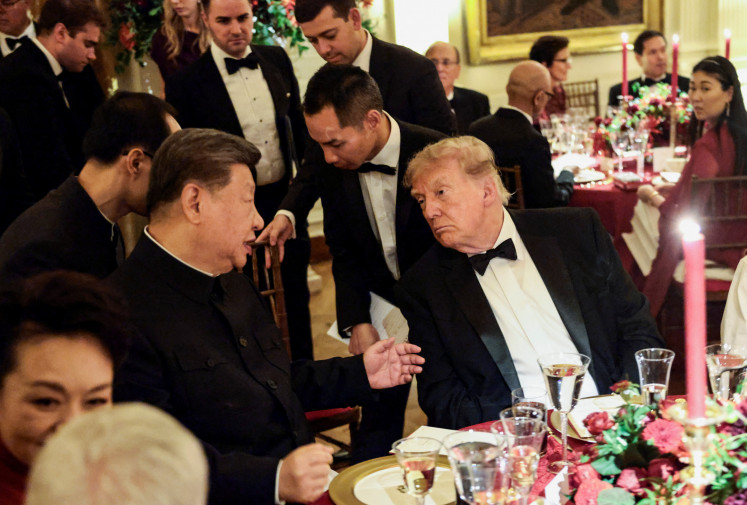
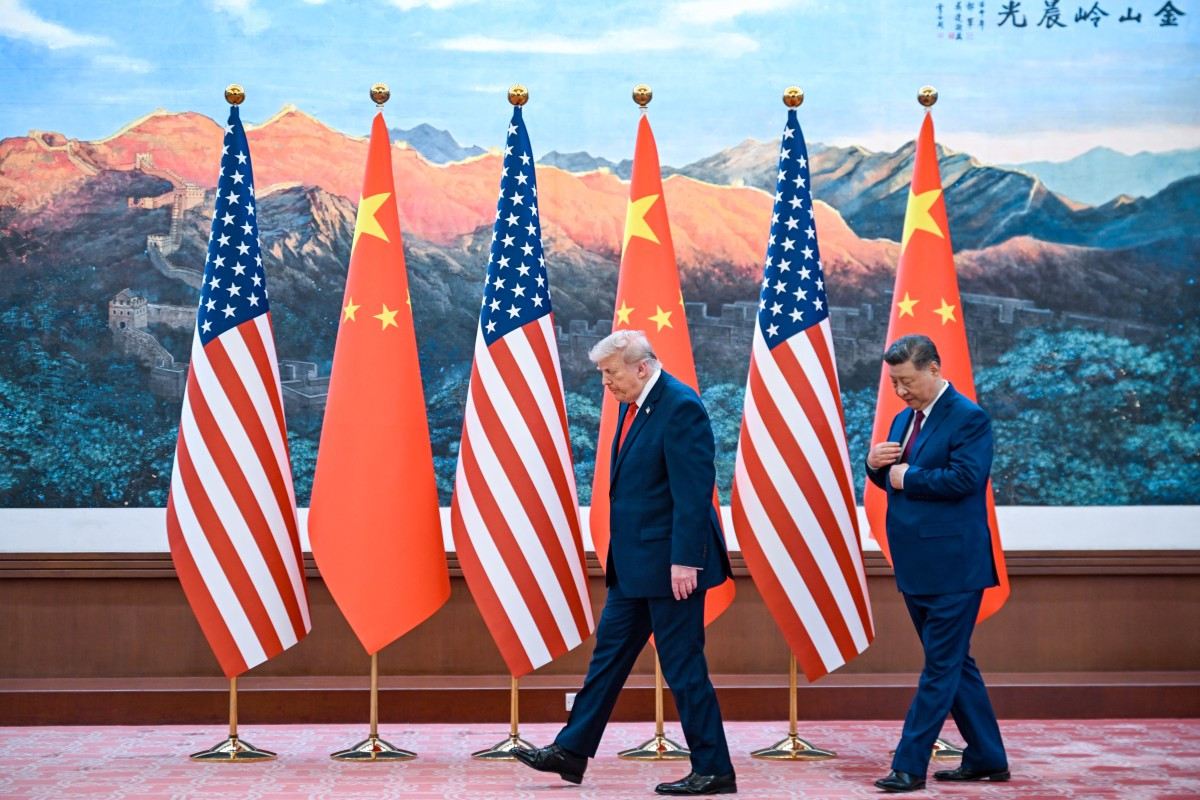 China's President Xi Jinping (right) receives United States President Donald Trump on May 14 after a welcome ceremony at the Great Hall of the People in Beijing. (AFP/Kenny Holston)
A
bout seven weeks have passed since the United States-China summit in Beijing on May 14-15. Looking ahead, with Xi Jinping’s visit to the US scheduled for Sept. 24, Washington and Beijing are anticipated to hold three to four summits this year alone.
This diplomatic flurry marks a recalibration of initial timelines. Originally scheduled for April 2026, the Beijing summit was preceded by efforts to align the foundational principles of US-Japan policy toward China. To that end, Japanese Prime Minister Sanae Takaichi visited Washington on March 19 to hold a bilateral summit with Donald Trump, where deliberations heavily focused on the China challenge.
The coordination remained tight through the Beijing talks. Immediately following the summit on May 15, Trump debriefed Prime Minister Takaichi via telephone from Air Force One. According to the Prime Minister’s Office, Trump provided a detailed readout of his visit to China.
The two leaders exchanged views on economic security, technological competition and regional defense, ultimately pledging to maintain close communication regarding developments in the Indo-Pacific. Conversely, direct high-level exchanges between Tokyo and Beijing have remained frozen since Takaichi’s controversial remarks in the Japanese Diet on Nov. 7, 2025.
How, then, are current US-China dynamics and the May summit perceived from Tokyo? The analysis can be broken down into three core dimensions.
First, Tokyo views the fundamental structure of US-China relations as an enduring, long-term systemic competition in which both Washington and Beijing believe they will ultimately prevail. Even Chinese Foreign Minister Wang Yi conceded to reporters on May 15 that a state of "healthy competition" exists. This rivalry is multidimensional, spanning military power, economic and technological dominance and governance values.

While the US retains a clear military advantage, China has secured critical leverage in specific economic and technological sectors. At the May summit, China’s overwhelming dominance in rare earth elements forced concessions from the American side.