The Jakarta Post
Please Update your browser
Your browser is out of date, and may not be compatible with our website. A list of the most popular web browsers can be found below.
Just click on the icons to get to the download page.


Popular Reads
Top Results
No results found. Please check your search term and try again
Can't find what you're looking for?
View all search results
Popular Reads
Top Results
No results found. Please check your search term and try again
Can't find what you're looking for?
View all search resultsHow ghost workers and livestreamers became the economy
A country cannot govern what it does not measure. Indonesia's economy is not shrinking or disappearing, it is becoming increasingly obscured by outdated statistical lenses.
Change text size
Gift Premium Articles
to Anyone
Share the best of The Jakarta Post with friends, family, or colleagues. As a subscriber, you can gift 3 to 5 articles each month that anyone can read—no subscription needed!
 Set as preferred source
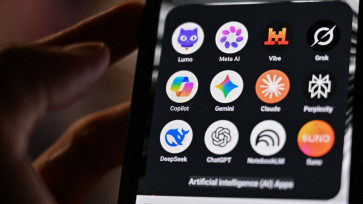
 Illustration of gig economy. (Shutterstock/ Artur Szczybylo)
F
rom breakfast to bedtime, Indonesians are surrounded by economic headlines. Morning news reports that Bank Indonesia (BI) is battling pressure on the rupiah. During the daily commute, podcasts debate the central bank's expanding mandate. At lunch, or while shopping at the neighborhood warung (kiosk), people complain about another jump in fuel prices as global oil prices surge.
In offices and cafés, conversations drift toward artificial intelligence and the future of work. By nightfall, discussions at the dinner table often end with the same familiar worries: layoffs, youth unemployment and the rising uncertainty of making a living.
The headlines change throughout the day, but they all point to the same fundamental question: Do we really understand how Indonesians earn a living today?
A day in Indonesia often begins with the kinds of moments people rarely think twice about. A small warung lifts its metal shutters before sunrise. A delivery rider stops for a plate of nasi kuning, pays with a quick scan of a QRIS code, checks his next order and rides on.
Moments later, a mother buys spinach and chilies, transferring payment via GoPay - a number she has already memorized from repeated visits. Inside the warung, the seller records each sale in a WhatsApp chat instead of a physical notebook. There is no ceremony, nor any grand discussion about "digital transformation". It is just another ordinary morning.
Nearby, a family kitchen has quietly transformed into a business. Orders arrive through messaging apps as kitchen micropreneurs and home-based resellers blur the line between household and enterprise. Elsewhere, multiplatform jugglers and invisible gig switchers move seamlessly from one app to another, combining deliveries, freelance work and temporary gigs without ever calling it a "strategy".

Together, they represent an economy that increasingly operates far beyond offices, factories and traditional business addresses.