The Jakarta Post
Please Update your browser
Your browser is out of date, and may not be compatible with our website. A list of the most popular web browsers can be found below.
Just click on the icons to get to the download page.


Popular Reads
Top Results
No results found. Please check your search term and try again
Can't find what you're looking for?
View all search results
Popular Reads
Top Results
No results found. Please check your search term and try again
Can't find what you're looking for?
View all search resultsPurbaya faces test of credibility and fiscal management
The problem for Purbaya is not the policy itself. The problem is the communication surrounding it.
Change text size
Gift Premium Articles
to Anyone
Share the best of The Jakarta Post with friends, family, or colleagues. As a subscriber, you can gift 3 to 5 articles each month that anyone can read—no subscription needed!
 Set as preferred source
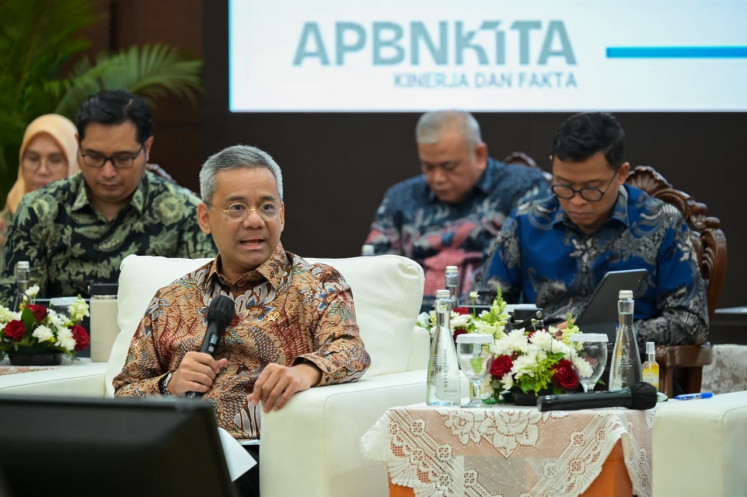
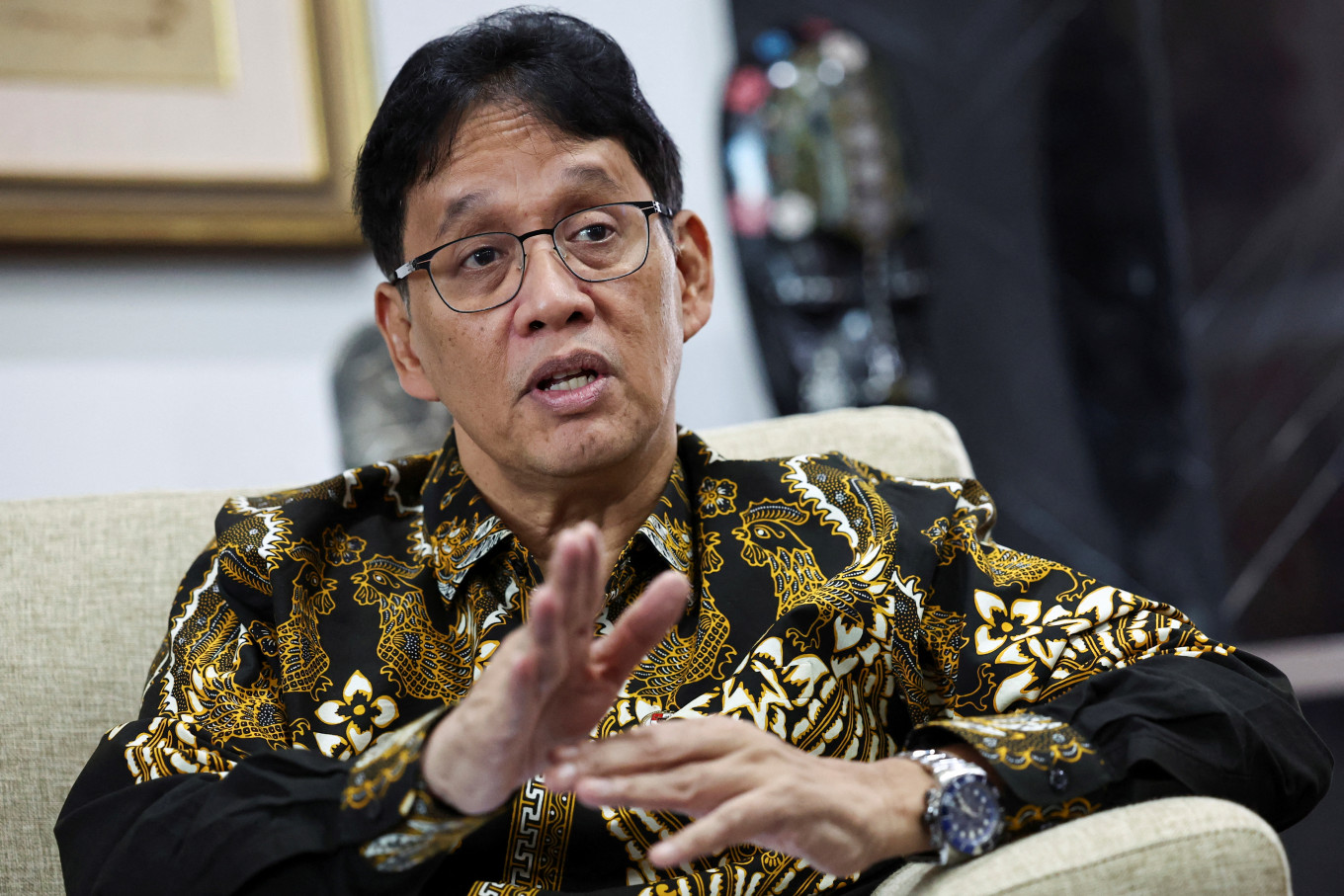 Business as usual: Finance Minister Purbaya Yudhi Sadewa gestures as he speaks during an interview on March 3 in Jakarta. (Reuters/Willy Kurniawan)
W
hen Purbaya Yudhi Sadewa was appointed Finance Minister in September last year, he arrived with a clear pro-growth mandate to support President Prabowo Subianto’s ambition of achieving 8 percent economic growth.
His appointment also signaled a shift in Indonesia’s fiscal regime. For a long time, former finance minister Sri Mulyani had built a reputation for fiscal prudence, policy predictability and macroeconomic stability. This, in turn, helped Indonesia navigate multiple crises while maintaining the confidence of investors and businesses.
Purbaya, by contrast, has sought to project a more openly optimistic economic narrative. Since taking office, he has, on various occasions, spoken of growth gradually rising to 6–8 percent in the coming years, the stock market reaching 10,000 and the rupiah returning to around Rp 15,000 per United States dollar. These are powerful messages, but they also raise expectations that must eventually be matched by economic outcomes.
Nearly a year into his tenure, Indonesia's tax ratio remains low by ASEAN standards, while government spending has become an increasingly important driver of growth in the first quarter of 2026, through programs such as free nutritious meals and the Red and White Cooperative (KDMP). This has intensified questions among investors and rating agencies about the sustainability of fiscal expansion.
Furthermore, the rupiah has faced repeated bouts of pressure, while financial markets have struggled with both domestic and global uncertainties. Yet official communication has often remained unchanged, emphasizing that Indonesia’s economic fundamentals are strong and that any shocks are only temporary.
The issue here is not that forecasts have turned out to be wrong. Economic forecasting is inherently uncertain, and even the best economists regularly revise their expectations. The problem is the emergence of a pattern, a repeated gap between what policymakers say, what the economy shows and what the government eventually does.

In macroeconomic policy, however, public statements by senior policymakers do more than describe the economy, they help anchor expectations. Households, businesses and financial markets make decisions partly based on what policymakers say and do. When repeated gap appear between public assurances and subsequent policy actions, credibility erodes.