The Jakarta Post
Please Update your browser
Your browser is out of date, and may not be compatible with our website. A list of the most popular web browsers can be found below.
Just click on the icons to get to the download page.


Popular Reads
Top Results
No results found. Please check your search term and try again
Can't find what you're looking for?
View all search results
Popular Reads
Top Results
No results found. Please check your search term and try again
Can't find what you're looking for?
View all search resultsWhy Indonesia must become a strategic pivot state
The blurring lines between the Middle East and the Indo-Pacific signal the death of predictable globalization and the rise of a volatile, multi-theater era of systemic competition. To avoid becoming a mere spectator to great power rivalry, Indonesia must shed its passive neutrality and embrace "Strategic Autonomy 2.0" toward bold, technological sovereignty.
Change text size
Gift Premium Articles
to Anyone
Share the best of The Jakarta Post with friends, family, or colleagues. As a subscriber, you can gift 3 to 5 articles each month that anyone can read—no subscription needed!
 Set as preferred source
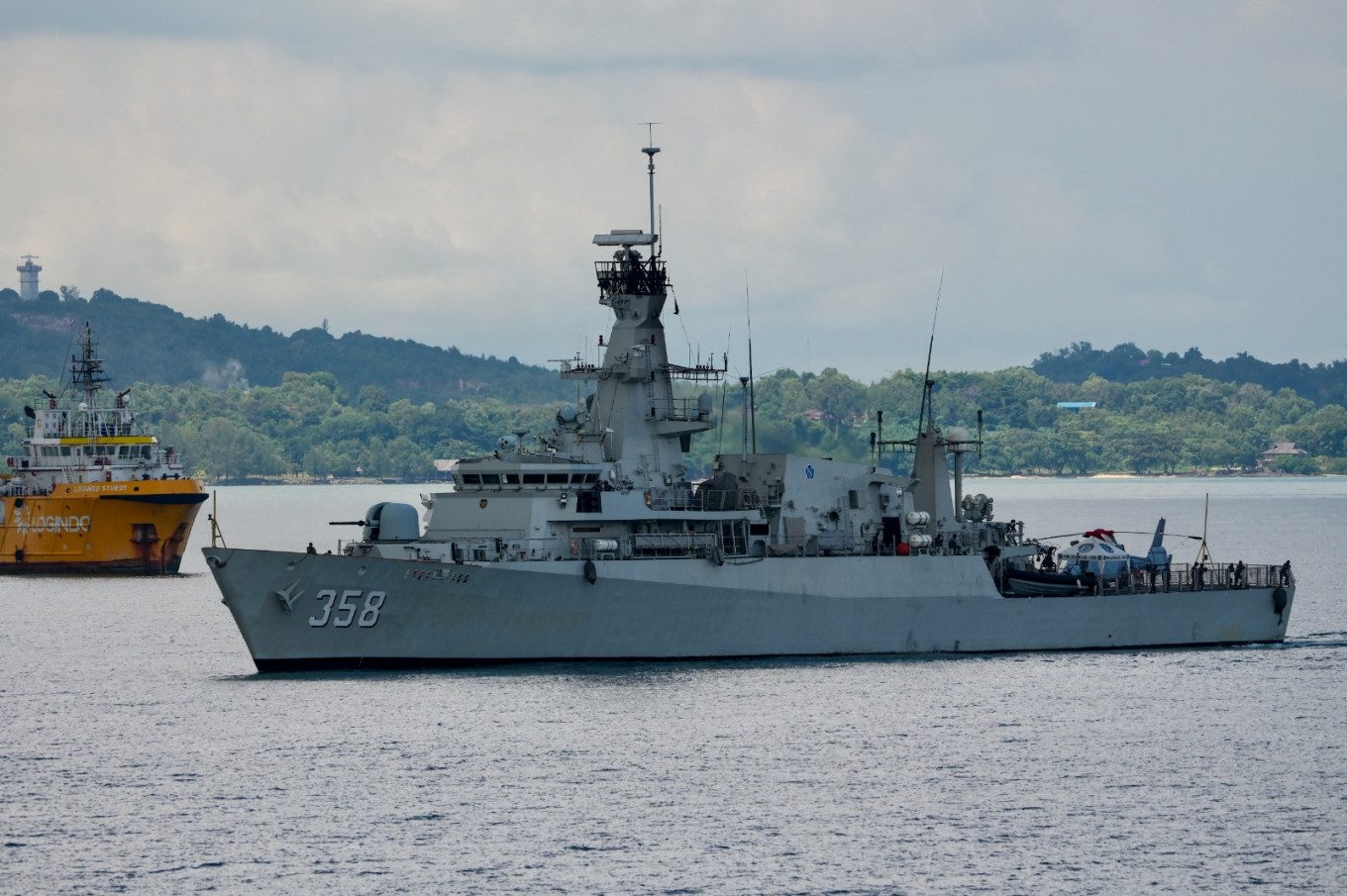 The Indonesian Navy's Bung Tomo-class corvette KRI John Lie arrives at a naval base on Sept. 20, 2023, during the ASEAN Solidarity Exercise Natuna 2023 in Natuna and Batam, the Riau Islands. (AFP/Bay Ismoyo)
T
he recent conflict in the Middle East is often portrayed as a regional crisis centered on Israel, Iran and the United States. However, such a view is increasingly inadequate. What is unfolding today is not simply friction between regional actors but a manifestation of a deeper transformation in the international system.
The Middle East has become one of several interconnected arenas in an era of broader systemic competition involving major powers, emerging technologies, economic coercion, maritime security and competing visions of global order.
For Indonesia, the significance of this transformation extends far beyond the immediate violence in Gaza, Lebanon, Syria or the Persian Gulf. The real issue is that the geopolitical boundaries separating the Middle East and the Indo-Pacific are blurring.
In the 21st century, conflicts do not remain confined by geography. Instead, they travel rapidly through energy markets, digital networks, maritime trade routes, supply chains, financial systems and strategic calculations. A disruption in the Strait of Hormuz directly drives inflation in Southeast Asia, just as escalation involving Iran influences US military deployments in the Pacific and cyber operations launched in one theater threaten critical infrastructure in another.
We are entering a new geopolitical era. The post-Cold War assumption that economic interdependence would gradually reduce strategic rivalry has collapsed.
For more than three decades, globalization fostered expectations that commerce, investment and technological integration would generate convergence among major powers. Instead, interdependence itself has become a source of competition.

Supply chains are weaponized for leverage, semiconductors and rare earth minerals have become vital strategic assets and artificial intelligence, data and cyberspace have mutated into contested domains of state power. The international system is moving decisively away from the logic of globalization and toward the logic of strategic competition.