The Jakarta Post
Please Update your browser
Your browser is out of date, and may not be compatible with our website. A list of the most popular web browsers can be found below.
Just click on the icons to get to the download page.


Popular Reads
Top Results
No results found. Please check your search term and try again
Can't find what you're looking for?
View all search results
Popular Reads
Top Results
No results found. Please check your search term and try again
Can't find what you're looking for?
View all search resultsWhat might government overlook in the DHE regulation?
By shifting the focus from rigid gross export receipts to true, economically retainable value, this analysis challenges the structural assumptions underlying Indonesia's aggressive 100 percent natural resource repatriation policy.
Change text size
Gift Premium Articles
to Anyone
Share the best of The Jakarta Post with friends, family, or colleagues. As a subscriber, you can gift 3 to 5 articles each month that anyone can read—no subscription needed!
 Set as preferred source
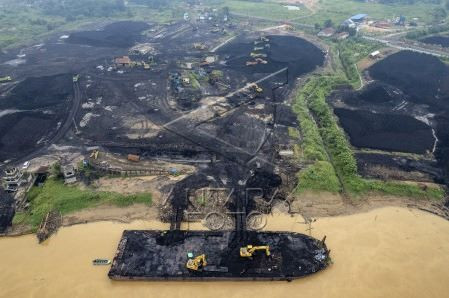 Excavators pile up coal on June 20, 2024 at a storage facility near the Batanghari River in Muaro Jambi regency, Jambi. (Antara/Wahdi Septiawan)
T
he government’s latest policy requiring 100 percent retention of Natural Resource Export Proceeds (DHE SDA) has been widely justified on macroeconomic grounds. Effective June 1, exporters of Indonesia's natural resources are required to repatriate 100 percent of their export proceeds into the domestic financial system.
For non-oil-and-gas sectors, the funds must be held in a special domestic account for a minimum of 12 months, while oil-and-gas exporters must retain at least 30 percent of their proceeds domestically for at least three months. These funds are generally placed through Himbara (state-owned) banks, with foreign-currency-to-rupiah conversion capped at 50 percent. However, exporters operating under bilateral or free trade agreements are permitted to place up to 30 percent of their DHE in non-Himbara institutions.
The rationale behind this policy is straightforward. Retaining more foreign exchange domestically should strengthen banking liquidity, support the local currency and improve macroeconomic resilience against external shocks, particularly since the rupiah has depreciated by approximately 10.34 percent against the United States dollar over the past 12 months.
Yet, this debate rests on an implicit assumption that deserves closer scrutiny: it assumes that the principal policy challenge is where export proceeds go after trade occurs. A more fundamental question is whether gross export proceeds are economically available for retention in the first place. In other words, how much of Indonesia's export earnings actually remains after firms meet their obligations for intermediate inputs and primary factors of production?
The coal sector provides an ideal case study to test this premise. Indonesia exported approximately 406 million tonnes of coal in 2024, making it one of the world's largest coal exporters. India imported roughly 108 million tonnes and China another 93 million tonnes, meaning nearly half of Indonesia's coal exports were absorbed by just two nations. Consequently, even marginal changes in the retention of these specific export proceeds could carry substantial macroeconomic implications.
A common explanation for capital leakage is that a significant portion of export earnings flows abroad to cover freight, shipping, insurance and other international logistics services. The intuition seems sound: coal travels thousands of kilometers before reaching its destination, allowing foreign service providers to capture a portion of its landed value.

Bloomberg data show that global coal freight rates spiked post-pandemic before gradually normalizing; for instance, the Hampton Roads–Rotterdam Panamax rate nearly doubled from US$9.60 per tonne in 2020 to $18.16 in 2021, before easing to $13.28 in 2024 and recovering slightly to $14.95 in 2026.