The Jakarta Post
Please Update your browser
Your browser is out of date, and may not be compatible with our website. A list of the most popular web browsers can be found below.
Just click on the icons to get to the download page.


Popular Reads
Top Results
No results found. Please check your search term and try again
Can't find what you're looking for?
View all search results
Popular Reads
Top Results
No results found. Please check your search term and try again
Can't find what you're looking for?
View all search resultsIs Indonesia safe if the rupiah reaches Rp 20,000?
Replacing officials to save a falling rupiah is empty political theater; Indonesia’s true economic safety depends on fixing deep-seated structural issues like oil deficits, agricultural productivity and policy execution.
Change text size
Gift Premium Articles
to Anyone
Share the best of The Jakarta Post with friends, family, or colleagues. As a subscriber, you can gift 3 to 5 articles each month that anyone can read—no subscription needed!
 Set as preferred source
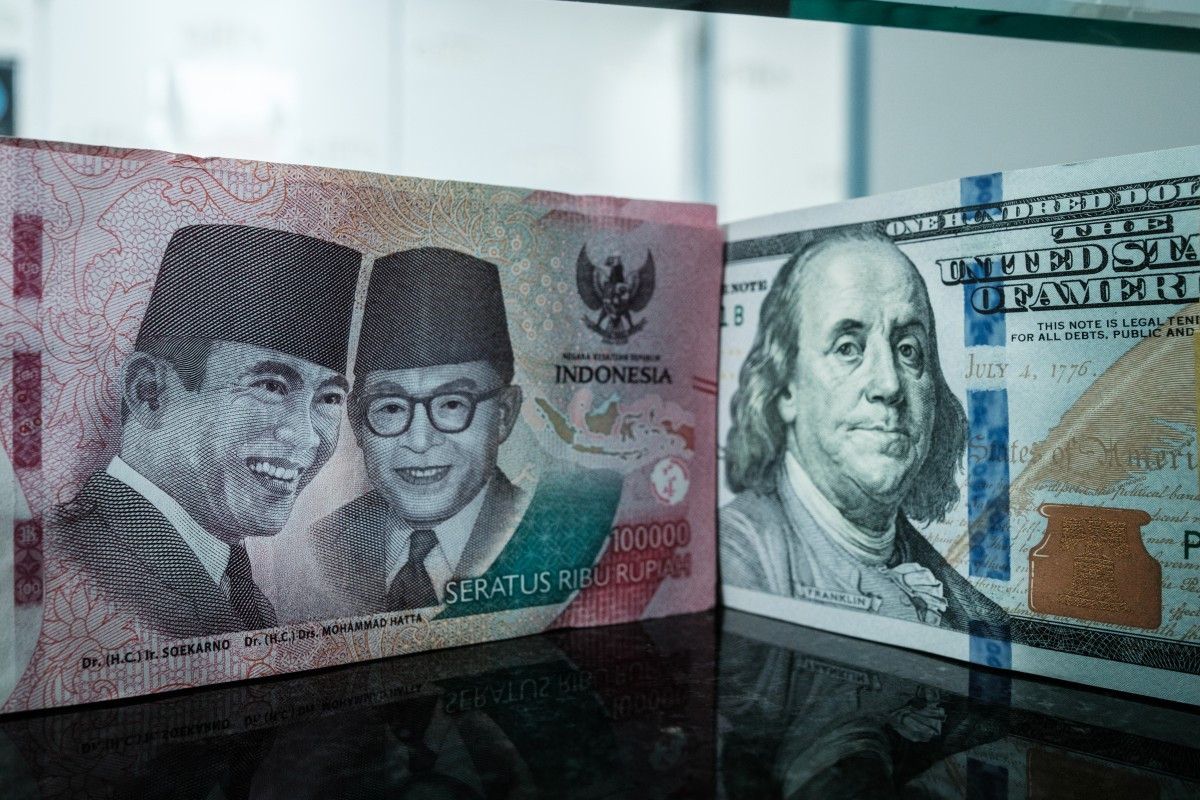 A 100,000 rupiah banknote is pictured next to a 100 United States dollar banknote at a currency exchange office in Jakarta on June 4, 2026, after the rupiah weakened beyond 18,000 per US dollar for the first time. (AFP/Yasuyoshi Chiba)
W
hen the rupiah weakens, politics quickly looks for someone to blame. A minister must be replaced. A central banker must be sacrificed. A new face must be shown to the market as proof that the government is serious. That temptation is growing again as the rupiah moves near levels that remind many Indonesians of 1998.
Changing the finance minister or the Bank Indonesia (BI) governor is not reform if the underlying risks remain untouched. It is theater. The harder question is whether Indonesia can remain safe if the rupiah weakens further, even toward Rp 20,000 per United States dollar.
The answer depends less on the number than on the surrounding conditions. A stable Rp 20,000 would be less dangerous than a panicked Rp 18,000 if liquidity remains normal, inflation stays contained, reserves remain adequate, bond markets continue to function and firms do not rush for dollars. But a stable Rp 20,000 could also mean markets have repriced Indonesia downward and accepted a weaker country risk.
Indonesia is under pressure, but the public evidence so far does not show a full currency crisis. Foreign portfolio outflows are present, but they are not the same as crisis-level capital flight. Foreign exchange reserves have fallen from about US$146.2 billion to $144.9 billion, but they still cover around 5.6 months of imports. Inflation reached 3.08 percent year-on-year in May, still within Bank Indonesia’s target range. Core inflation was lower, at 2.59 percent.
The sharper warning is the trade account. Indonesia recorded only a $90 million trade surplus in April, with a strong non-oil and gas surplus of $3.53 billion almost wiped out by a large oil and gas deficit of $3.44 billion. The rupiah story is not only about market psychology. It is about imported energy, imported inputs and the dollar cost structure beneath daily life.
A weaker currency eventually leaves the trading screen and enters the real economy. The more Indonesia relies on imported fuel, industrial inputs and capital goods, the more exchange-rate pressure can raise production costs, transport costs and household expenses. Stress becomes crisis when reserve loss, inflation expectations, forced bond selling, subsidy uncertainty, corporate dollar distress and political attacks on institutions begin to reinforce one another.

That is why replacing officials is a weak answer. If investors demand higher yields because of oil risk, fiscal pressure, foreign outflows, policy uncertainty and doubts over institutional credibility, changing names will not reduce the price of risk. Markets may read the move as panic.