The Jakarta Post
Please Update your browser
Your browser is out of date, and may not be compatible with our website. A list of the most popular web browsers can be found below.
Just click on the icons to get to the download page.


Popular Reads
Top Results
No results found. Please check your search term and try again
Can't find what you're looking for?
View all search results
Popular Reads
Top Results
No results found. Please check your search term and try again
Can't find what you're looking for?
View all search resultsNickel's recovery hopes tempered by growing stock overhang
A growing mountain of surplus metal accumulating in warehouses is a reminder that this could be a slow-fuse process.
Change text size
Gift Premium Articles
to Anyone
Share the best of The Jakarta Post with friends, family, or colleagues. As a subscriber, you can gift 3 to 5 articles each month that anyone can read—no subscription needed!
 Set as preferred source
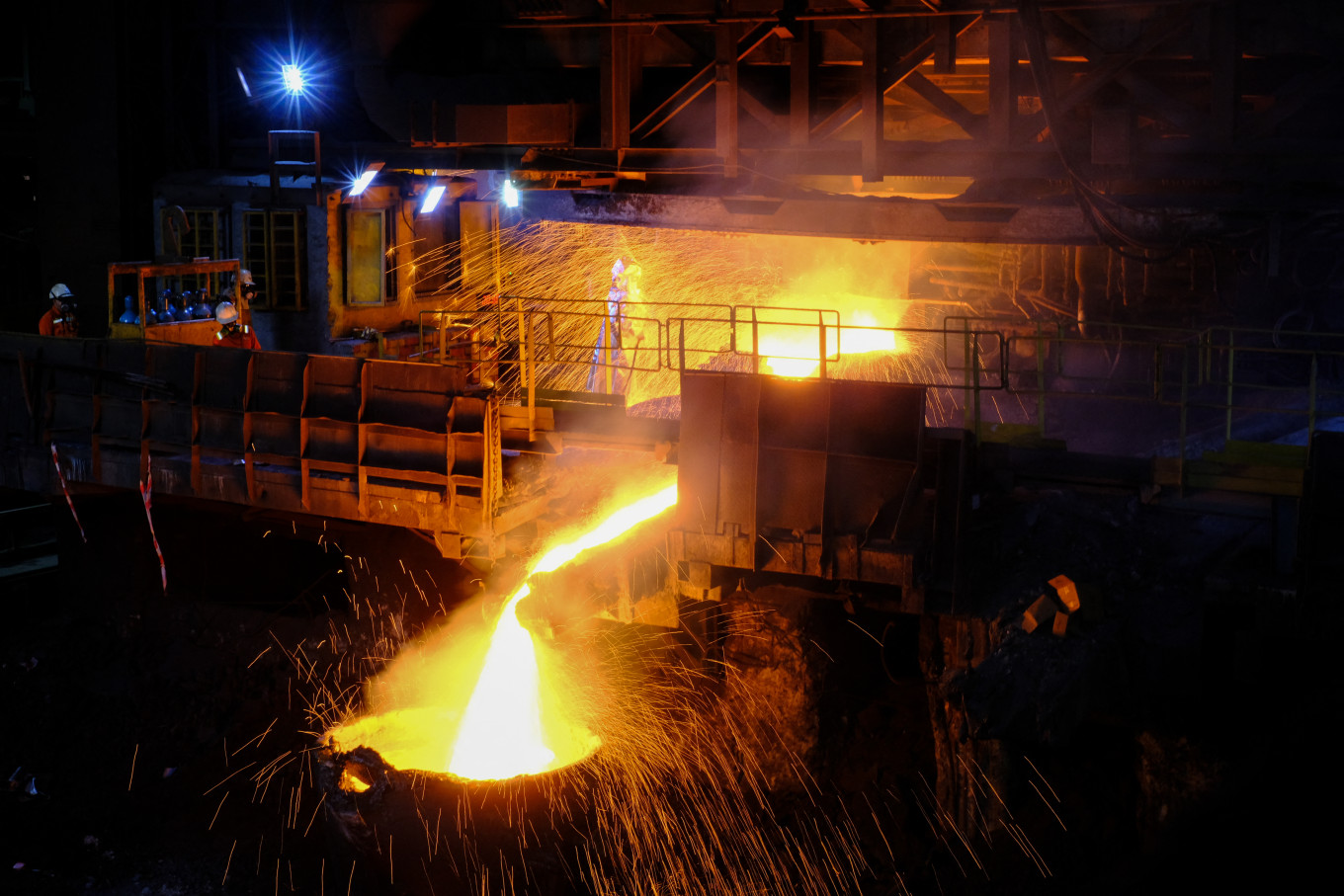 A nickel smelter of PT Vale Indonesia in Sorowako, South Sulawesi, operates on Aug. 2, 2024. (AFP/Muchtamir Zaide)
N
ickel's early-year rally is a collective bet that Indonesia's multi-year production surge is finally abating, allowing the market to rebalance after four consecutive years of oversupply.
But a growing mountain of surplus metal accumulating in London Metal Exchange (LME) and Shanghai Futures Exchange (ShFE) warehouses is a reminder that this could be a slow-fuse process.
Combined exchange inventory stands at 468,600 tonnes, the largest stock overhang since 2015 and equivalent to around six weeks of global usage.
The rate of growth has slowed as LME-registered stocks plateau out. But the rise in Shanghai inventory has been simultaneously accelerating, suggesting the refined nickel surplus is now migrating eastward.
LME nickel stocks, including off-warrant inventory, rose for nine straight months between June last year and March, when they topped out just below the 400,000-tonne level.
They have since edged 20,000 tonnes lower. Although metal is still arriving at LME warehouses in sizable clips, warrant cancellations and load-out rates have also picked up in recent weeks, signaling a stronger draw on metal from the physical market.

The Western supply chain, or what is left of it after Indonesia's Chinese-backed supply tsunami, is absorbing two unexpected hits to production.
The Ambatovy mine in Madagascar has been suspended since February due to damage from a cyclone.
The mine, which is being taken over by a consortium led by Jason Kluk, former head of nickel trading at Glencore, produced 28,000 tonnes of finished nickel products in 2024.
Just as Ambatovy is due to return at the end of this month, Sherritt International's Fort Saskatchewan refinery may run out of feed.
The Canadian producer has suspended direct participation in its Cuban mining joint venture after the latest salvo of United States sanctions on the country.
The mines are integrated with Sherritt's nickel plant in Alberta and the company warned last month it expected its raw materials inventory to last only to the middle of June.
Sherritt expected to produce 26,000-28,000 tonnes of finished nickel this year but the outlook is now highly uncertain. The sanctions have upended Sherritt's nickel business and the company has just signed a term sheet to sell a majority stake to Gillon Capital.
While the nickel stocks built in the West show signs of exhaustion, Chinese inventory is rapidly climbing.
Shanghai exchange stocks have almost doubled since the start of the year and now total 87,671 tonnes, which is the highest level since 2017. The rise has been relentless with no discernible seasonal impact from the New Year holiday period.
There may be a lot more sitting in government warehouses.
China's imports of refined metal surprised to the upside last year and they have remained robust so far this year.
The country imported 231,000 tonnes of nickel in 2025, the highest tally in four years, according to the World Bureau of Metal Statistics, which collates official customs data.
Yet Chinese nickel producers also exported a record 171,000 tonnes of metal, mainly to LME warehouses in Asia.
The two-way flow makes little market sense unless imports included purchases by government stockpile managers.
Macquarie analysts think governments absorbed around 150,000 tonnes of nickel last year as they look to build reserves of what most deem to be a critical mineral. The bank expects more strategic buying this year.
China is not explicitly referenced but the country has long been a strategic stockpiler of nickel and soaking up more metal at a time of low prices is a tried-and-tested policy.
China's import surge has rolled into this year. Inbound volumes of refined nickel jumped by 56 percent year-on-year to 94,000 tonnes in the January to April period, while exports fell to just 9,400 tonnes.
Combined with China's own expanded smelter capacity, running off Indonesian raw materials, it is little surprise that domestic inventory is rising and Shanghai prices are underperforming those in London.
The price gap should create a renewed incentive for exports but so far that is not happening.
It is not as if the West needs more metal anyway despite the disruption in Madagascar and Canada.
While Indonesian production may well fall this year due to a combination of government mining restrictions and lack of sulfur for processing, it is clearly going to take time before that becomes manifest in the refined metal segment of the market.
Nickel's rebalancing act could be a long-drawn-out affair.
---
The writer is a columnist for Reuters. The views expressed are personal.