The Jakarta Post
Please Update your browser
Your browser is out of date, and may not be compatible with our website. A list of the most popular web browsers can be found below.
Just click on the icons to get to the download page.


Popular Reads
Top Results
No results found. Please check your search term and try again
Can't find what you're looking for?
View all search results
Popular Reads
Top Results
No results found. Please check your search term and try again
Can't find what you're looking for?
View all search resultsAnalysis: Diplomacy secures release of nine Indonesians from Israel
Change text size
Gift Premium Articles
to Anyone
Share the best of The Jakarta Post with friends, family, or colleagues. As a subscriber, you can gift 3 to 5 articles each month that anyone can read—no subscription needed!
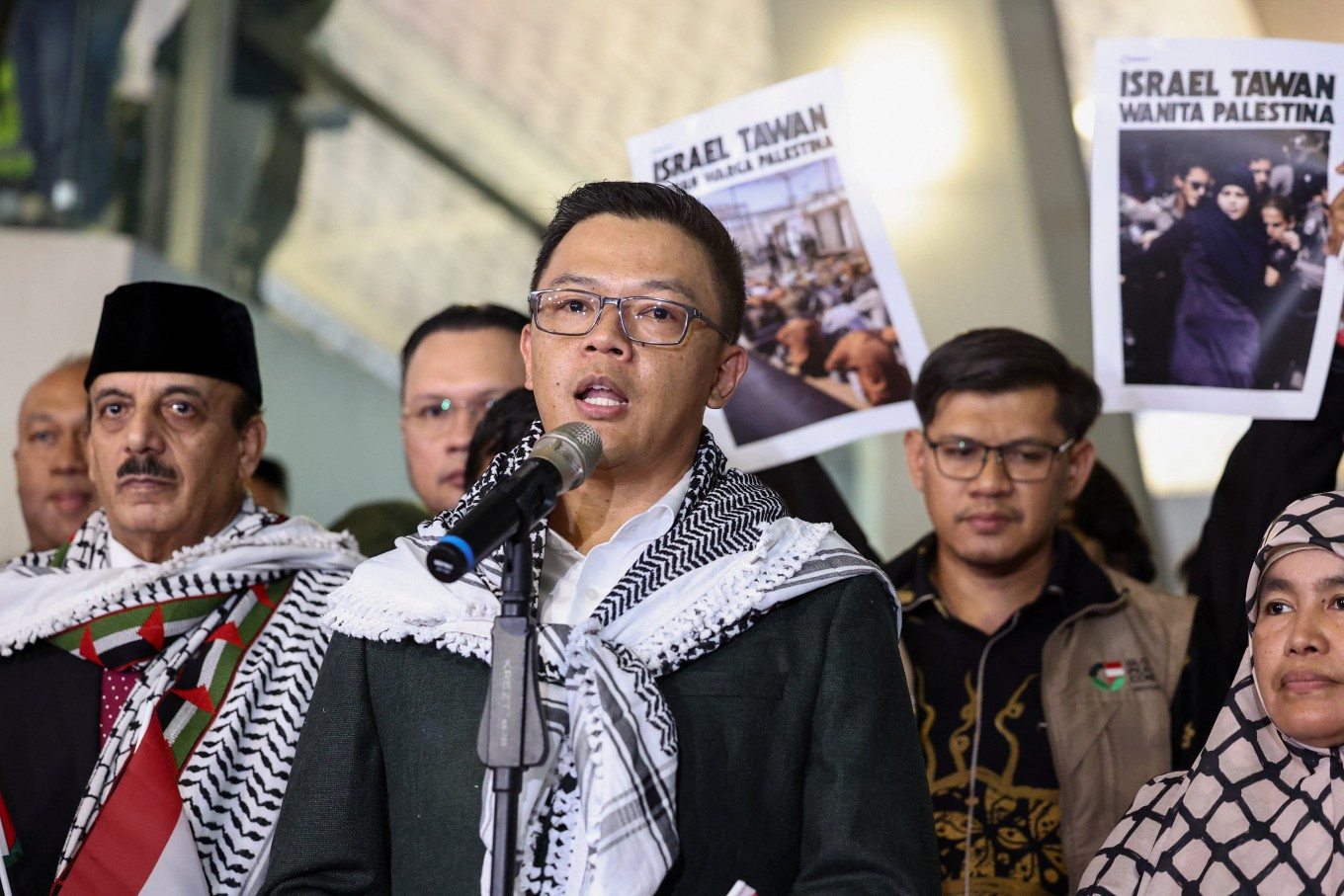 Foreign Minister Sugiono (center) addresses reporters on May 24, 2026, accompanied by the nine Indonesian members of the Gaza-bound Global Sumud Flotilla, upon their arrival at Soekarno-Hatta International Airport in Tangerang, Banten. (REUTERS/Willy Kurniawan)
S
ecuring the release of nine Indonesians, detained by the Israel Defense Forces (IDF) in international waters as part of a humanitarian aid flotilla to Gaza, was no small diplomatic achievement for Indonesia, which has no formal ties to the Jewish state. Yet this accomplishment was not fully appreciated at home, where critics dismissed the government’s efforts as timid and pointed to President Prabowo Subianto’s silence throughout the episode.
Foreign Minister Sugiono in particular came under fire for refusing to describe Israel’s actions as an “abduction”, the term used by Global Sumud Flotilla 2.0, the group with which the nine Indonesians were affiliated. Instead, the minister characterized the incident as an “interception”, though he still condemned the action as a violation of international law.
Timid or not, credit should be given to the foreign minister and his team for securing the release of the five humanitarian activists and four journalists within four days of their capture. In diplomacy, the careful choice of words is often essential to avoid jeopardizing outcomes; in this case, the safe return of Indonesian citizens.
The absence of diplomatic relations with Israel meant Indonesia could not negotiate directly for their release and instead had to rely on third countries. At a press conference welcoming the group’s return at Soekarno-Hatta airport on May 24, Sugiono expressed gratitude to Egypt, Jordan and Turkey, all of which maintain diplomatic ties with Israel, for their assistance.
At the airport, Sugiono was seen wearing a black-and-white keffiyeh, the traditional Arab scarf that has become a symbol of the Palestinian struggle for statehood and which Israel often finds politically provocative. By then, however, the nine Indonesians were already safely home.
Missing from the public narrative are details about their treatment while in Israeli custody. Sugiono acknowledged that some of the nine repatriates would require medical and psychological care, which the government has pledged to provide.

The nine Indonesians were among the 400 to 500 activists from more than 40 countries who were aboard the flotilla’s vessels that were intercepted by the IDF before they reached Israeli waters. Other flotilla activists, including those from Australia and Ireland, reported harrowing experiences while in Israeli detention, saying they had ben subjected to physical and psychological abuse including beatings, deprivation of food and medical care, stress positions and sexual assault.