The Jakarta Post
Please Update your browser
Your browser is out of date, and may not be compatible with our website. A list of the most popular web browsers can be found below.
Just click on the icons to get to the download page.


Popular Reads
Top Results
No results found. Please check your search term and try again
Can't find what you're looking for?
View all search results
Popular Reads
Top Results
No results found. Please check your search term and try again
Can't find what you're looking for?
View all search resultsThe academic fraud in Copenhagen was years in the making
When a university system prioritizes metric-driven visibility over scientific veracity, AI stops being a tool for discovery and becomes a frictionless shortcut for institutionalized fraud.
Change text size
Gift Premium Articles
to Anyone
Share the best of The Jakarta Post with friends, family, or colleagues. As a subscriber, you can gift 3 to 5 articles each month that anyone can read—no subscription needed!
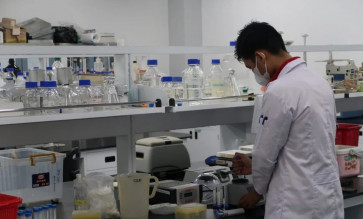
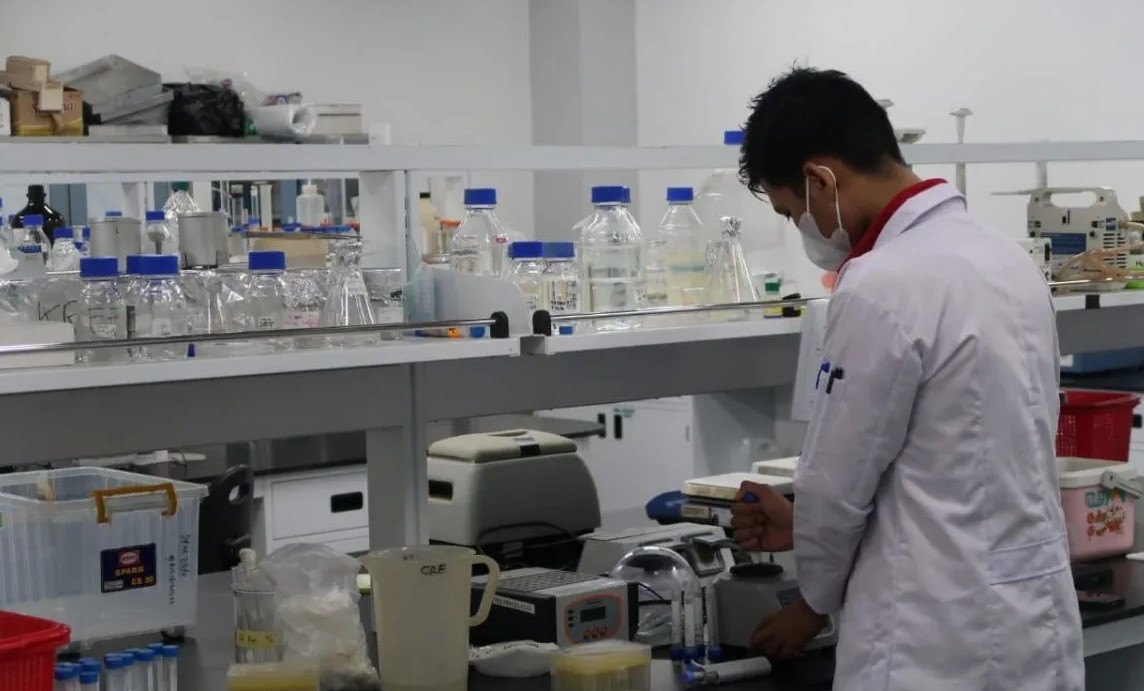 A National Research and Innovation Agency (BRIN) researcher works in a laboratory at Soekarno Science and Technology Zone in Cibinong, West Java, on July 5, 2023. (Antara/Sugiharto Purnama)
E
very scientific paper asks you to believe something you cannot check. No reviewer repeats every experiment or audits every dataset. The entire enterprise runs on collective trust. Consequently, a single act of fabrication never stays contained to a single paper; it seeps outward, discounting the work of everyone who happens to share the same affiliation, the same country and the same passport.
Today, that trust has never been cheaper to betray, and Indonesia is living the consequences.
Recently, at an international conference in Copenhagen, an Indonesian researcher allegedly presented fabricated data generated with artificial intelligence, under an institution that could not be traced. She reportedly went so far as to alter her appearance between sessions to pass as multiple people. The domestic reaction has followed a familiar script: public outrage, demands for sanctions and a ministerial investigation, all aimed squarely at the individual.
But treating this as the story of one dishonest person avoids a harder truth. What happened in Copenhagen was not a betrayal of how Indonesia trains its researchers; it was the predictable outcome of it.
The system has been bending this way for more than a decade, rewarding the appearance of science over its substance. A 2013 civil service regulation, reinforced by a 2017 Higher Education Ministry rule tying Scopus publication to full professorship (The Jakarta Post, May 2026), made indexation in a foreign commercial database a formal condition of academic survival.
Doctoral students cannot graduate without an international publication. Lecturers cannot be promoted without one. We have, in effect, outsourced the definition of good science to a Dutch publishing company and built an entire career structure around satisfying its algorithms.

The output looks impressive until you ask what it actually measures. Between 2011–2015 and 2016–2020, Indonesia's internationally indexed publications jumped by 584 percent (Prakoso Bhairawa Putera et al., 2022).