The Jakarta Post
Please Update your browser
Your browser is out of date, and may not be compatible with our website. A list of the most popular web browsers can be found below.
Just click on the icons to get to the download page.


Popular Reads
Top Results
No results found. Please check your search term and try again
Can't find what you're looking for?
View all search results
Popular Reads
Top Results
No results found. Please check your search term and try again
Can't find what you're looking for?
View all search resultsBeyond trade platforms: The sovereignty question behind e-commerce
E-commerce increasingly shapes the conditions under which market participants compete.
Change text size
Gift Premium Articles
to Anyone
Share the best of The Jakarta Post with friends, family, or colleagues. As a subscriber, you can gift 3 to 5 articles each month that anyone can read—no subscription needed!
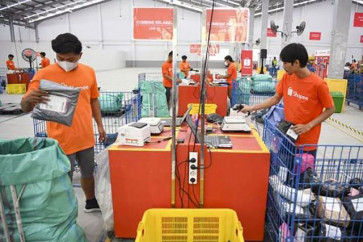
 Workers sort packages for shipment on Aug. 30, 2023, at the warehouse of e-commerce giant Shopee in Cengkareng, West Jakarta. (Antara/M Risyal Hidayat)
F
rom personal care to professional supplies, from groceries to electric vehicles, almost everything can now be bought through apps, websites and social media channels. E-commerce has moved from a convenient alternative to a central channel of modern consumption.
Purchases that once required a trip to the store can now be completed in minutes. In ASEAN-10, e-commerce became the largest contributor to the digital economy in 2025, generating around US$185 billion in Gross Merchandise Value and $41 billion in revenue.
In Indonesia, e-commerce deepened its reach during the COVID-19 pandemic, when mobility restrictions pushed more firms, customers and products into the online marketplace. A World Bank survey in 2021 found that e-commerce contributed to micro, small and medium enterprise resilience and supported faster recovery.
The same system that expands market access also creates new forms of dependency. Online platforms allow merchants to reach wider markets, while creating new layers of cost and control. Fees, commissions, advertising requirements, logistics arrangements and platform-driven promotions can directly affect margins. When these rules change, merchants often have limited room to respond. This is where the promise of digital access meets the reality of platform power.
The government appears to recognize the seriousness of the issue. Trade Minister Budi Santoso has announced plans to revise Trade Minister Regulation No. 31/2023 on electronic commerce (PMSE). The MSMEs Ministry, led by Maman Abdurrahman, has also responded strongly to rising platform fees.
These reactions suggest that the debate is moving beyond individual business complaints toward a broader question of how Indonesia’s digital marketplace should be governed. When fees, algorithms and platform rules can shape whether local brands grow or struggle, e-commerce starts to function as economic infrastructure, with consequences for competition, MSMEs and national economic sovereignty.

Indonesia’s e-commerce sector is no longer a small part of the economy. A joint report by Google, Temasek and Bain & Company estimated that Indonesia’s digital economy reached around $100 billion in gross merchandise value in 2025, with e-commerce contributing $71 billion. By 2030, the sector is projected to reach around $140 billion. This growth has opened new opportunities for MSMEs and local industries to reach consumers beyond their immediate geography. Research by Wanmin Ni in 2022 also suggests that e-commerce can encourage entrepreneurship and innovation.