The Jakarta Post
Please Update your browser
Your browser is out of date, and may not be compatible with our website. A list of the most popular web browsers can be found below.
Just click on the icons to get to the download page.


Popular Reads
Top Results
No results found. Please check your search term and try again
Can't find what you're looking for?
View all search results
Popular Reads
Top Results
No results found. Please check your search term and try again
Can't find what you're looking for?
View all search resultsThe Ibrahim verdict and the troubled justice system
When a flawed anti-corruption verdict relies on silence as guilt, it doesn't just threaten the innocent—it risks turning Indonesia's brightest young professionals into the scapegoats of a broken judicial system.
Change text size
Gift Premium Articles
to Anyone
Share the best of The Jakarta Post with friends, family, or colleagues. As a subscriber, you can gift 3 to 5 articles each month that anyone can read—no subscription needed!
 Set as preferred source
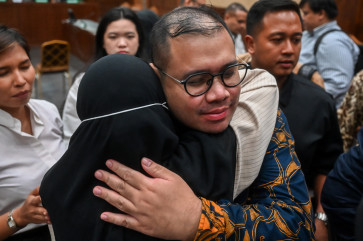
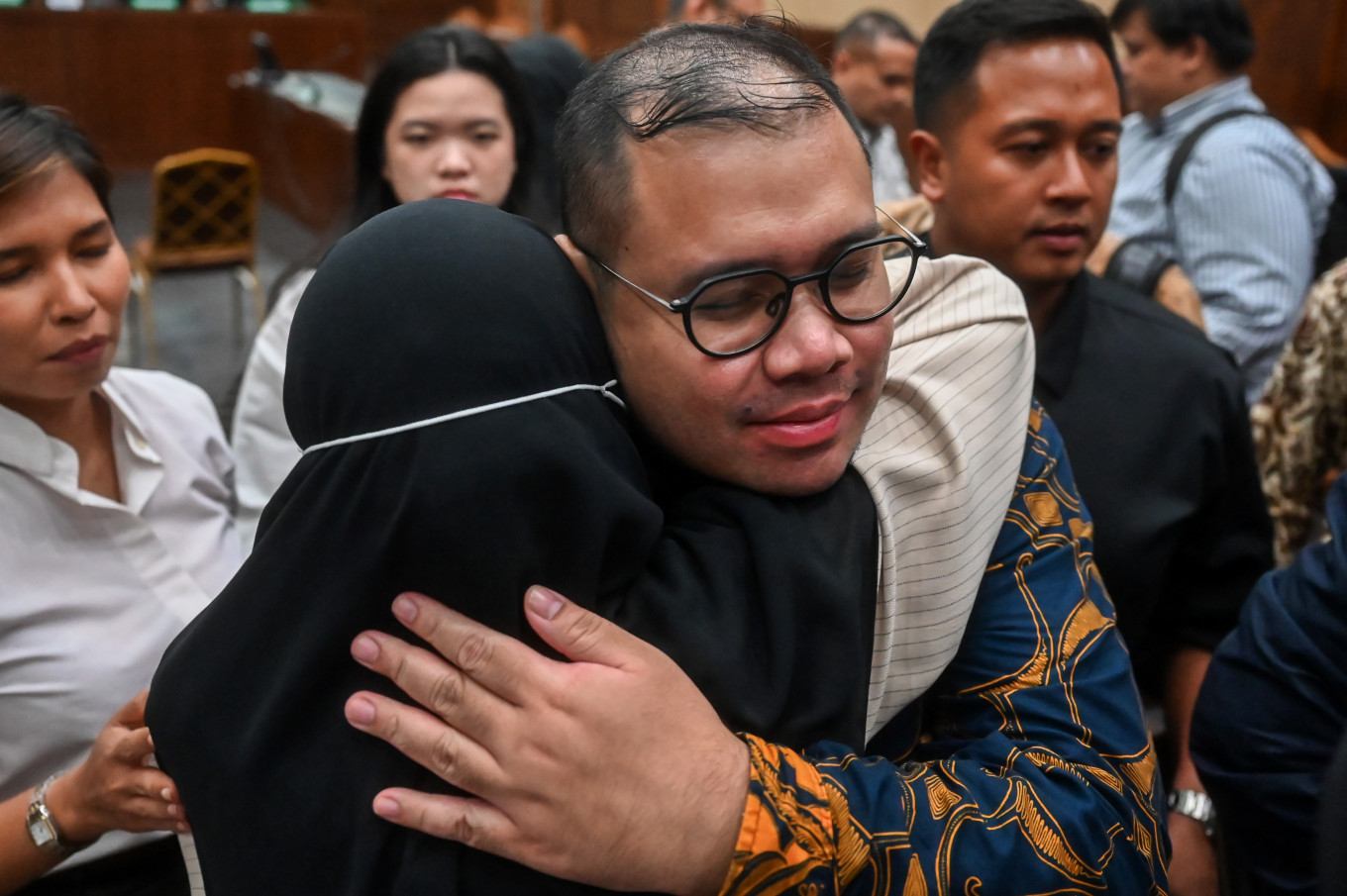 Ibrahim Arief, a suspect in a corruption case involving the procurement of Chromebook-based laptops at the then-education, culture, research and technology ministry from 2019 to 2022, embraces his wife on May 12, 2026, after attending a verdict hearing at the Jakarta Corruption Court. (Antara/Rivan Awal Lingga)
I
n 2011, the governor of Colorado in the United States issued a full and unconditional posthumous pardon to Joe Arridy, 72 years after he was executed in a gas chamber for a crime he did not commit. Due to his neurodivergence, Arridy had been entirely unable to understand or deny the coerced, false allegations leveled against him.
The Arridy case remains one of the most blatant miscarriages of justice in modern history, not only serving as a cautionary tale for the US, but also offering profound lessons for judicial systems worldwide, including Indonesia's.
Recently, the Jakarta Corruption Court sentenced Ibrahim Arief to four years in prison for his alleged role as an accomplice in the Chromebook procurement corruption scheme. What drew public attention, however, was not the conviction itself, but the sharp dissenting opinions delivered by two of the five judges on the panel.
Both argued that Ibrahim should be acquitted and his reputation fully restored, noting that the evidence linking him to any state losses was exceptionally weak, and that the material presented in court pointed far more convincingly to his innocence than his guilt.
Despite the obvious differences in time and context, a troubling thread connects these two cases: the state apparatus, represented by the prosecution, seemingly driven by desperation to find a scapegoat to blame. This raises a fundamental question that warrants deeper scrutiny: What truly constitutes a verdict beyond a reasonable doubt?
To ground this in the current Indonesian political context, President Prabowo Subianto explicitly emphasized at the 2026 Indonesia Economic Outlook that the courts must deliver fair, unequivocal decisions to uphold the rule of law. He added a vital legal principle: if a court harbors even a slight doubt regarding a defendant's guilt, it must not convict.

In this light, the country's judiciary, including the majority of the bench in Ibrahim’s case, should hold the rule of law in the highest esteem to ensure the justice system is driven by fairness, ultimately preventing wrongful convictions.





Your Opinion Matters
Share your experiences, suggestions, and any issues you've encountered on The Jakarta Post. We're here to listen.
Enter at least 30 characters
0
/ 30
Thank you
Thank you for sharing your thoughts. We appreciate your feedback.