The Jakarta Post
Please Update your browser
Your browser is out of date, and may not be compatible with our website. A list of the most popular web browsers can be found below.
Just click on the icons to get to the download page.


Popular Reads
Top Results
No results found. Please check your search term and try again
Can't find what you're looking for?
View all search results
Popular Reads
Top Results
No results found. Please check your search term and try again
Can't find what you're looking for?
View all search resultsAnalysis: Indonesia’s digital tightrope: Between safety and free speech
Change text size
Gift Premium Articles
to Anyone
Share the best of The Jakarta Post with friends, family, or colleagues. As a subscriber, you can gift 3 to 5 articles each month that anyone can read—no subscription needed!
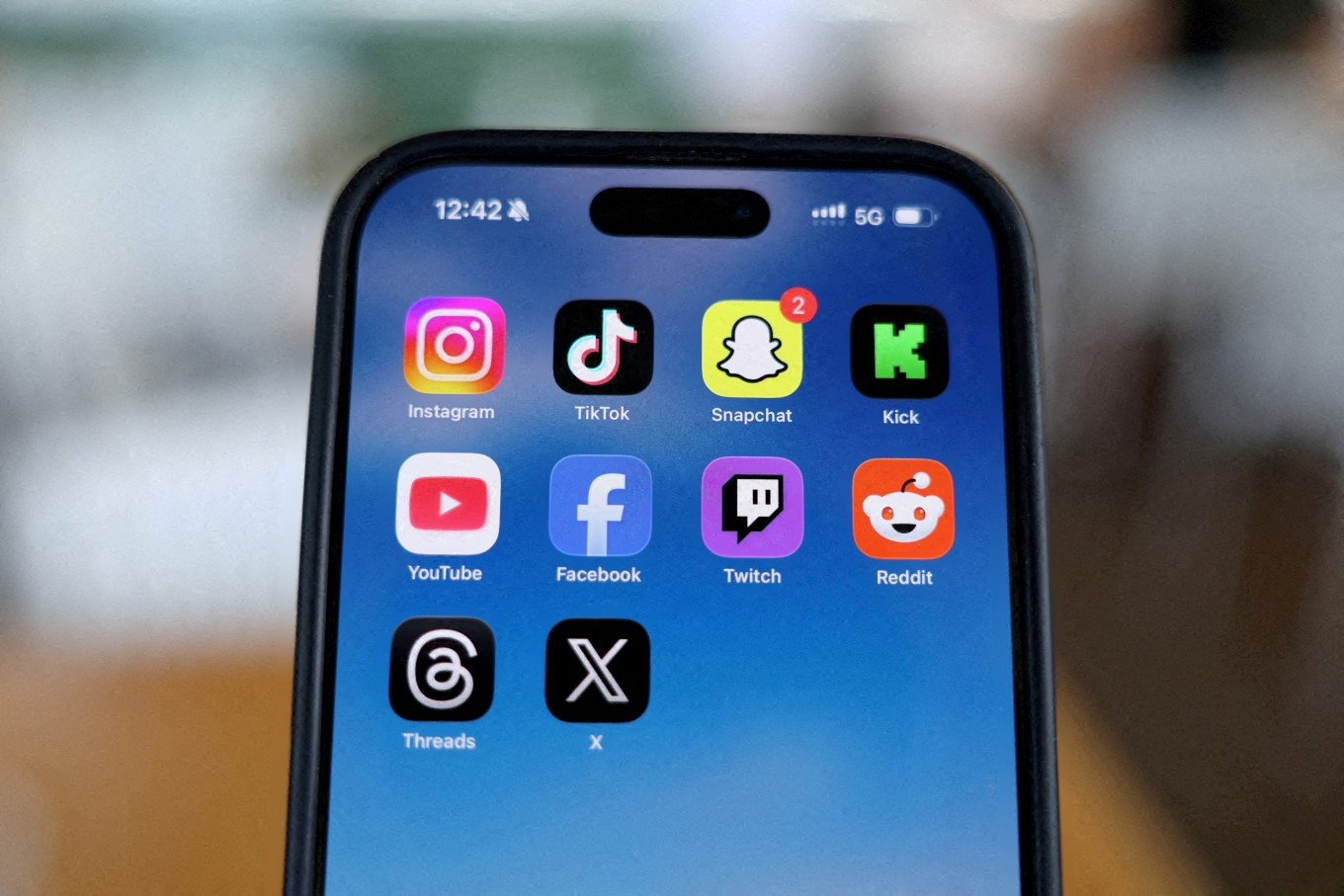 Instagram, TikTok, Snapchat, Kick, YouTube, Facebook, Twitch, Reddit, Threads and X applications are displayed on a mobile phone ahead of new law banning social media for users under 16 in Australia, in this picture illustration taken on December 9, 2025. (Reuters/Hollie Adams)
T
his year appears to be a significant moment for the Indonesian government to test its content moderation mechanisms. As the state expands its authority over digital platforms, a major challenge remains: balancing the need to protect users from harmful and illegal content while ensuring that moderation efforts do not evolve into broader censorship and restrictions on freedom of expression.
Recently, a video uploaded on April 30 by Amien Rais, a senior politician and chief adviser of the minor Ummat Party, was taken down from his YouTube channel. The removal was accompanied by a notice stating the content was “not available on the country's domain due to a legal complaint from the government”. The video briefly circulated on social media the following day, and Google Trends recorded a spike in searches related to the topics Amien raised.
The video contained allegations that Cabinet Secretary Teddy Indra Wijaya had become “personally closer” to President Prabowo Subianto beyond their professional relationship. Amien claimed Teddy was unfit for the position due to his alleged homosexuality and urged the President to replace him with a “normal” figure focused on serving the nation.
Shortly before this, in early April, an Instagram post by the independent media platform Magdalene was also restricted. The post detailed findings related to the acid attack allegedly committed by military intelligence officers against human rights activist Andrie Yunus. Indonesian users were notified that the platform had “complied with a legal request” from the Communication and Digital Affairs Ministry to geo-block the content within Indonesia, although it remained accessible abroad.
Similar concerns emerged during the August–September 2025 protests, when reports of content restrictions and livestream disruptions intensified as the government sought to maintain political stability. Digital rights group SAFEnet recorded various forms of repression during the nationwide demonstrations, including disrupted circulation of protest-related information. These cases are merely the tip of the iceberg, illustrating how the government, including law enforcement agencies, exercises authority through weaponization of the draconian Electronic Information and Transactions (ITE) Law.
On one hand, the government frames stronger moderation as a necessity to protect society from terrorism, child exploitation and disinformation. On the other hand, critics argue these same mechanisms risk undermining freedom of expression and expanding state control over digital discourse. This pattern suggests that the government is moving beyond reactive moderation toward a proactive, state-led "digital cage".

Over the past year, the government has moved to formalize its regulatory framework through several key initiatives. In February 2025, the ministry launched SAMAN, a compliance system designed to monitor how platforms remove illegal material. This was followed on March 13, 2026, by Ministerial Decree No. 127/2026, which forces platforms to respond to takedown orders within a strict four-hour window. Additionally, the Government Regulation on Child Protection in Digital Space (PP Tunas) mandates age-verification and parental controls, with eight major platforms, TikTok, Bigo Live, X, Instagram, Facebook, Threads, YouTube and Roblox, committing to these rules as of April 30.