The Jakarta Post
Please Update your browser
Your browser is out of date, and may not be compatible with our website. A list of the most popular web browsers can be found below.
Just click on the icons to get to the download page.


Popular Reads
Top Results
No results found. Please check your search term and try again
Can't find what you're looking for?
View all search results
Popular Reads
Top Results
No results found. Please check your search term and try again
Can't find what you're looking for?
View all search resultsThe new architecture of peace: Mediation in a multipolar world
As the old rules of diplomacy falter, a new "composite" era of mediation, led by middle powers and private experts, is rising to meet the most violent decade of the 21st century.
Change text size
Gift Premium Articles
to Anyone
Share the best of The Jakarta Post with friends, family, or colleagues. As a subscriber, you can gift 3 to 5 articles each month that anyone can read—no subscription needed!
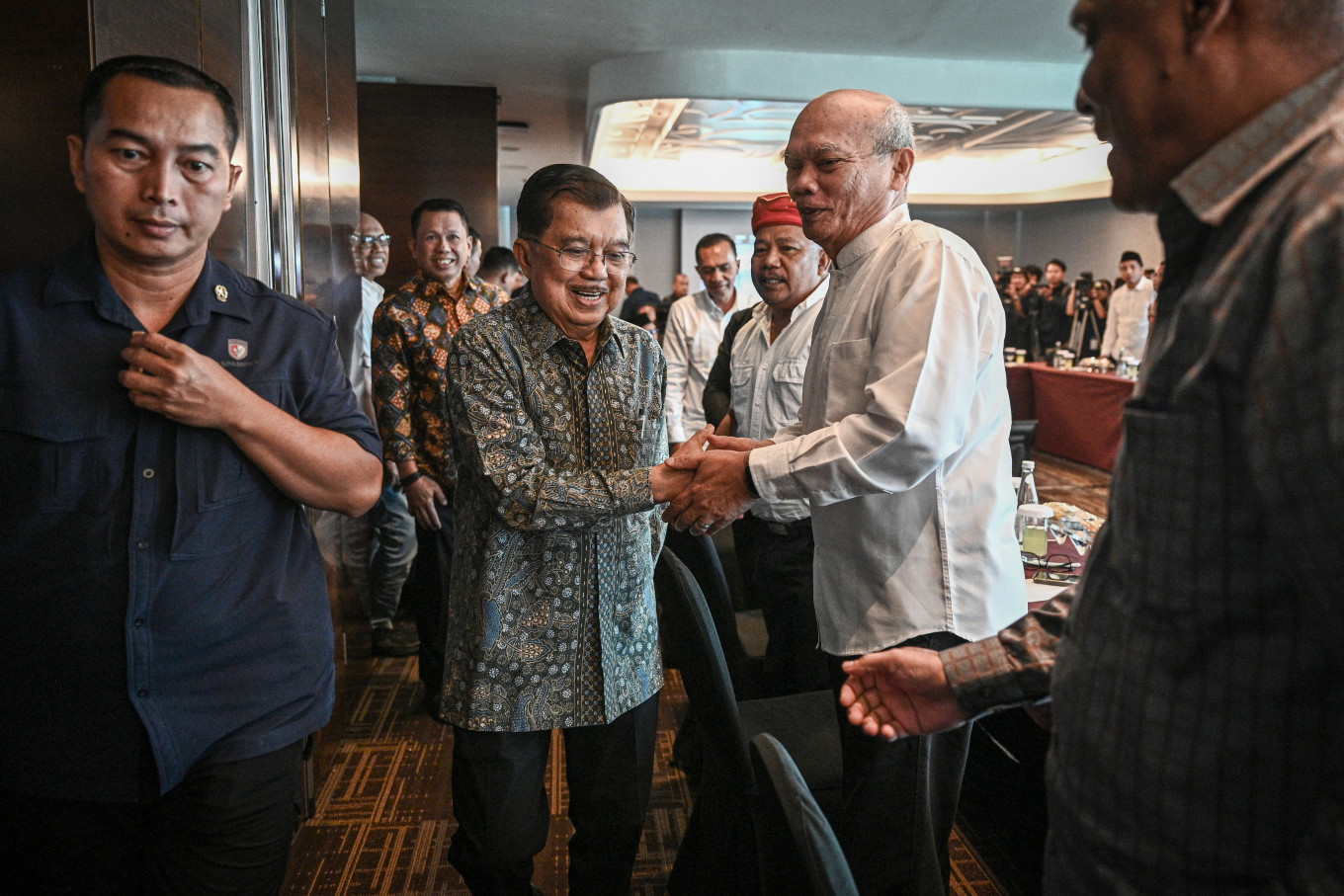 Former vice president Jusuf Kalla (center) shakes hands with a Christian delegate from the Malino I peace talks, Rinaldi Damanik (right), during a meeting with figures involved in the Malino I peace process for Poso and Malino II for Maluku in Jakarta on April 21, 2026. The meeting was held in an effort to ease tensions following a viral video clip of Kalla’s lecture at Gadjah Mada University (UGM), which was accused of being blasphemous and led to police reports. (Antara/Fauzan)
T
he third decade of the 21st century will be recorded by historians as one of the most violent in recent history. In 2025, the world experienced levels of conflict not seen since World War II, with almost 60 active state-based conflicts recorded, many of which have become increasingly internationalized.
Compounding these escalating levels of conflict is the growing challenge international mediators face in reducing violence, limiting civilian harm and negotiating lasting peace agreements. Mediation is defined as a neutral, third-party process designed to facilitate dialogue between conflicting parties with the ultimate goal of reaching a negotiated settlement.
Twenty years ago, I joined a small private foundation in Switzerland that somewhat improbably ventured to mediate between states and non-state armed groups across the world. Mostly working in long-forgotten internal conflicts left over from post-colonial state formation, the Centre for Humanitarian Dialogue’s (HD) proposition to skeptical governments was simple: trust us to engage with non-state armed groups and bring them to the negotiating table.
For governments like Indonesia, which was then wrestling with a violent insurrection in Aceh, the challenge was a refusal to engage directly with these groups. HD provided a valuable bridge, offering the deniability and pathway necessary for violence reduction and resolution.
The first decade of the 21st century was marked by significant progress in peacemaking. The United Nations was highly active in supporting a rules-based approach and established a robust roster of mediators. Member states were keen to address conflicts to pave the way for growth and development, leaving considerable space and autonomy for private mediators. By 2015, comprehensive peace agreements had been reached in Aceh, Nepal, the Philippines and South Sudan.
However, this proved to be a high watermark. Over the past 10 years, several factors have made mediation more grueling.

First of all, levels of interstate conflict have increased, largely due to the emergence of new middle powers, escalating competition between great powers, and the consequent decay of the multilateral system. Geopolitical contestation, once regulated by a raft of international agreements on arms control and non-aggression, is now "off the leash".