TheJakartaPost
Please Update your browser
Your browser is out of date, and may not be compatible with our website. A list of the most popular web browsers can be found below.
Just click on the icons to get to the download page.


Popular Reads
Top Results
No results found. Please check your search term and try again
Can't find what you're looking for?
View all search results
Popular Reads
Top Results
No results found. Please check your search term and try again
Can't find what you're looking for?
View all search resultsGig economy no more
By intervening in ride-hailing commissions, the government risks turning a flexible "bridge" into a rigid dead end for the very workers it aims to protect.
Change text size
Gift Premium Articles
to Anyone
Share the best of The Jakarta Post with friends, family, or colleagues. As a subscriber, you can gift 3 to 5 articles each month that anyone can read—no subscription needed!
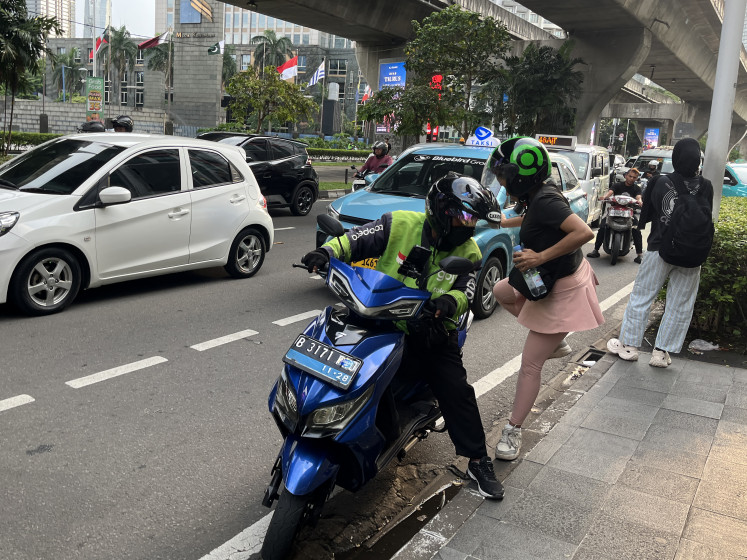
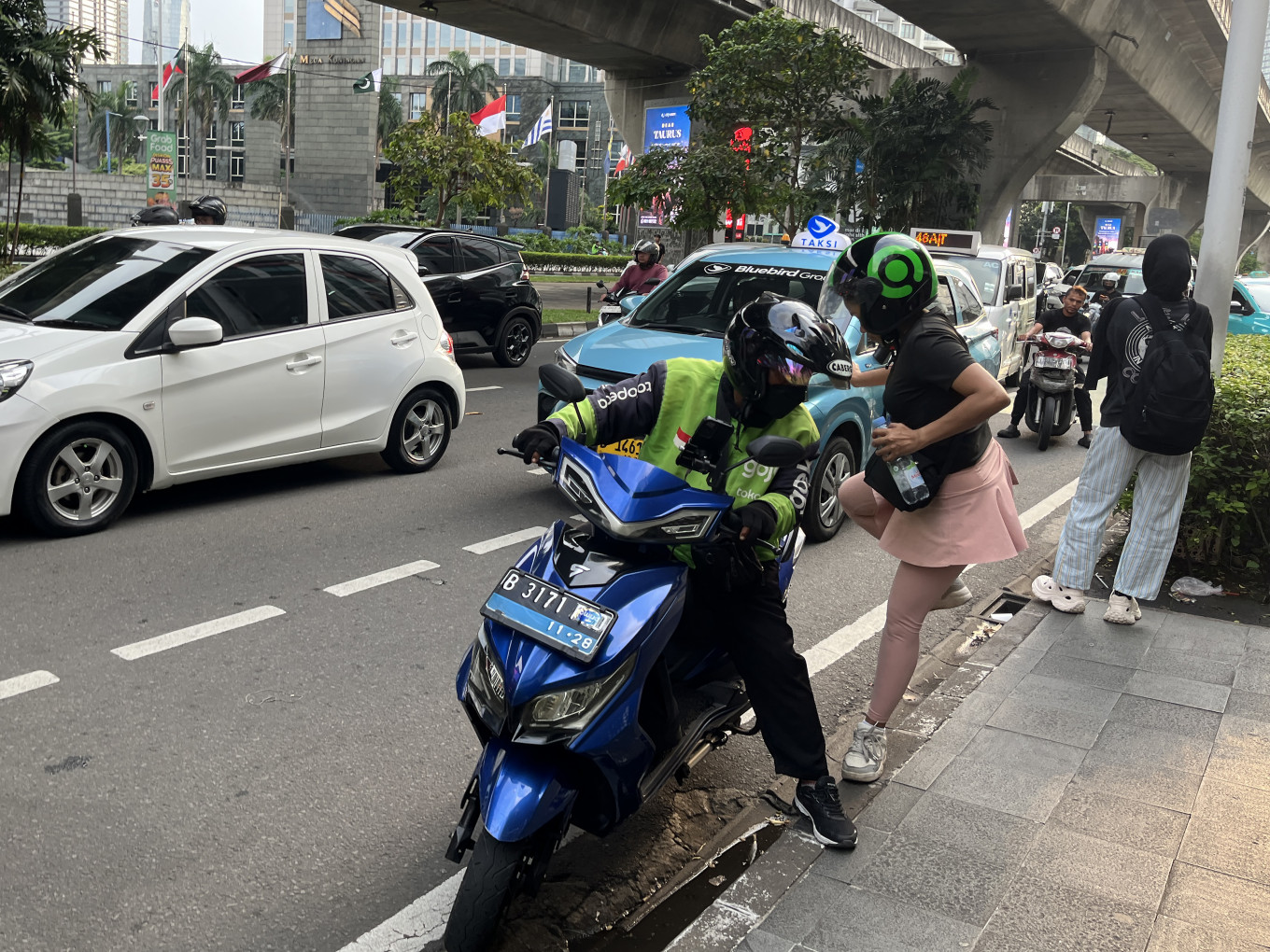 Fast, cheap, ubiquitous: An 'ojol' (online motorcycle transportation) driver drops off a passenger on May 3, 2026, in front of a shopping mall on Jl. Prof. Dr. Satrio in South Jakarta. (JP/Iqro Rinaldi)
O
nce celebrated for its flexible hours and low barriers to entry, Indonesia’s gig economy may be on the verge of a major shake-up. As the government tightens its grip, at least for ojol (online motorcycle transportation) drivers, it is potentially rewriting the very promise that made these jobs attractive in the first place.
During the May 1 Labor Day celebrations, President Prabowo Subianto unveiled a populist move to slash the commission charged by ride-hailing platforms from 20 percent to just 8 percent. To ensure the policy sticks, state asset fund Danantara has even taken a stake in PT GoTo Gojek Tokopedia, the parent company of major ride-hailing app Gojek. Although the holding reportedly remains below 1 percent, the message is clear.
At first glance, the policy looks like a clear win for drivers; a smaller platform cut could translate into higher take-home pay. However, it also signals a deeper shift: The state is moving from regulator to active participant in an industry still struggling to sustain profitability.

GoTo, which only recently posted its first quarterly net profit in Q1 this year, could be pushed back into the red if more than half of its commission-based revenue is effectively wiped out. A similar impact could affect Gojek’s main competitor, Singapore-based Grab, which counts Indonesia as its biggest market to date.
This is where the government’s intervention risks becoming a double-edged sword. To this day, ojol drivers are still classified as “partners” rather than employees, a status that has become the foundation of the gig economy. The arrangement promises flexibility but provides far fewer benefits than formal employment in order to keep platforms’ fixed labor costs low.
In response to tighter rules, ride-hailing platforms may protect their margins by raising the bar for who can become a driver, keeping only a smaller pool of high-performing partners. This adjustment may result in fewer opportunities for aspiring gig workers. Furthermore, it may also mean fewer drivers on the road, longer wait times and higher fares for consumers.

Stricter rules could also squeeze smaller players out of the market, leaving only deep-pocketed giants that can absorb thinner margins. In the long run, this may accelerate industry consolidation and potentially pave the way for the long-rumored merger between Gojek and Grab, effectively creating a monopoly.