The Jakarta Post
Please Update your browser
Your browser is out of date, and may not be compatible with our website. A list of the most popular web browsers can be found below.
Just click on the icons to get to the download page.


Popular Reads
Top Results
No results found. Please check your search term and try again
Can't find what you're looking for?
View all search results
Popular Reads
Top Results
No results found. Please check your search term and try again
Can't find what you're looking for?
View all search resultsCan honesty save ASEAN? Lessons from the Cebu Summit
While ASEAN is famous for diplomatic platitudes, the Cebu summit proved that admitting your flaws is the first step toward remaining relevant in a shifting geopolitical landscape.
Change text size
Gift Premium Articles
to Anyone
Share the best of The Jakarta Post with friends, family, or colleagues. As a subscriber, you can gift 3 to 5 articles each month that anyone can read—no subscription needed!
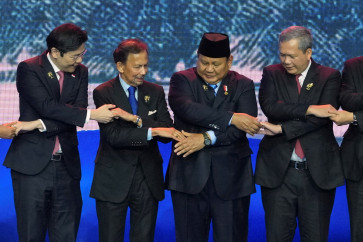
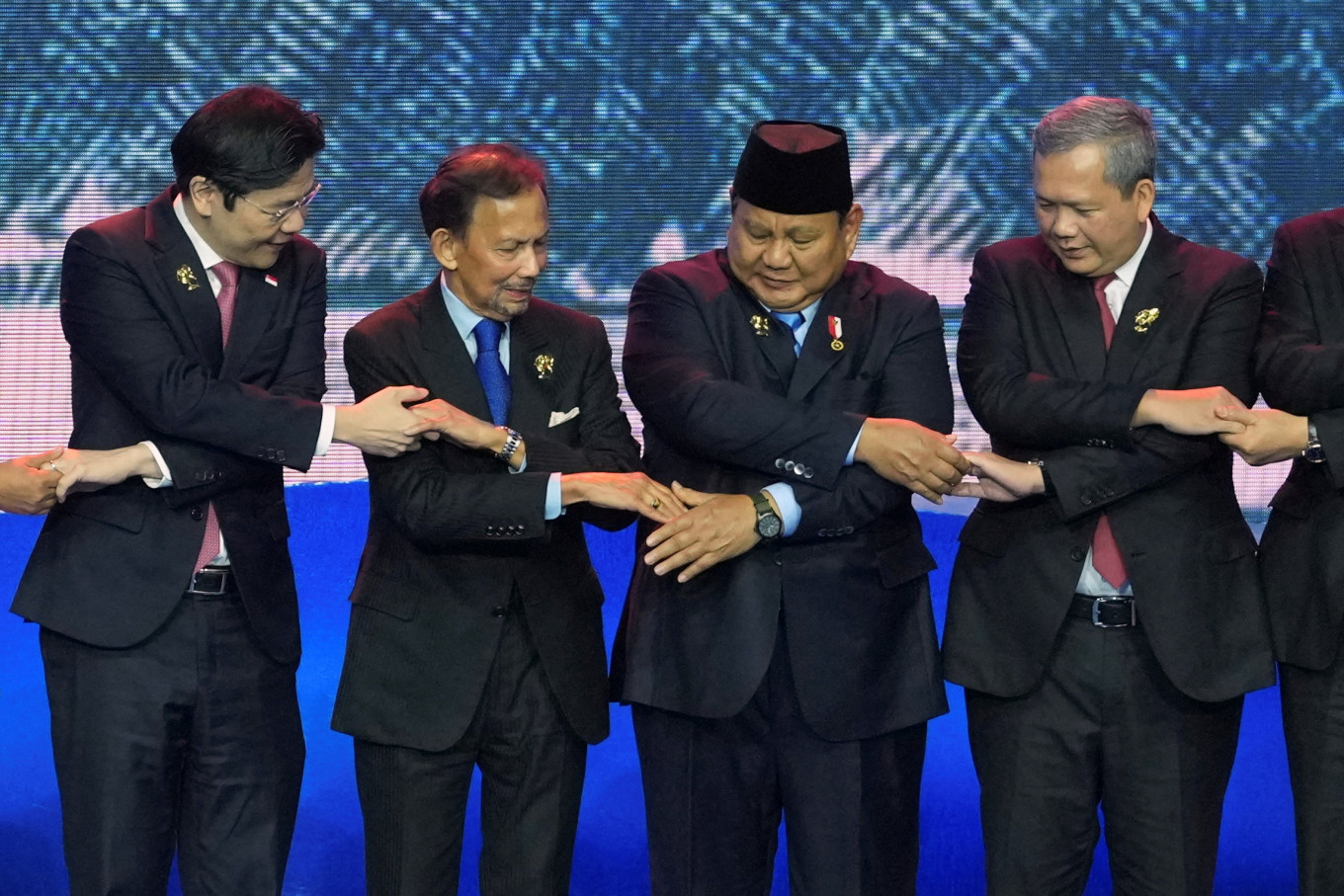 Singapore's Prime Minister Lawrence Wong, Brunei's Sultan Hassanal Bolkiah, Indonesia's President Prabowo Subianto and Cambodia's Prime Minister Hun Manet (from left to right) hold hands for a group photo during the opening ceremony of the 48th ASEAN Summit and Related Meetings on May 8 in Cebu, the Philippines. (Reuters/Aaron Favila)
T
his time, at least, ASEAN put a premium on honesty. It is convenient to pretend that everything is smooth and going according to plan, but politicians can sometimes embrace the decency of saying things as they are. This is what happened in Cebu, the Philippines, where the 48th ASEAN Summit was held last week.
“Details must still be ‘ironed out.’” These were the words used by Philippine President Marcos Jr., currently the chair of ASEAN, when offering his views on the decision to establish the ASEAN Petroleum Security Agreement (APSA)—the biggest outcome of the gathering.
It is safe to assume that it will take significant time to sort out not only the complex technical parts of this agreement but also its political dimensions. How and when the fuel will be stocked, under which circumstances, and how much will be shared remain tough topics yet to be agreed upon.
Cebu offered other interesting developments, and each requires the same dose of frankness shown for the APSA. There was a decision to establish an ASEAN Maritime Centre, symbolically significant considering the ongoing disputes in the South China Sea. Other surprises emerged as well: an ASEAN Centre of Excellence on Gender Equality and Women’s Empowerment (ACE-GEWE) will also be created.
For all these initiatives, the citizens of Southeast Asia might wonder how long it will take to see these institutions in place. As I have mentioned previously in this column, the ASEAN Centre for Climate Change (ACCC) to be set up in Brunei is not yet operational, even though years have passed since the formal decision was made.
There are exceptions, however. The ASEAN Centre for Sustainable Development Studies and Dialogue (ACSDSD) in Bangkok is alive and kicking; its creation was a quick affair, taking just a couple of years—which, for ASEAN, is remarkably fast.

ASEAN has many problems. For example, it has a fixation on centrality—the idea of being an indispensable institution. In theory, ASEAN is vital, yet the issue remains the way it functions. This is a structural problem, but it is also a matter of mindset and culture.