The Jakarta Post
Please Update your browser
Your browser is out of date, and may not be compatible with our website. A list of the most popular web browsers can be found below.
Just click on the icons to get to the download page.


Popular Reads
Top Results
No results found. Please check your search term and try again
Can't find what you're looking for?
View all search results
Popular Reads
Top Results
No results found. Please check your search term and try again
Can't find what you're looking for?
View all search resultsChildcare reform can’t wait
As viral tragedies expose a broken system of unregulated daycares and uncertified caregivers, Indonesia must choose between performing temporary damage control or finally building the foundational safety net its "golden generation" deserves.
Change text size
Gift Premium Articles
to Anyone
Share the best of The Jakarta Post with friends, family, or colleagues. As a subscriber, you can gift 3 to 5 articles each month that anyone can read—no subscription needed!
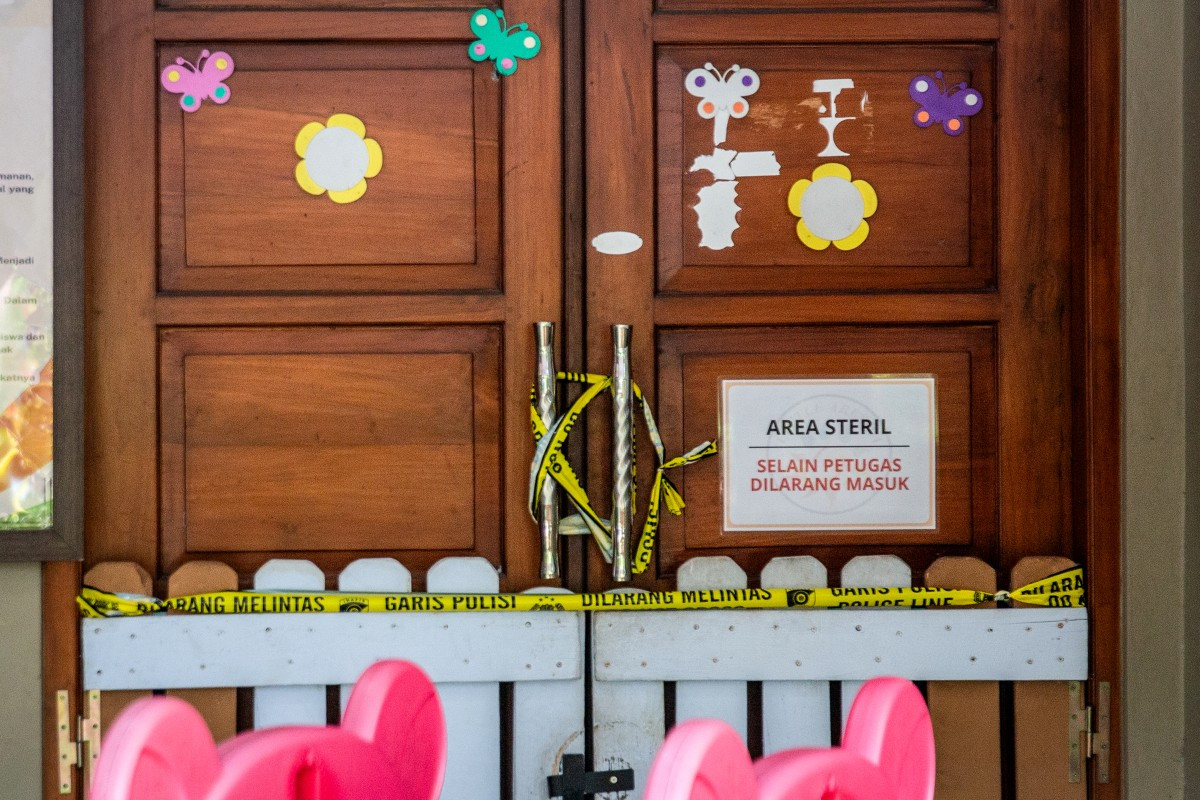 The gate of the Little Aresha daycare center in Umbulharjo, Yogyakarta, is sealed by police tape on April 27, 2026, following allegations of child abuse. Police have arrested 13 people after shocking images of alleged abuse of small children at the daycare center went viral, sparking outrage across the nation. (AFP/Devi Rahman)
E
very time violence against children at daycare facilities comes to light, authorities respond with a familiar urgency: caregivers are arrested, facilities are sealed and assurances are issued that perpetrators will be held accountable. These actions may be necessary in the immediate aftermath of abuse, but they do little to address the conditions that allow such cases to recur.
Punishing individual offenders cannot substitute for a functioning childcare system. In a country of more than 280 million people, including approximately 22.6 million children aged one to four, repeated incidents of abuse reflect not only individual cruelty but also systemic neglect. When safe and reliable childcare is absent, the consequences extend beyond isolated wrongdoing and point to deeper structural failures.
Today, Indonesia’s daycare sector remains largely unregulated despite the growing reliance of working families on these services. Government data shows that around 75 percent of households require alternative caregiving arrangements; yet, nearly 98.9 percent of daycare centers are run by private entities with uneven standards and minimal oversight.
Amid this urgency and the lack of reliable childcare services, families are often left with little choice but to place their children in the most accessible facility, regardless of whether it meets even the most basic safety standards, such as trained caregivers, emergency protocol and basic monitoring systems like CCTV.
These gaps subsequently create environments where harm can occur without early detection or prevention, as evidenced in the recent case of Little Aresha daycare in Yogyakarta that shocked the nation.
Reports have it that children were crammed into overcrowded and poorly ventilated rooms and tied to doorknobs with makeshift ropes between bathing and mealtimes.

But the incident was not an isolated tragedy. In Cimanggis, Depok, West Java, the owner of Wensen School Indonesia was found guilty of kicking a two-year-old child and throwing a nine-month-old infant, causing injuries that included joint dislocation. In another case in Sawangan, also in Depok, a caregiver reportedly poured hot water on a one-year-old baby out of frustration because the child would not stop crying.