TheJakartaPost
Please Update your browser
Your browser is out of date, and may not be compatible with our website. A list of the most popular web browsers can be found below.
Just click on the icons to get to the download page.


Popular Reads
Top Results
Can't find what you're looking for?
View all search results
Popular Reads
Top Results
Can't find what you're looking for?
View all search results-
/
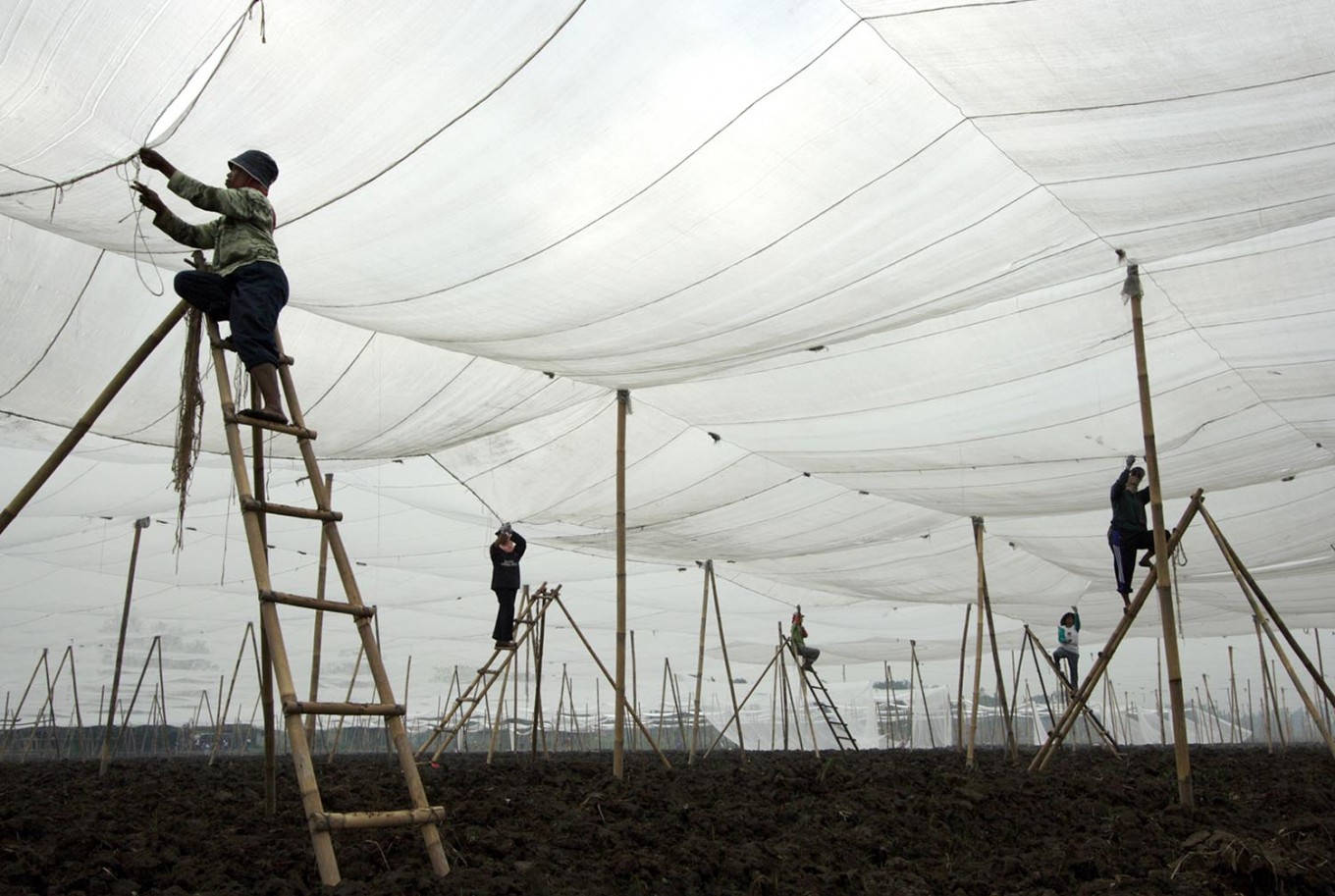
Workers prepare nets before the planting period of Vorstenlanden tobacco in Klaten, Central Java. The nets protect from pests and the sun. JP/Magnus Hendratmo
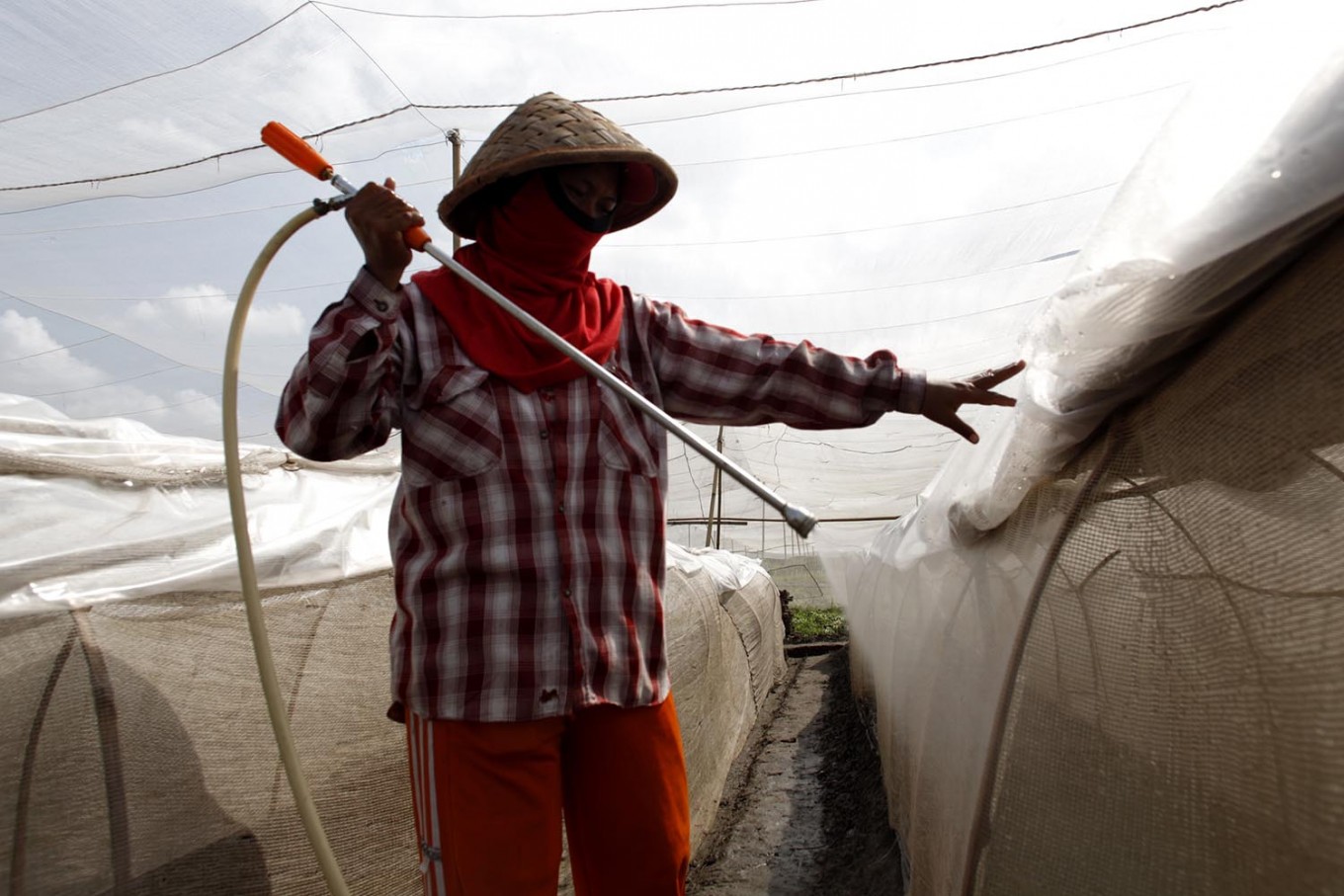
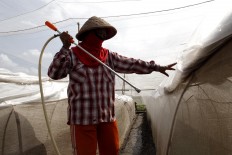
/A worker sprays Vorstenlanden tobacco plant in Klaten. JP/Magnus Hendratmo
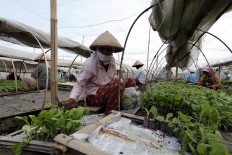
/Workers sort Vorstenlanden tobacco plant seedlings before being planted. JP/Magnus Hendratmo
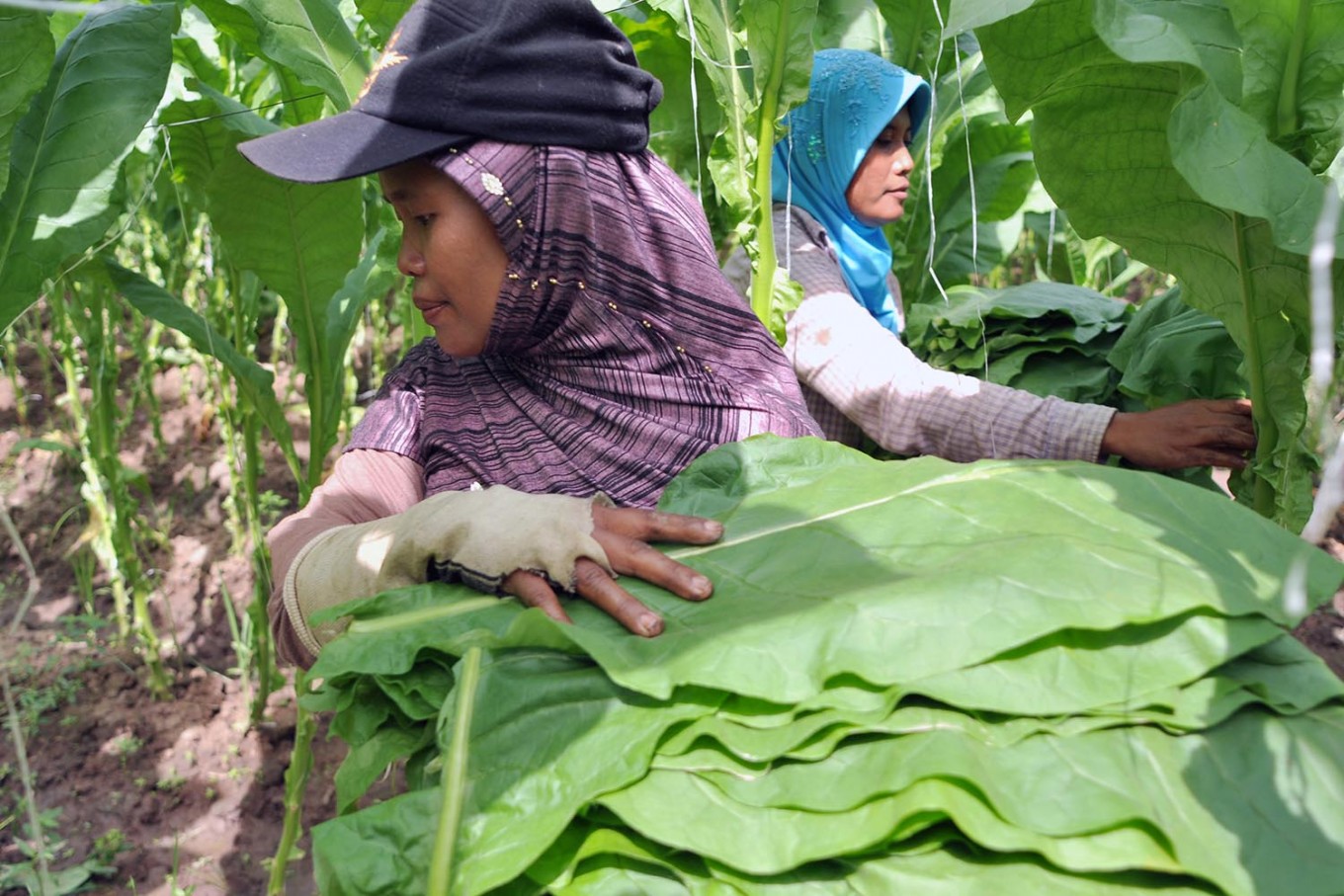
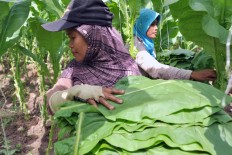
/Female workers harvest tobacco leaves manually between 6 a.m. and 8 p.m. JP/Magnus Hendratmo
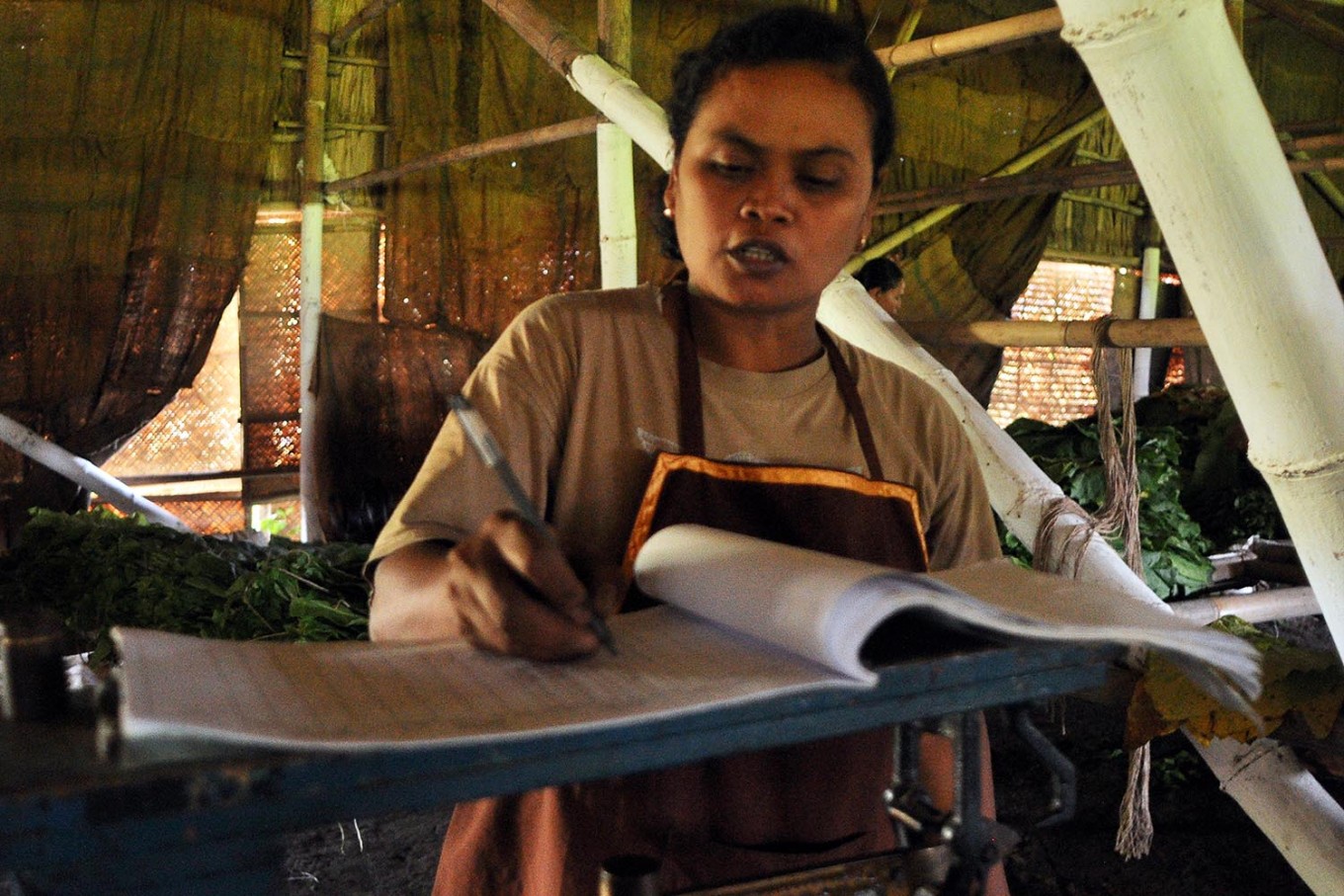
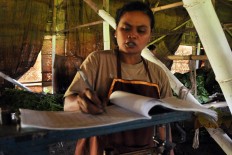
/A worker is tasked with keeping track of the harvest. JP/Magnus Hendratmo
/A worker scales the tobacco leaves. JP/Magnus Hendratmo
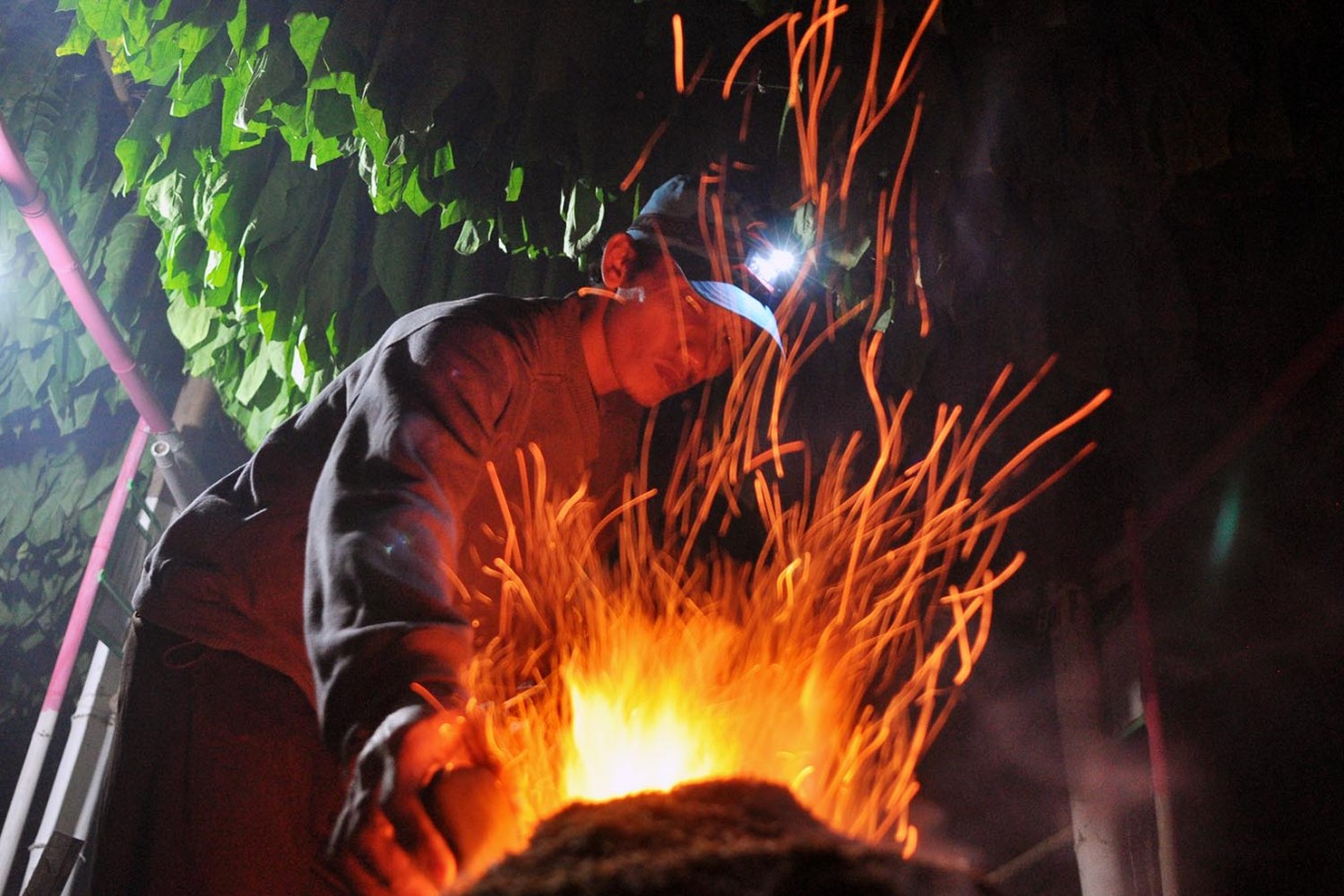
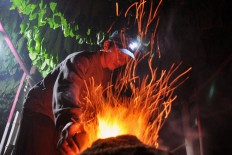
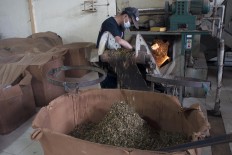
/A male worker starts a fire using woods or coal briquettes to dry tobacco leaves for 11 days. JP/Magnus Hendratmo
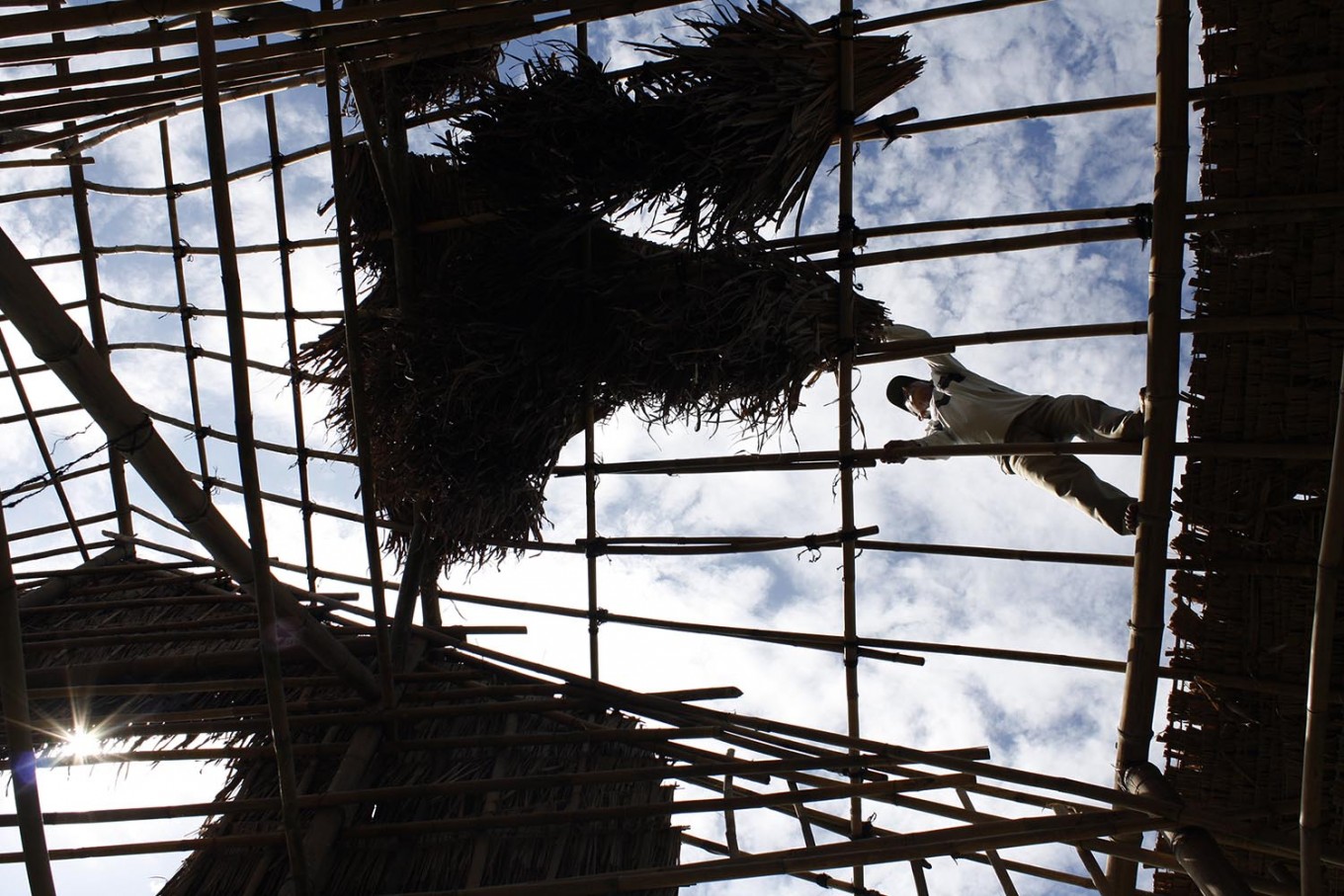
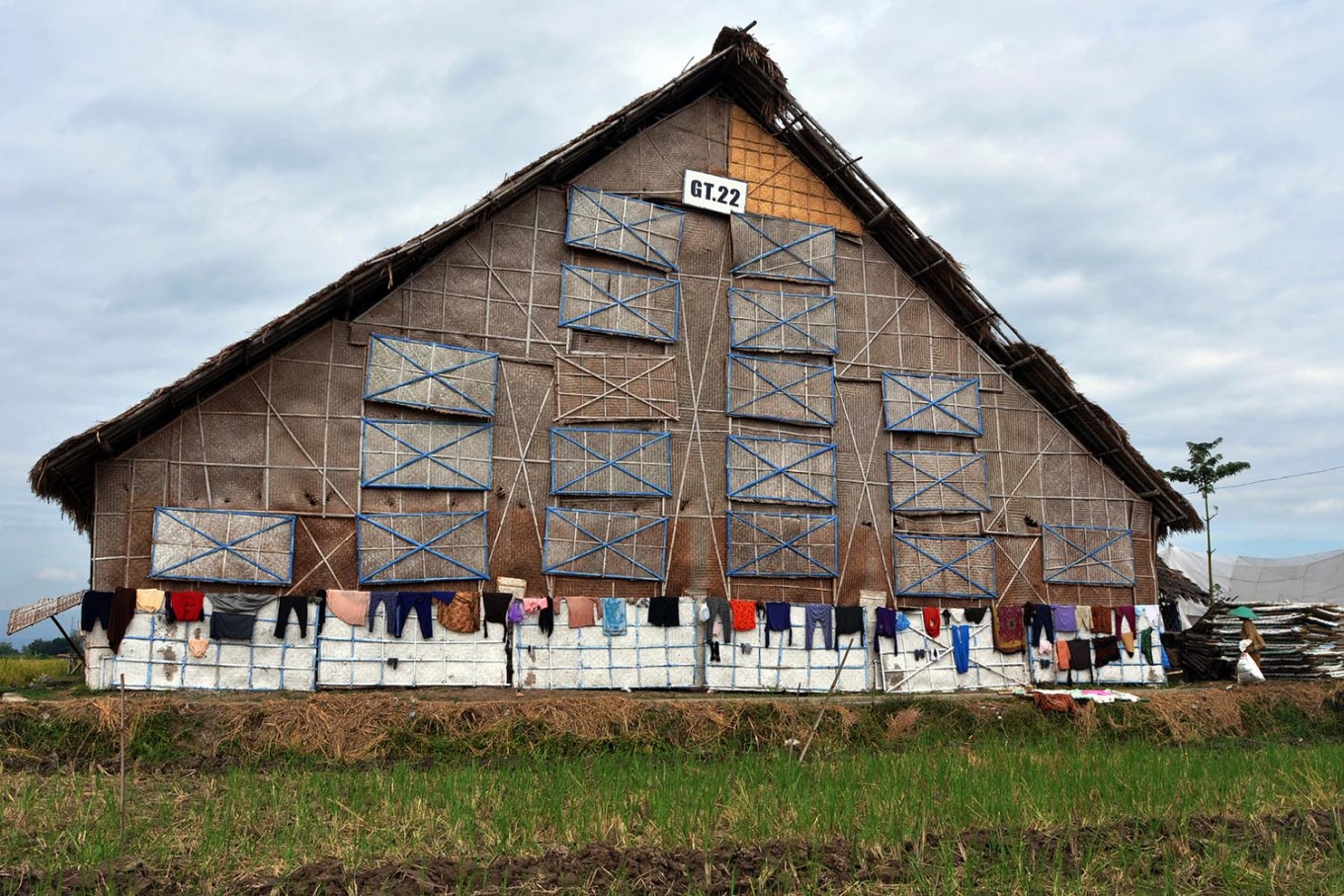
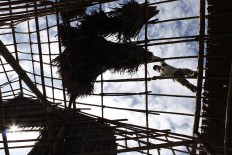
/The bamboo ward is 100-meters-long, 18-m-wide and 12-m-high and used to dry Vorstenlanden tobacco leaves. JP/Magnus Hendratmo
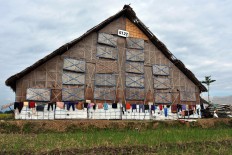
/The ward is easily visible from afar. JP/Magnus Hendratmo
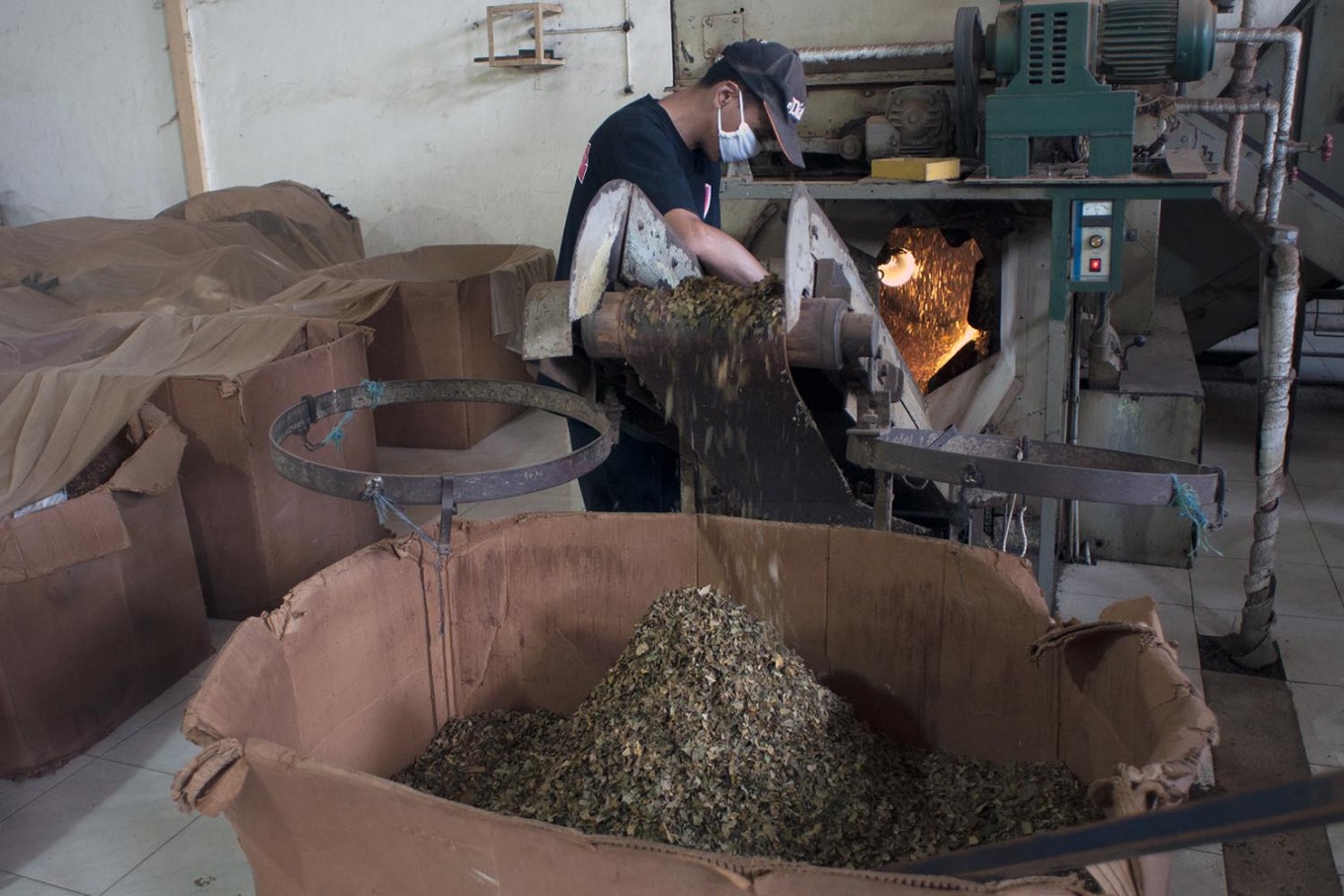
/A worker operates the cutting machine for tobacco leaves. JP/Magnus Hendratmo
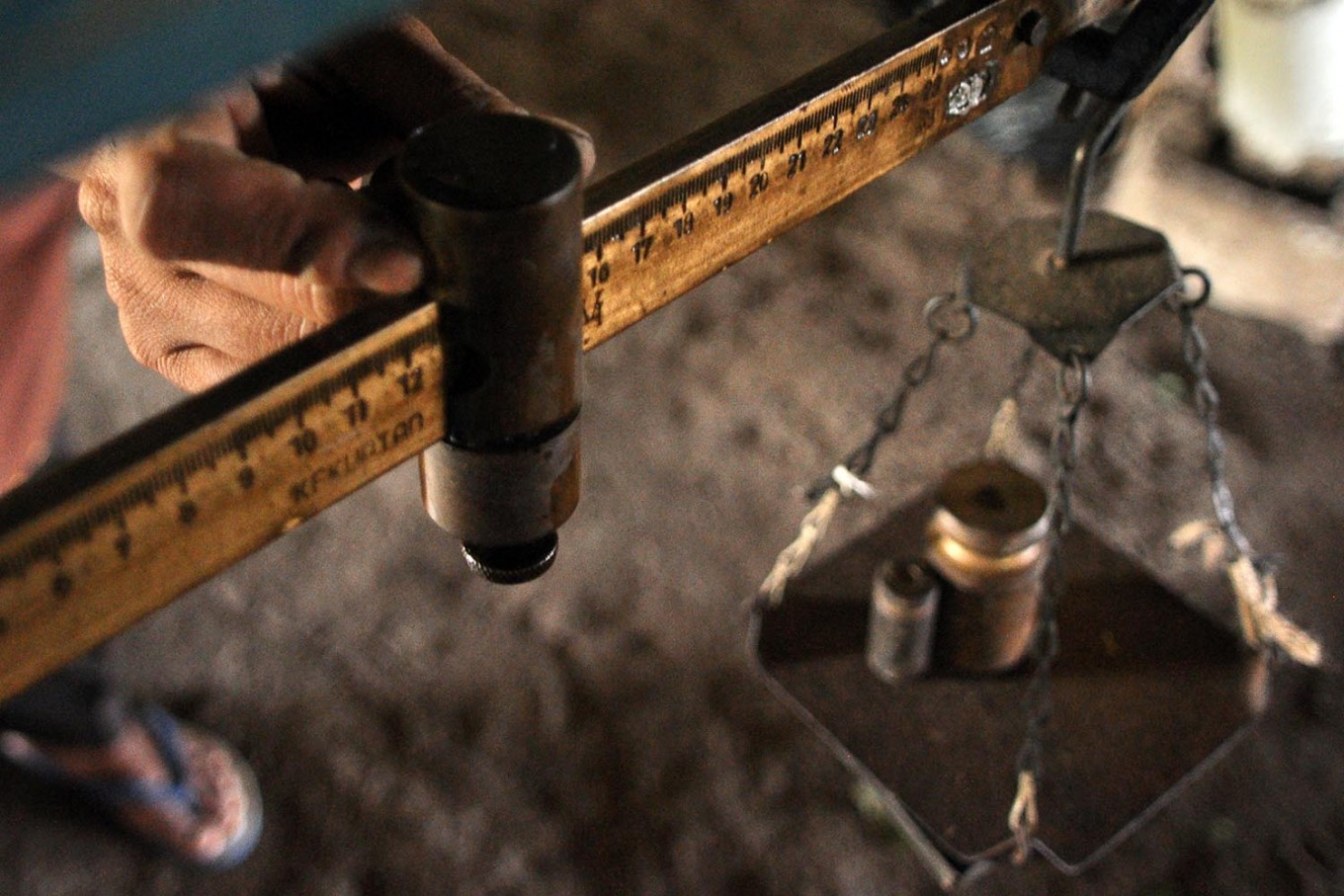
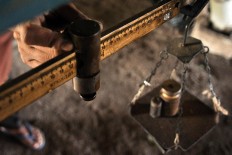
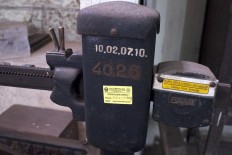
/A measuring tool from the Dutch era, owned by PD Taru Martani, still functions well. JP/Magnus Hendratmo
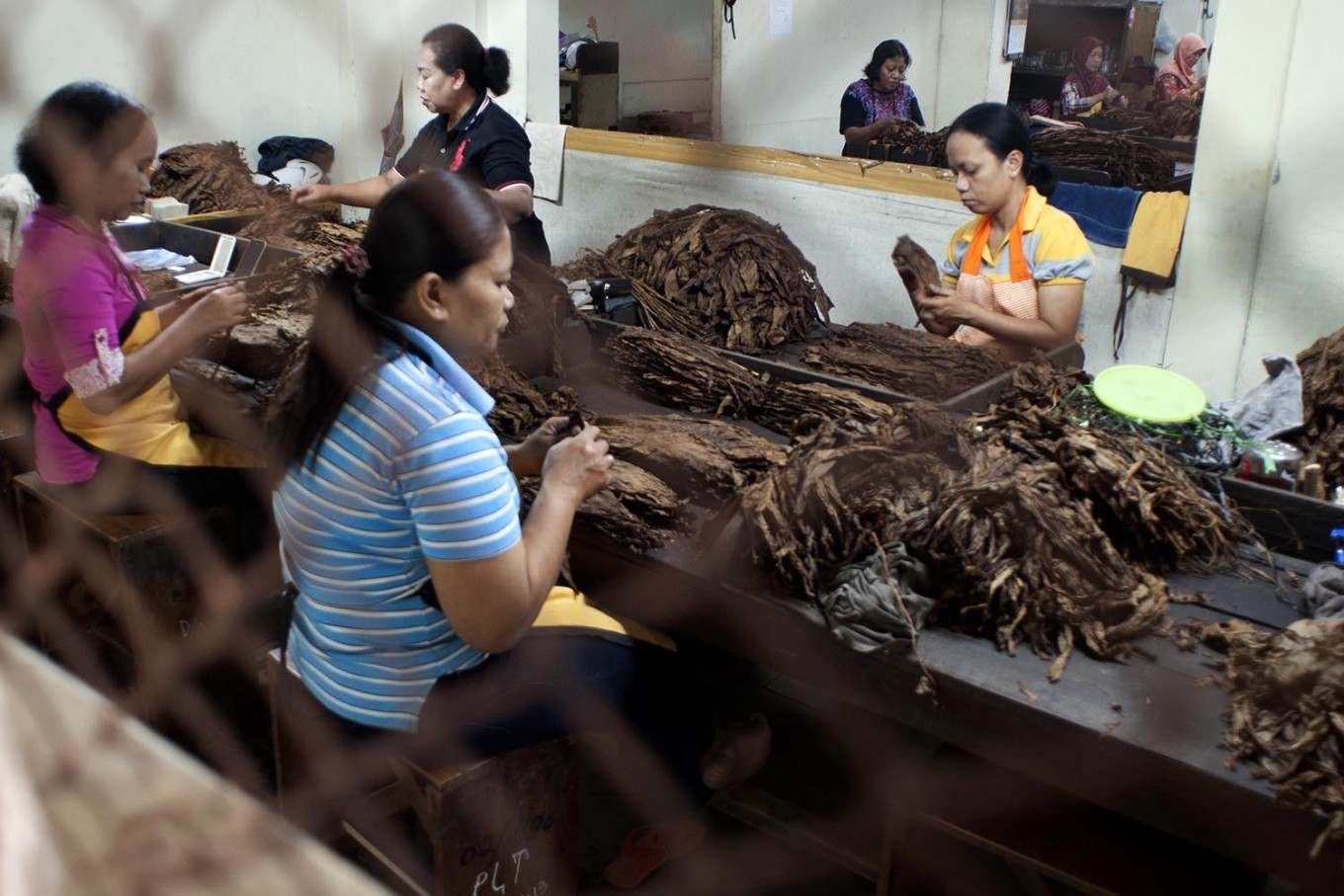
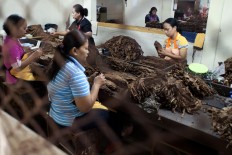
/Female workers sort dried Vorstenlanden tobacco leaves before going to the cutting machine. JP/Magnus Hendratmo
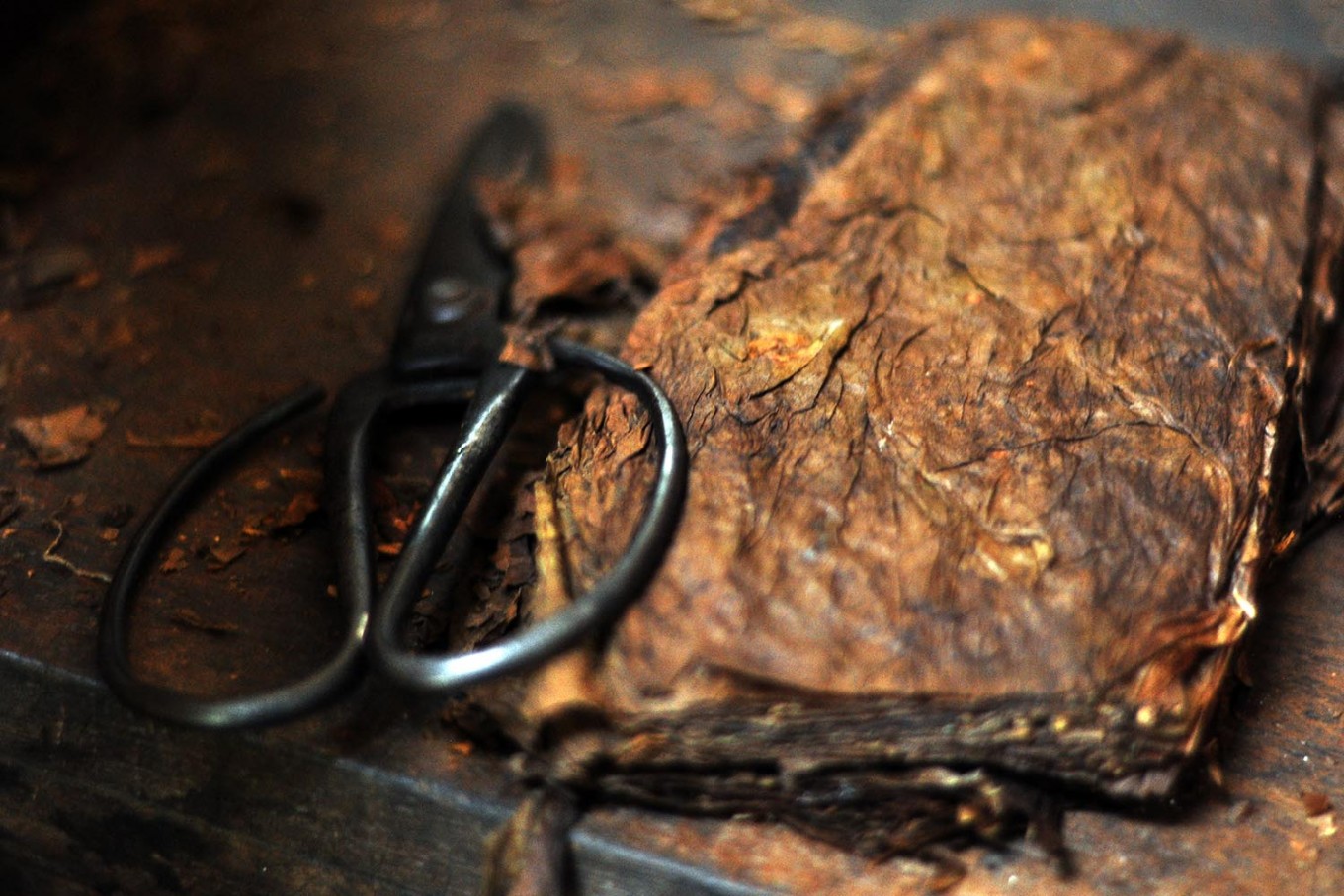
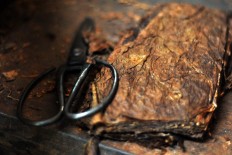
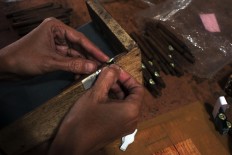
/A pair of scissors from the Dutch colonial era is still used. JP/Magnus Hendratmo
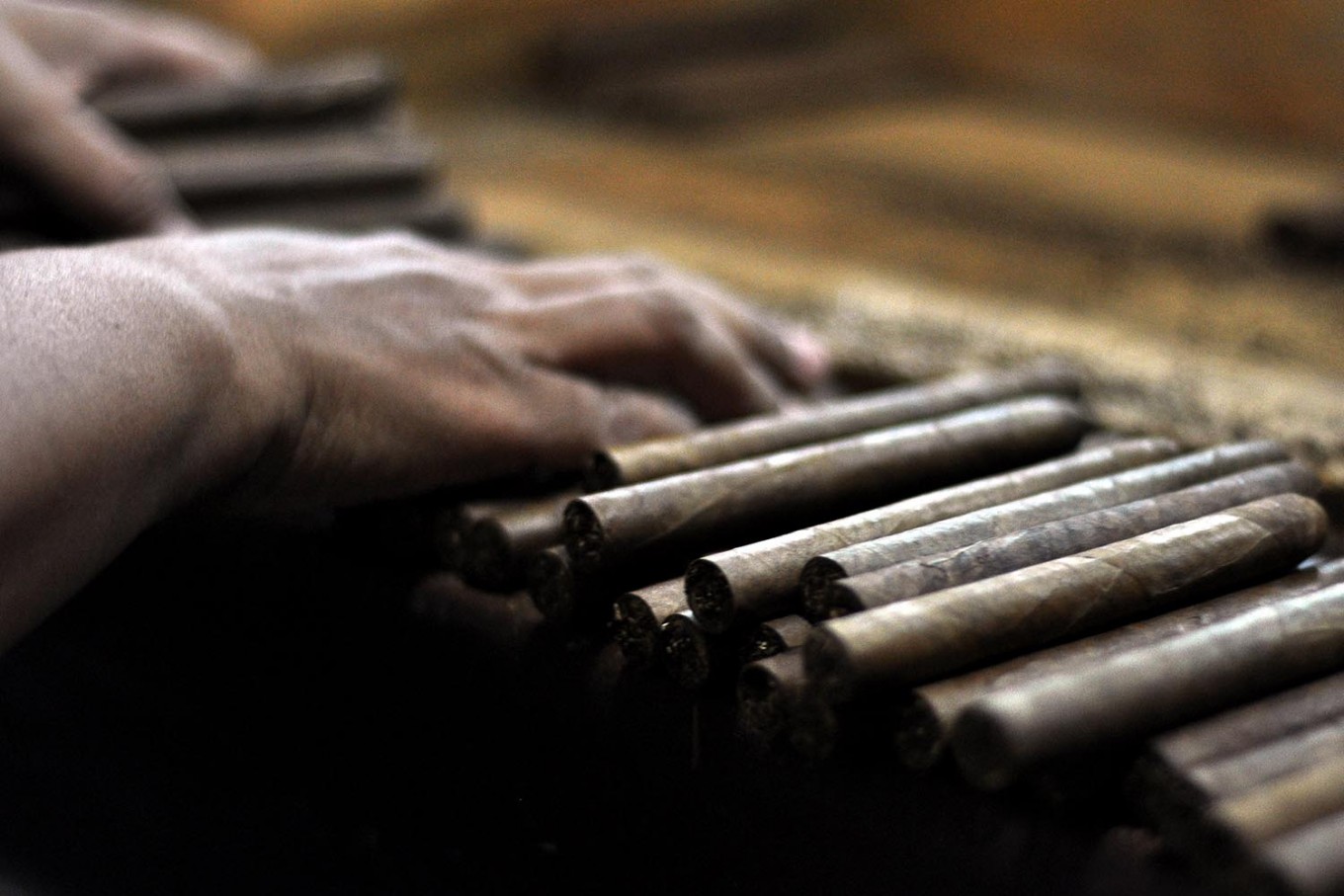
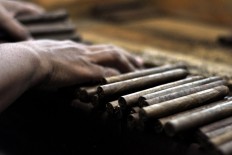
/The already processed cigars are ready for packing. JP/Magnus Hendratmo
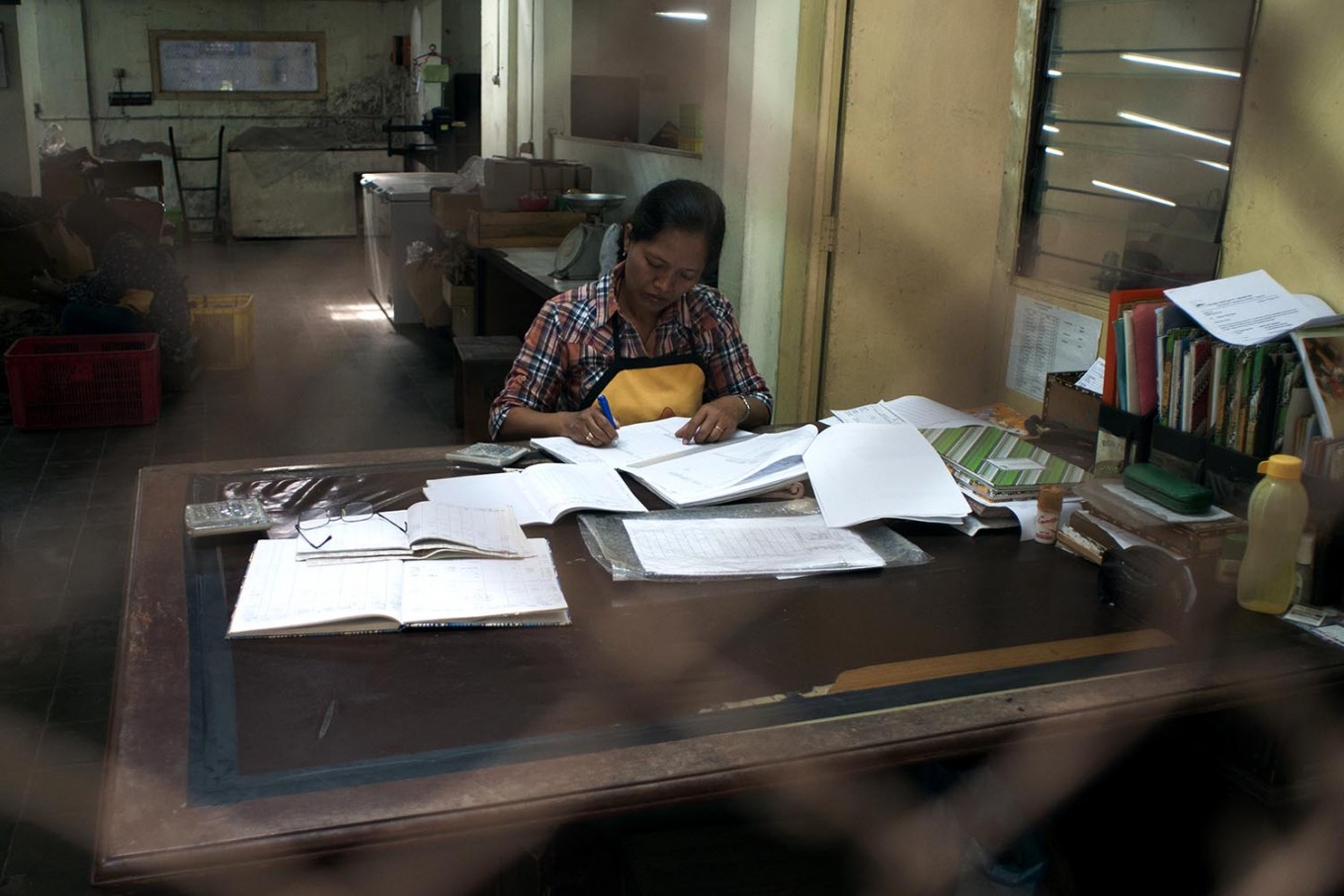
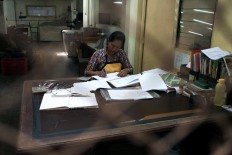
/A clerk maintains records for PD Taru Martani. JP/Magnus Hendratmo
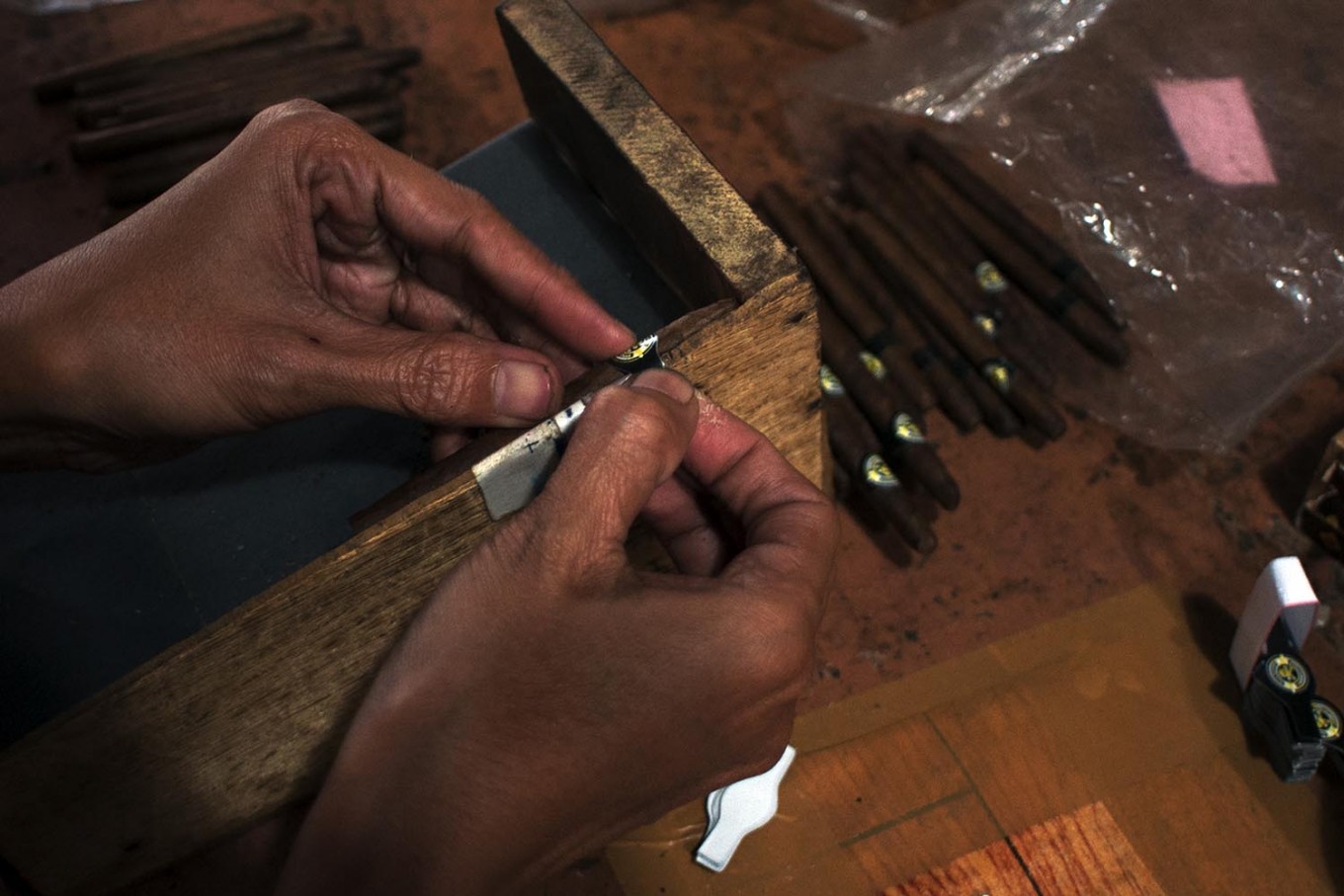
/A trademark is put on every cigar produced by PD Taru Martani. JP/Magnus Hendratmo
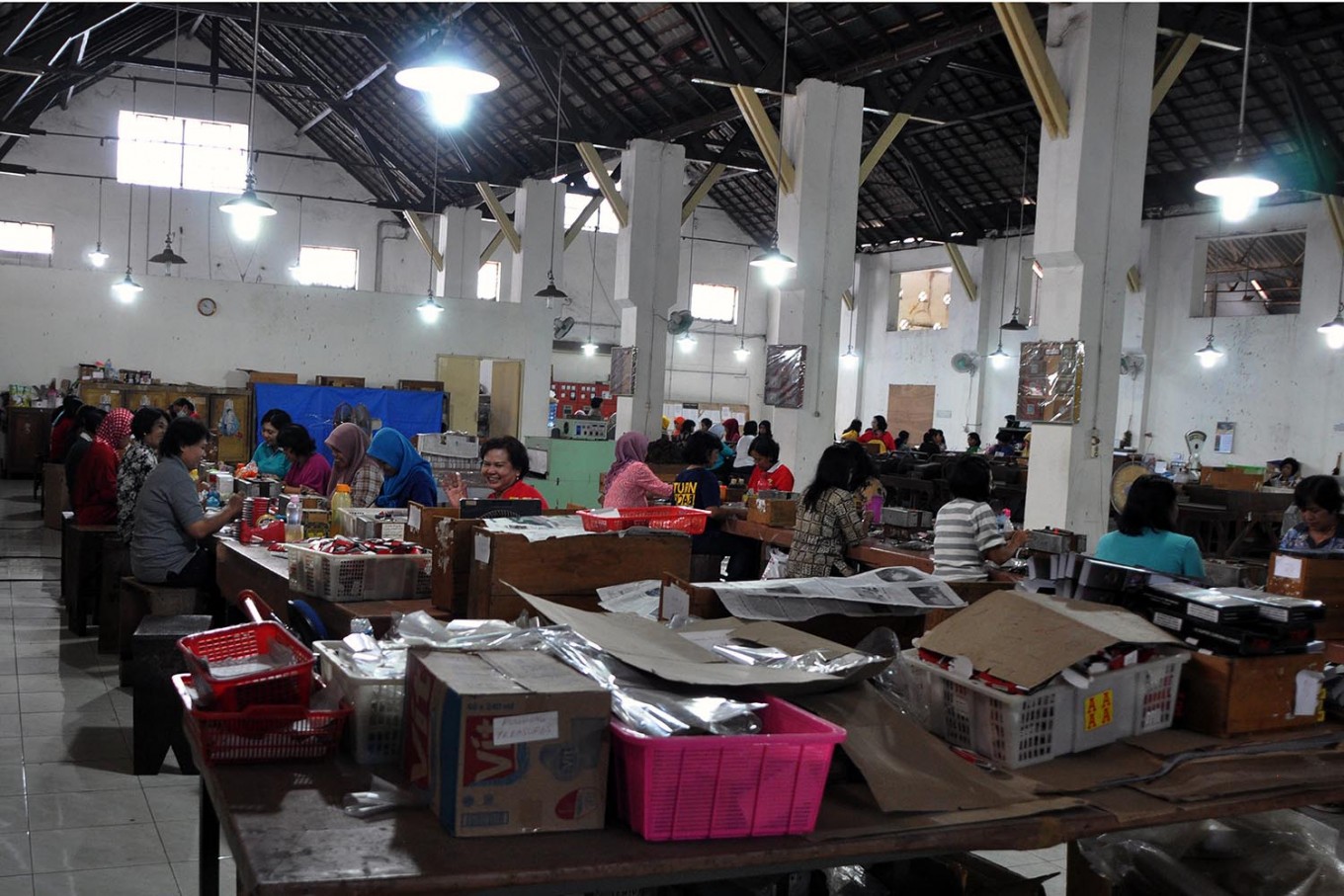
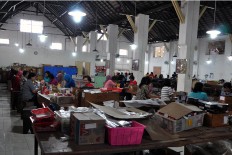
/Workers, mostly female, are busy producing cigars at PD Taru Martani in Yogyakarta. JP/Magnus Hendratmo
Magnus Hendratmo
Klaten regency in Central Java is rich in traces of Dutch colonial times, including in its public spaces. Old buildings are still standing along the Spoor Weg (or Jl. Station Klaten 151). There are also rows of buildings made of bamboo and sugarcane leaves. Locals call them “los” (wards), which means spacious in both Dutch and Javanese languages.
The “los” are 100-meter-long, 18-m-wide and 12-m-high and they are used to dry Vorstenlanden (princely land) tobacco leaves.
These tobacco leaves are planted between July and September and are harvested when they are 50-day old. The manual harvesting begins at 6 a.m. until 8 a.m. Fifty leaves are bunched and tied at time, referred to as dolok. A ward can accommodate 20,520 dolok.
After the leaves are completely dried, they are packed and sent to be processed into cigars.
Indonesia has been a cigar producer since the Dutch colonial era – apart from other cigar producer countries such as Cuba, Dominica, Honduras, Mexico, Nicaragua and the United States.
A Dutch businessman built a cigar factory in Yogyakarta under the name NV Negresco. After gaining independence, the company became a national
company called PD Taru Martani. It is still in operation and its cigars have been exported to Europe. [yan]
Swipe Left or Right

You might also like
© 2016 - 2026 PT. Bina Media Tenggara
Your Opinion Matters
Share your experiences, suggestions, and any issues you've encountered on The Jakarta Post. We're here to listen.
Enter at least 30 characters0 / 30Thank You
Thank you for sharing your thoughts. We appreciate your feedback.