The Jakarta Post
Please Update your browser
Your browser is out of date, and may not be compatible with our website. A list of the most popular web browsers can be found below.
Just click on the icons to get to the download page.


Popular Reads
Top Results
No results found. Please check your search term and try again
Can't find what you're looking for?
View all search results
Popular Reads
Top Results
No results found. Please check your search term and try again
Can't find what you're looking for?
View all search resultsForest fires drive Indonesia’s emissions to third-highest level since 2003
Cumulative emissions reached nearly 200 megatonnes of carbon by Nov. 15, slightly exceeding 2019 levels but remaining below those recorded in 2006 and the record-breaking 2015 fire season, according to the European Union’s Copernicus Atmosphere Monitoring Service (CAMS).
Change text size
Gift Premium Articles
to Anyone
Share the best of The Jakarta Post with friends, family, or colleagues. As a subscriber, you can gift 3 to 5 articles each month that anyone can read—no subscription needed!
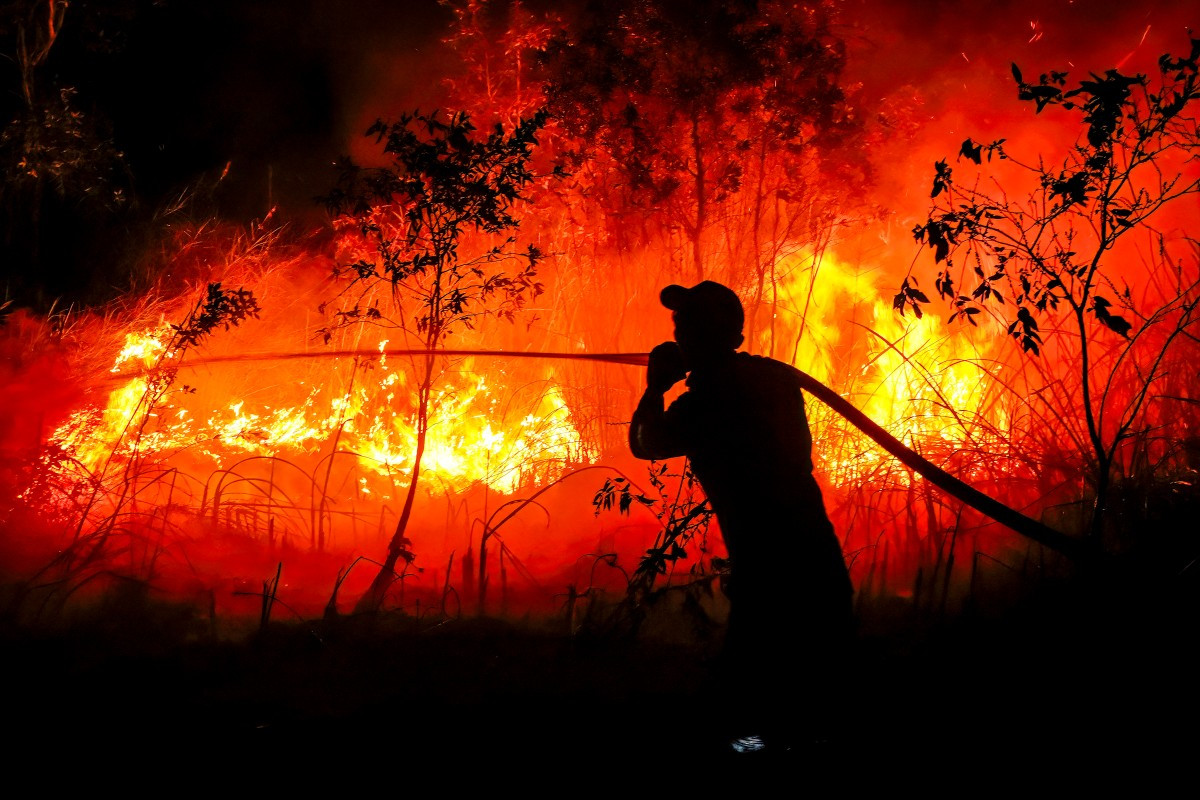 A firefighter from the Regional Disaster Management Agency douses a forest fire at Sungai Rambutan village in Ogan Ilir, South Sumatra on Sept. 11, 2026. Toxic haze has shrouded parts of Indonesia and Malaysia for weeks as Jakarta struggles to contain fires that have scorched large tracts of Borneo and Sumatra, with smoke drifting into neighboring Malaysia, Singapore and Brunei. (AFP/SIGIT PRASETYA)
C
arbon emissions from forest and land fires in Indonesia have approached 200 million tonnes this year, making 2026 the third-worst year for fire emissions since 2003, as prolonged dry conditions fuel blazes across the archipelago, according to the European Union’s Copernicus Atmosphere Monitoring Service (CAMS).
Cumulative emissions reached nearly 200 megatonnes of carbon by Nov. 15, slightly exceeding 2019 levels but remaining below those recorded in 2006 and the record-breaking 2015 fire season, CAMS said in a statement earlier this week.
“One thing that stands out this year is the persistence of the fires and the substantial differences between provinces,” said Mark Parrington, a senior scientist at CAMS.
“Our forecasts have highlighted the severe and prolonged air quality and health impacts of the haze and regional smoke transport across Indonesia and the wider Maritime Continent,” he added.
The fires, which began intensifying in late July and driven by excessively dry super-El Niño, have primarily affected Kalimantan, Sumatra and Papua, with smoke spreading to neighboring Singapore and Malaysia.
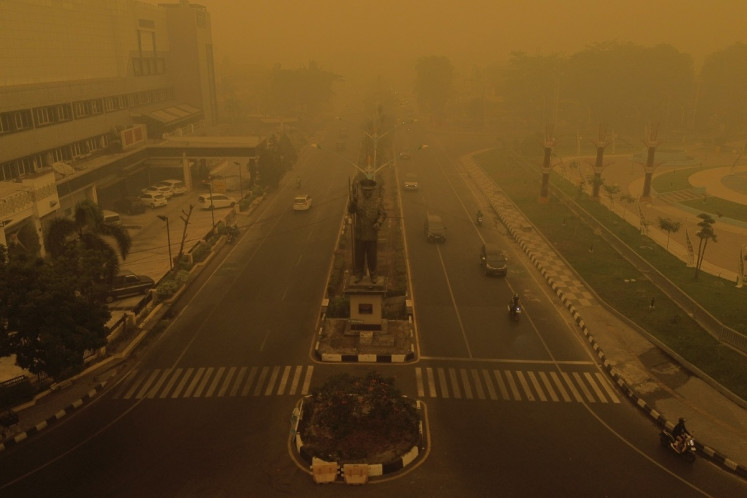

Central Kalimantan and Papua recorded emissions tracking close to their 2015 levels by the end of October, while West Kalimantan recorded its highest cumulative emissions for the period in the CAMS dataset.