The Jakarta Post
Please Update your browser
Your browser is out of date, and may not be compatible with our website. A list of the most popular web browsers can be found below.
Just click on the icons to get to the download page.


Popular Reads
Top Results
No results found. Please check your search term and try again
Can't find what you're looking for?
View all search results
Popular Reads
Top Results
No results found. Please check your search term and try again
Can't find what you're looking for?
View all search resultsIndonesia defends climate goals as fire emissions soar
Change text size
Gift Premium Articles
to Anyone
Share the best of The Jakarta Post with friends, family, or colleagues. As a subscriber, you can gift 3 to 5 articles each month that anyone can read—no subscription needed!
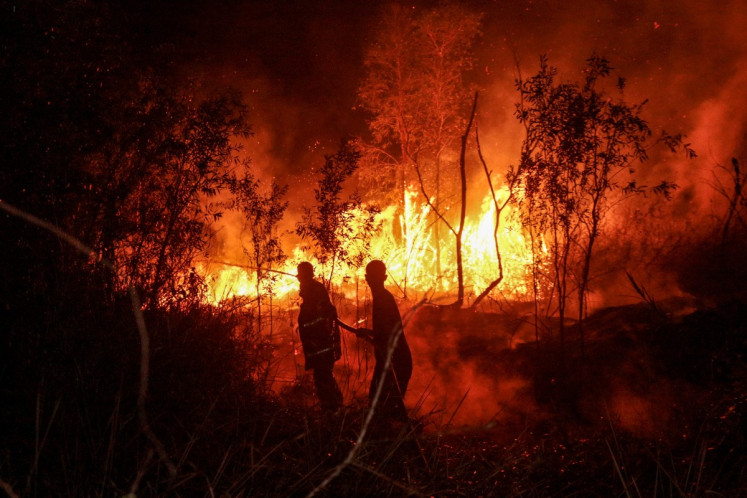
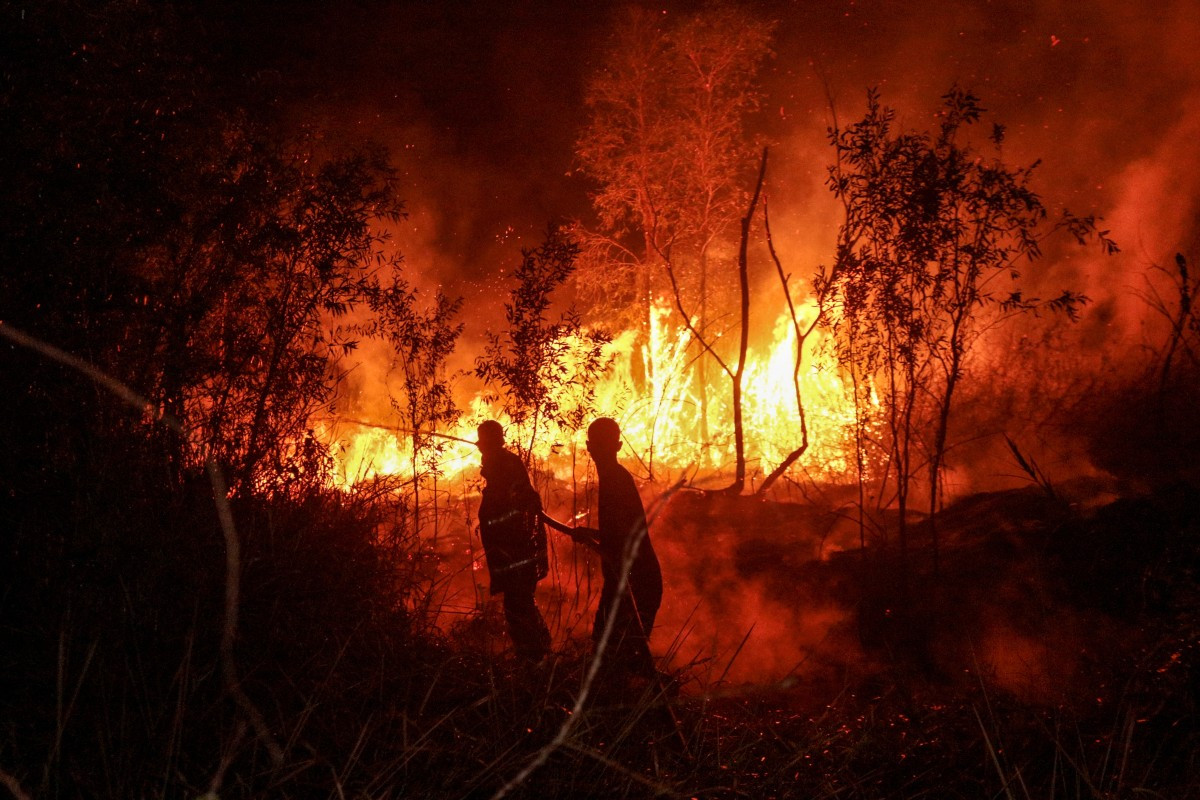 Firefighters work on cointaining a wildfire in Banjarbaru, South Kalimantan, on October 13, 2026. Toxic haze has shrouded parts of Indonesia, Malaysia and Singapore for weeks as Jakarta struggles to contain fires that have scorched large tracts of Borneo and Sumatra, with the smoke drifting across the region. (AFP/Muda Sagala)
I
ndonesia has defended its climate commitments ahead of the United Nations climate talks, as record-breaking emissions from wildfires at home threaten one of the main pillars of its climate strategy and fuel doubts over its ability to help curb global warming.
Less than a week before the 31st UN Climate Change Conference (COP31) opens in Turkey, Environment Minister Jumhur Hidayat outlined six priority areas for Indonesia’s negotiations, including accelerating the energy transition and securing greater climate financing.
But he stressed that the country's climate ambitions should not come at the expense of its development agenda.
“Our priorities are energy affordability, workers’ welfare and protection of local communities. We also oppose unilateral measures that disadvantage developing countries,” Jumhur told a press conference on Wednesday.
The summit will seek to accelerate the 2015 Paris Agreement, which aims to limit global warming to 1.5 degrees Celsius. However, a UN climate report issued on Oct. 21 warned the threshold would likely be breached in coming years, urging countries to limit the duration and scale of the overshoot.
As mandated by the 2015 agreement, Indonesia has submitted the second edition of its climate pledge, known as the Nationally Determined Contributions (NDCs), outlining pathways to reduce greenhouse gas emissions by 2060.

A key component of the country's climate strategy is reducing emissions from the forestry and other land-use (FOLU) sector, including by preventing forest and peatland fires. The government aims to turn the sector into a net carbon sink by 2030, meaning it absorbs more greenhouse gases than it releases.