The Jakarta Post
Please Update your browser
Your browser is out of date, and may not be compatible with our website. A list of the most popular web browsers can be found below.
Just click on the icons to get to the download page.


Popular Reads
Top Results
No results found. Please check your search term and try again
Can't find what you're looking for?
View all search results
Popular Reads
Top Results
No results found. Please check your search term and try again
Can't find what you're looking for?
View all search resultsForest loss, wildfires put orangutans at high extinction risk
Tapanuli orangutans in North Sumatra face increasing threats as their habitat gets fragmented by forest-encroaching business activities, while Bornean orangutans in Kalimantan are choked by haze-causing forest and peatland fires.
Change text size
Gift Premium Articles
to Anyone
Share the best of The Jakarta Post with friends, family, or colleagues. As a subscriber, you can gift 3 to 5 articles each month that anyone can read—no subscription needed!
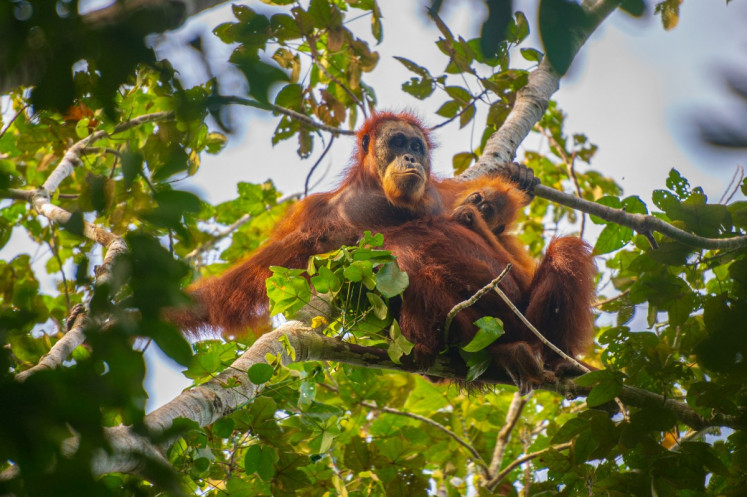
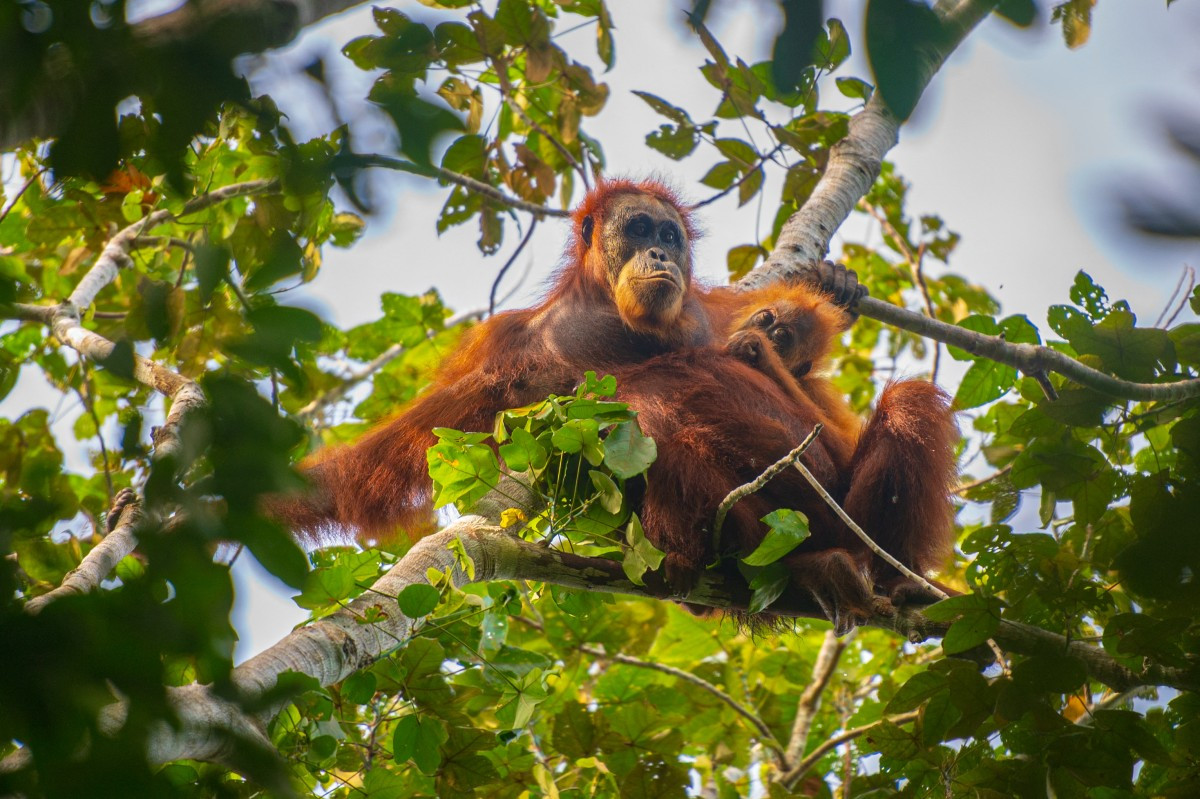 This undated handout photograph taken by the Orangutan Information Centre and released on June 10 shows Tapanuli orangutans over a tree in the Batang Toru forest in North Sumatra. Climate change-fueled landslides wiped out nearly one in 10 remaining members of the world's rarest great ape species in Sumatra, scientists said on June 10. (AFP/Handout/Orangutan Information Centre )
O
rangutan populations are at a higher risk of extinction amid soaring forest loss and raging wildfires across key habitats in Sumatra and Kalimantan, as the world struggles to keep up with the global target of halting biodiversity loss by 2030.
In a joint report published on Oct. 24, environmental groups Mighty Earth and Satya Bumi issued a “red code” warning for the Tapanuli orangutan, often considered world’s rarest great ape, which is facing a higher extinction risk.
The species is endemic to the fragmented forests of the Batang Toru ecosystem in South Tapanuli regency, North Sumatra. But the ape faced another danger when at least 58 individuals inside the ecosystem were killed by the cyclone-induced floods and landslides in the region in 2025, leaving only an estimated 658 Tapanuli orangutans remaining in the wild.
In their report, the environmental groups noted the disaster had damaged more than 8,300 hectares of forest in the western Batang Toru ecosystem, the largest of the three forest blocks inhabited by the orangutans.
Enforcing a moratorium on industrial expansion, smallholder agriculture and small-scale logging, which are among the main drivers of rainforest destruction in orangutan habitat, remains vital, according to Phil Aikman, Southeast Asia campaign director of Mighty Earth.
Limiting the business may pave the way for a recovery plan for the species, which includes restoration of the fragmented rainforest canopy across the ecosystem.

“There is now far too little Tapanuli orangutan habitat left to allow any further rainforest loss,” Aikman told The Jakarta Post on Sunday.