The Jakarta Post
Please Update your browser
Your browser is out of date, and may not be compatible with our website. A list of the most popular web browsers can be found below.
Just click on the icons to get to the download page.


Popular Reads
Top Results
No results found. Please check your search term and try again
Can't find what you're looking for?
View all search results
Popular Reads
Top Results
No results found. Please check your search term and try again
Can't find what you're looking for?
View all search resultsProposal to narrow definition of corruption draws flak
A proposal to narrow the legal definition of corruption has prompted concerns of weakening anticorruption campaigns.
Change text size
Gift Premium Articles
to Anyone
Share the best of The Jakarta Post with friends, family, or colleagues. As a subscriber, you can gift 3 to 5 articles each month that anyone can read—no subscription needed!
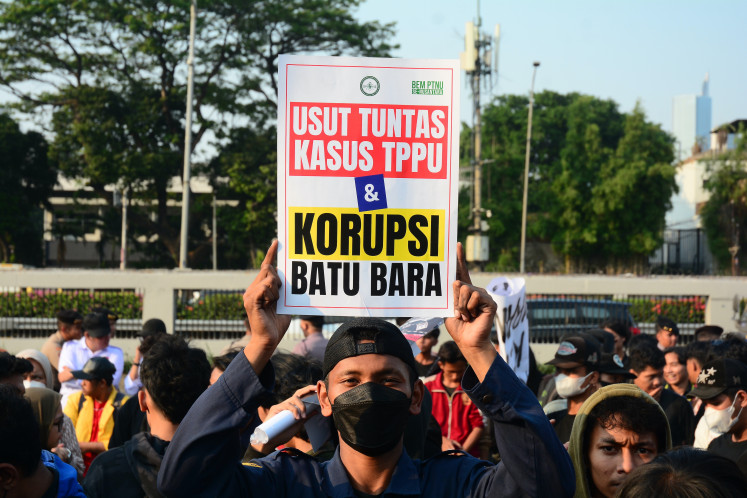
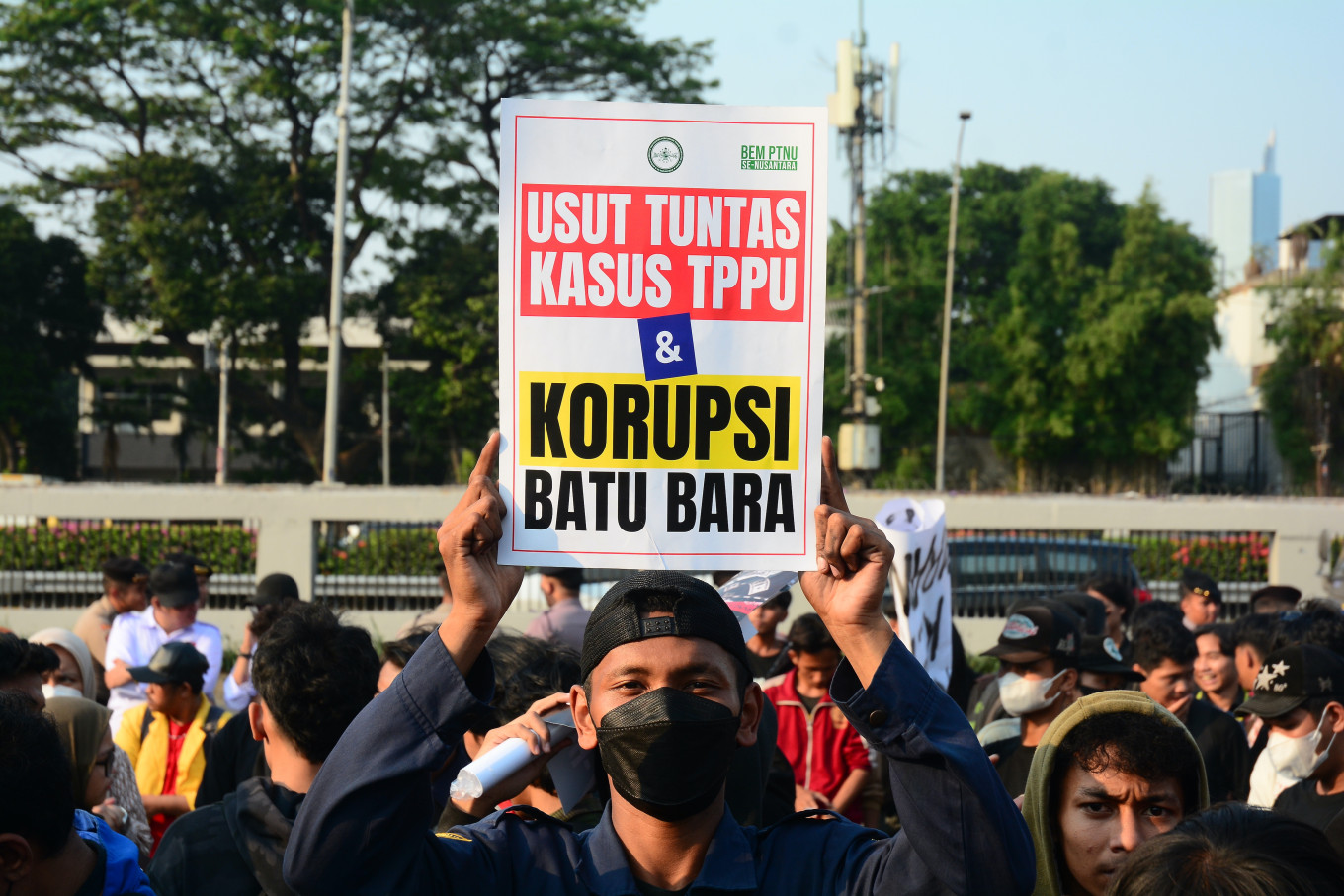 A protester from a coalition of university students holds a banner reading, “Fully Investigate Money Laundering and Coal Corruption,“ during a demonstration on July 10 outside the House of Representatives complex in Jakarta. The protesters called for curbing corruption in the coal industry. (JP/Iqro Rinaldi)
A
proposal to narrow the definition of corruption to give state asset fund Danantara more room to take business risks has drawn criticism from experts and activists, who said it may weaken the anticorruption fight without addressing deeper problems hindering the performance of state-owned enterprises.
National Economic Council (DEN) chairman Luhut Binsar Pandjaitan announced last Tuesday that the council has proposed to President Prabowo Subianto the idea of decriminalizing financial losses to the state.
Illicit enrichment that causes state losses is a corruption offense under the prevailing anticorruption law, along with bribery, embezzlement of public funds, illegal kickbacks and unlawful gratuity.

The proposal draws on the United Nations Convention Against Corruption (UNCAC), which Luhut said did not require proof of state financial losses as evidence of corruption, unlike Indonesian law enforcement which has placed significant emphasis on such losses in corruption cases.
“[The state losses concept] is burdensome for entities such as Danantara when conducting business because every business activity inevitably carries risks,” Luhut said, stressing that the change would provide legal certainty to attract investment.
The proposal quickly drew rebuke from the Corruption Eradication Commission (KPK). Its chairman Setyo Budiyanto said last Wednesday that the provisions on state losses should be retained, arguing that it remained “absolutely necessary in Indonesia to address increasingly complex and sophisticated methods of corruption”.

Some politicians from across the political spectrum, including those of pro-government Nasdem Party, Prosperous Justice Party (PKS) and National Awakening Party (PKB), as well as a politician from quasi-opposition Indonesian Democratic Party of Struggle (PDI-P), have also opposed the proposal.