The Jakarta Post
Please Update your browser
Your browser is out of date, and may not be compatible with our website. A list of the most popular web browsers can be found below.
Just click on the icons to get to the download page.


Popular Reads
Top Results
No results found. Please check your search term and try again
Can't find what you're looking for?
View all search results
Popular Reads
Top Results
No results found. Please check your search term and try again
Can't find what you're looking for?
View all search resultsWomen fight fires, sexism in Kalimantan
Change text size
Gift Premium Articles
to Anyone
Share the best of The Jakarta Post with friends, family, or colleagues. As a subscriber, you can gift 3 to 5 articles each month that anyone can read—no subscription needed!
 Set as preferred source
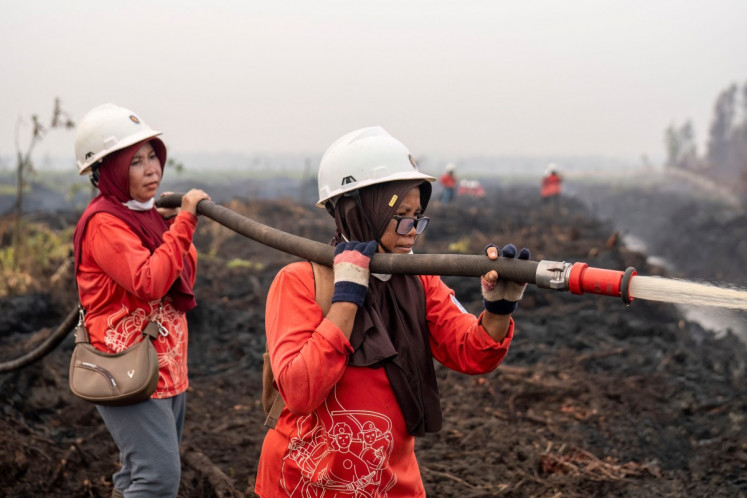
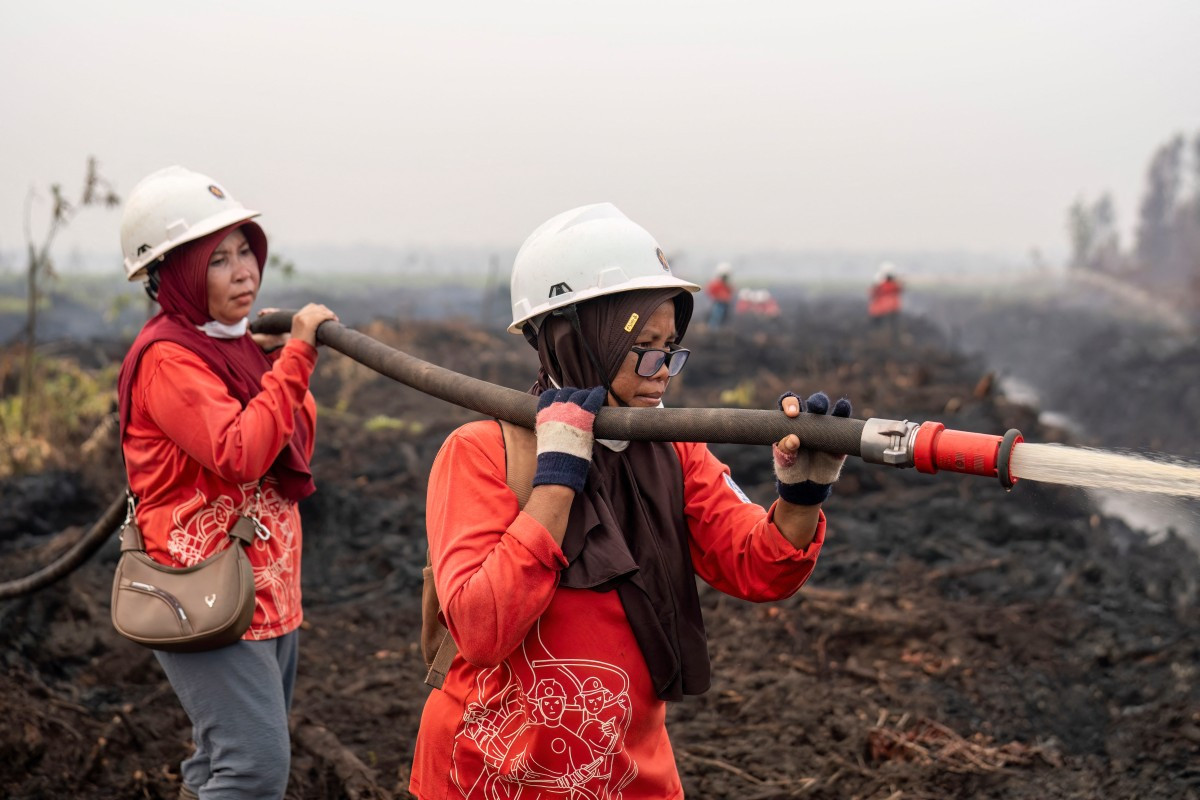 Members of the all-women The Power of Mama (TPoM) volunteer firefighting team spray water onto smoldering peatland in Mensubuk Lama, Tanjungpura Village, Ketapang regency, West Kalimantan on September 26, 2026. Indonesia has been battling fires for weeks in parts of Borneo and Sumatra, sending suffocating haze across the islands and neighboring Malaysia and Singapore. (AFP/Heribertus)
H
ousework in the morning followed by several hours of firefighting: women in West Kalimantan risk life and limb to battle blazes making their communities sick, all while shouldering a sexist backlash.
More than 100 women, many of them homemakers, are volunteer members of an initiative dubbed "Power of Mama", patrolling daily for smoke and flames and jumping in to put out fires when needed.
Formed in 2022, the "Mamas", as they call themselves, are spread over a dozen villages in the Ketapang regency of rural West Kalimantan.
It is a region where traditional gender roles define women as the main providers of childcare, cooking and cleaning, and where firefighting is a male domain.
"There have been sarcastic remarks," homemaker and mother Ramilah, 46, told AFP in Tanjungpura village after helping battle a nearby peatland fire with more than a dozen other women.
"We have explained that our intention is good, to help [...] and Alhamdulillah [praise be to God], the community has begun to accept it," said Ramilah.

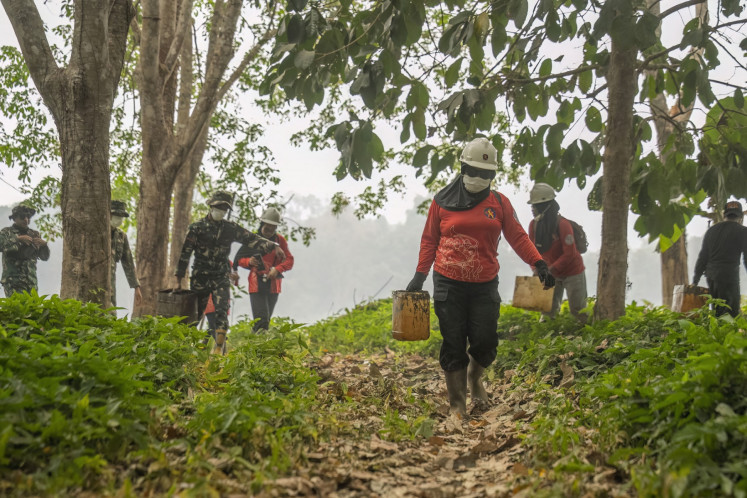
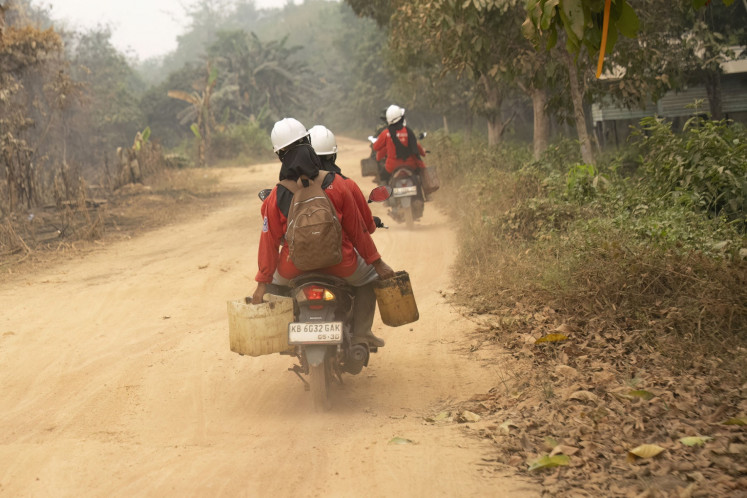
The women set out on a smoke-saturated September Saturday – some on motorbikes, others piled onto the back of a pickup truck with a water pump and some buckets.
They wore orange jump suits and rubber boots for protection, most sporting hijabs under their hard hats.
Surgical masks were their only shield against the toxic smoke in which they battled for hours.
Peatland fires are common in Kalimantan and can smolder and spread under the soil for weeks or months, emitting huge quantities of smoke and sometimes causing surface blazes.
'Protect our forest'
Ramilah said she joined the initiative "to protect our forest" and counter the toxic haze emitted by the fires that has "had a big impact – especially for my child, who now can't go to school".
It makes for much longer days.
Ramilah starts at the crack of dawn with housework, taking care of the cows and feeding the family's stock of tilapia fish.
Fire patrols and operations are from about 10 a.m. to 1 p.m., "then working at home again until night", she said.
The Power of Mama, with backing from YIARI wildlife rehabilitation foundation, was inspired by the hardships experienced in 2019, when wildfires ravaged Kalimantan during another tough episode of the El Nino weather phenomenon that typically brings severe drought to Indonesia.
Wildfires in Indonesia are blamed in large part on slash-and-burn land-clearing practices that result in the destruction of fire-resistant forest cover and the draining of peatlands.
Nearly 900,000 hectares of land have burnt in Indonesia so far this year, according to the Nusantara Atlas fire monitor – more than five times the size of Greater London.
Government figures put the razed area at just over 202,000 hectares between January and July.
The resulting haze has spread to neighboring countries, closed thousands of schools, caused tens of thousands of respiratory infections and imperiled countless wild animals.
'Women are not suited'
Power of Mama coordinator Mita Anggraeni told AFP sexism had been a challenge.
"Some people still think that women are not suited [...] to handle fires" despite often being at the forefront when they strike.
"When the men work far away, the women who stay in the village have to go out themselves to put out the fire," Mita said.
Melyanti, a 25-year-old carer for the elderly and part-time firefighter, told AFP there were some in the community "who don't like our fire prevention activities".
"If anyone asks for help, as long as our group is able to help, we will," she said.
But when the land of a vocal detractor recently caught fire, "We didn't respond. We couldn't help because he had belittled us for two months".
Homemaker and mother Mutia Mulansari, 30, said she had heard people say the women were "just riding motorbikes back and forth, back and forth [...] we’re just playing around".
But attitudes have begun changing as the volunteers "proved that we are capable", she said.
Her husband Roni Irawan, 35, said he supported Mutia's firefighting endeavors, especially since she showed she was "still able to manage the housework".
"It turns out that mothers can do more than work in the home," Mutia said.


Your Opinion Matters
Share your experiences, suggestions, and any issues you've encountered on The Jakarta Post. We're here to listen.
Enter at least 30 characters
0
/ 30
Thank you
Thank you for sharing your thoughts. We appreciate your feedback.


