The Jakarta Post
Please Update your browser
Your browser is out of date, and may not be compatible with our website. A list of the most popular web browsers can be found below.
Just click on the icons to get to the download page.


Popular Reads
Top Results
No results found. Please check your search term and try again
Can't find what you're looking for?
View all search results
Popular Reads
Top Results
No results found. Please check your search term and try again
Can't find what you're looking for?
View all search resultsToo hot for Jakarta kids to play outside
In Jakarta, children pay the price as outdoor playgrounds become dangerously hot during the day due to the lack of cover from heat. Experts urge rethinking of design and materials to keep youngsters safe.
Change text size
Gift Premium Articles
to Anyone
Share the best of The Jakarta Post with friends, family, or colleagues. As a subscriber, you can gift 3 to 5 articles each month that anyone can read—no subscription needed!
 Set as preferred source
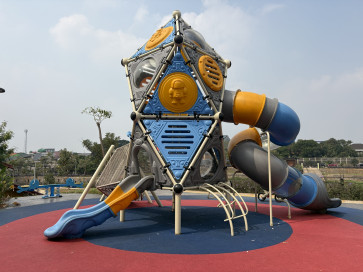
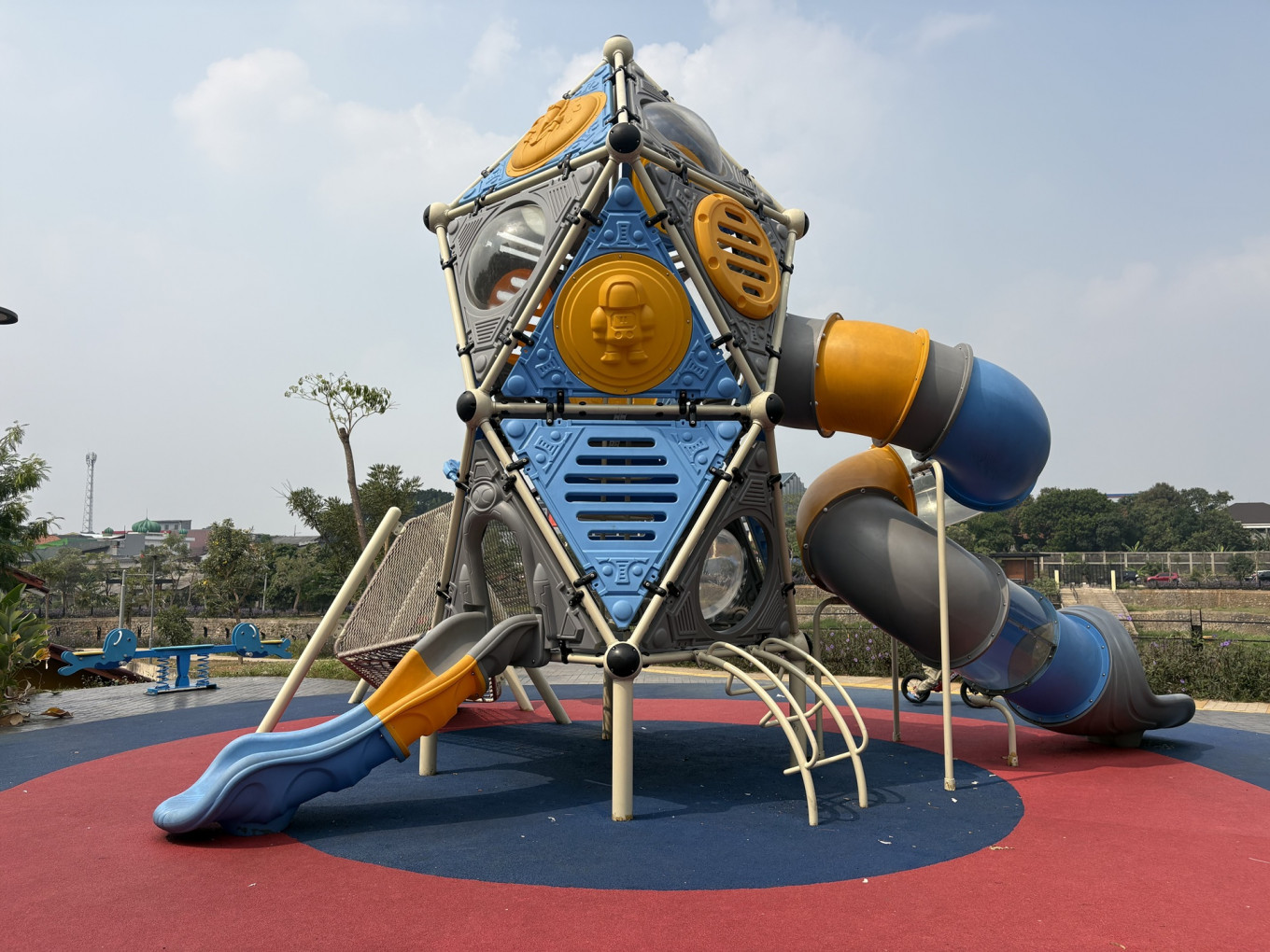 Feeling the heat: The main play structure at Embung Jagakarsa open green space in Jagakarsa, South Jakarta stands tall under direct sunlight with no shade above and around it, as seen on Aug. 10, 2026. (JP/Miriam Bahagijo)
I
t was still 10 a.m. at Embung Jagakarsa open green space in Jagakarsa district, South Jakarta, but the temperature had already reached 30 degrees Celsius. The yellow-and-blue play structure stood tall in the middle of the playground under the sweltering sun, making the structure’s surface too hot to touch.
On the morning of Aug. 10, a little girl took off her shoes before entering the playground in the area, but put them on again less than a minute later while muttering, “Hot! Hot! Hot!” A mother half-shouted to her toddler who was riding a two-wheeled bicycle, reminding him to put on his hat as the sunlight was intense.
Many outdoor playgrounds in Jakarta, like Embung Jagakarsa, offer little to no shade, putting children at risk of losing their rights to play safely in outdoor spaces, as the climate crisis brings more hotter days to come.
According to the World Bank, Indonesia’s average temperature in the past 50 years has increased by 0.28 degrees per decade due to the climate crisis. The average high temperature in Jakarta felt throughout July, with daily highs averaging around 32 degrees, is three to five times more likely due to climate change, as suggested by Climate Central’s Climate Shift Index.
By 2050, the World Bank suggested that the city will be among regions projected to experience 300 hot days or more, or days when maximum temperature exceeds 30 degrees.
Even for tropical countries like Indonesia, where the people are relatively used to hot weather, climate change could make hotter-than-normal temperature more frequent and dangerous.

“The combination of high temperature and humidity makes it harder for the body to dissipate heat and increases the risk of heat stress, especially when heat waves last longer or occur more frequently,” said Retno Wihanesta, urban resilience and knowledge management manager at WRI Indonesia.