The Jakarta Post
Please Update your browser
Your browser is out of date, and may not be compatible with our website. A list of the most popular web browsers can be found below.
Just click on the icons to get to the download page.


Popular Reads
Top Results
No results found. Please check your search term and try again
Can't find what you're looking for?
View all search results
Popular Reads
Top Results
No results found. Please check your search term and try again
Can't find what you're looking for?
View all search resultsBREAKING: Court orders free meals financing removed from education budget
The court held that the program does not qualify as an educational expense, and that using education budget funds violates the Constitution, which mandates that at least 20 percent of the national budget be allocated to education.
Change text size
Gift Premium Articles
to Anyone
Share the best of The Jakarta Post with friends, family, or colleagues. As a subscriber, you can gift 3 to 5 articles each month that anyone can read—no subscription needed!
 Set as preferred source
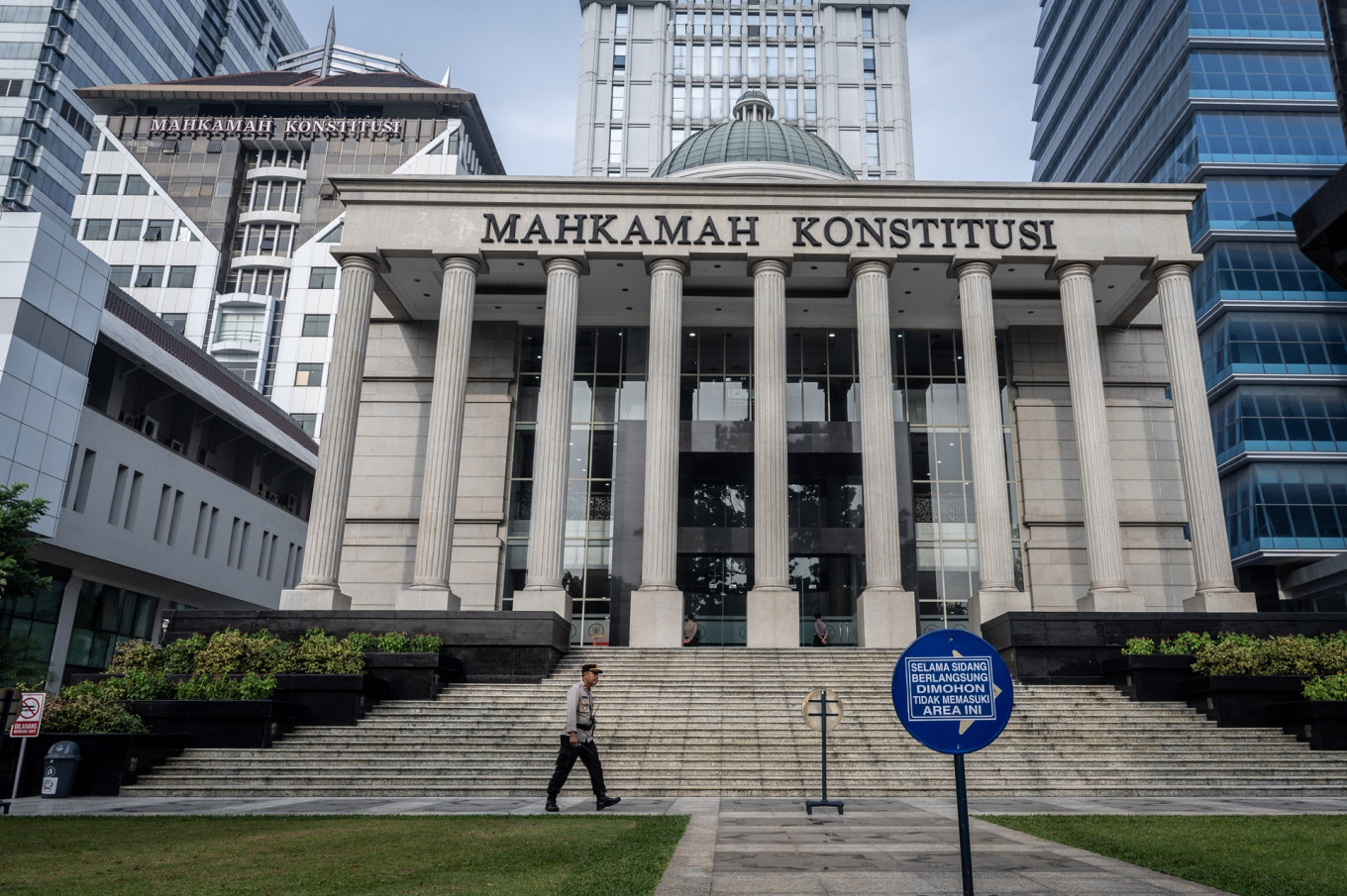 A police officer patrols the grounds of the Constitutional Court in Central Jakarta on Feb. 4, 2025. (Antara/Bayu Pratama S.)
T
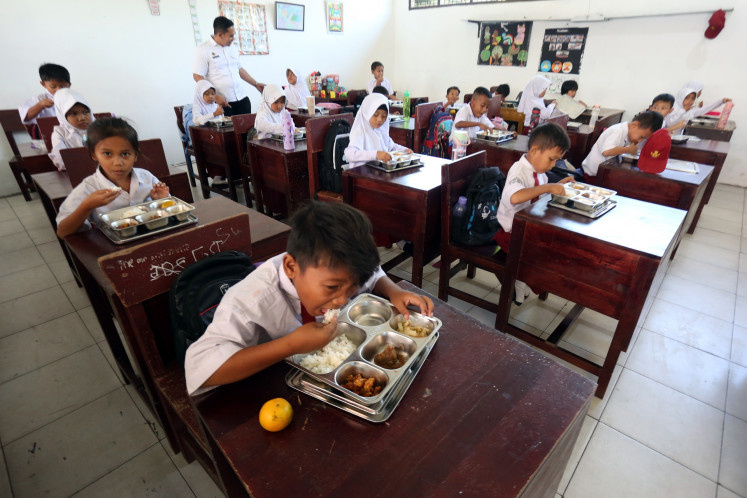
he Constitutional Court ruled on Thursday that the government should no longer source funding for President Prabowo Subianto’s costly free nutritious meal program from the education budget.
During a hearing on Thursday, the nine-justice panel granted a petition submitted by education nonprofit Yayasan Taman Belajar Nusantara, a university lecturer and a contract teacher.
The court held that the program does not qualify as an educational expense, and that using education budget funds violates the Constitution, which mandates that at least 20 percent of the national budget be allocated to education.
The justices said the removal of the free meals financing from the education budget was effective starting 2028, although it also suggested that the government adjust its spending for next year in line with the ruling.
“If the government can adjust the 2027 state budget structure that has been deliberated since early 2026 to meet the ruling, it would be better if the budget for the free meals program was separated from the education budget in the 2027 budget,” Justice Enny Nurbaningsih said, in reading the ruling.
Of the total Rp 3.8 quadrillion (US$226 billion) allocation for this year’s state budget, the free meals program initially received Rp 335 billion, up significantly from Rp 71 trillion last year.

Some Rp 223 trillion for the program accounts for one-third of the Rp 769 trillion earmarked for education, which stands at 20 percent of this year’s state budget as mandated by the 1945 Constitution.
After several budget-saving measures and operational setbacks due to a corruption scandal involving the National Nutrition Agency (BGN) and public pressure, the free meals budget has been cut to some Rp 229 trillion.
The program has faced mounting scrutiny since its rollout in early 2025 over its huge budget, which has placed additional strain on government finances, and incidents of mass food poisoning. It has also been marred by governance problems, culminating in the arrest of former BGN head Dadan Hindayana and two of his deputies in a corruption investigation linked to the multitrillion-rupiah program.
The level of public satisfaction with the costly program fell by 30 percentage points to 33.8 percent this month, from 62.5 percent in November 2025, according to the latest survey from pollster Saiful Mujani Research and Consulting (SMRC). (kuk/ipa)