TheJakartaPost
Please Update your browser
Your browser is out of date, and may not be compatible with our website. A list of the most popular web browsers can be found below.
Just click on the icons to get to the download page.


Popular Reads
Top Results
No results found. Please check your search term and try again
Can't find what you're looking for?
View all search results
Popular Reads
Top Results
No results found. Please check your search term and try again
Can't find what you're looking for?
View all search resultsLiving near geothermal sites: Women bear the greatest impact
A year-long Magdalene investigation across three geothermal regions in Indonesia found that environmental changes, health concerns and declining livelihoods have placed the heaviest burden on women.
Change text size
Gift Premium Articles
to Anyone
Share the best of The Jakarta Post with friends, family, or colleagues. As a subscriber, you can gift 3 to 5 articles each month that anyone can read—no subscription needed!
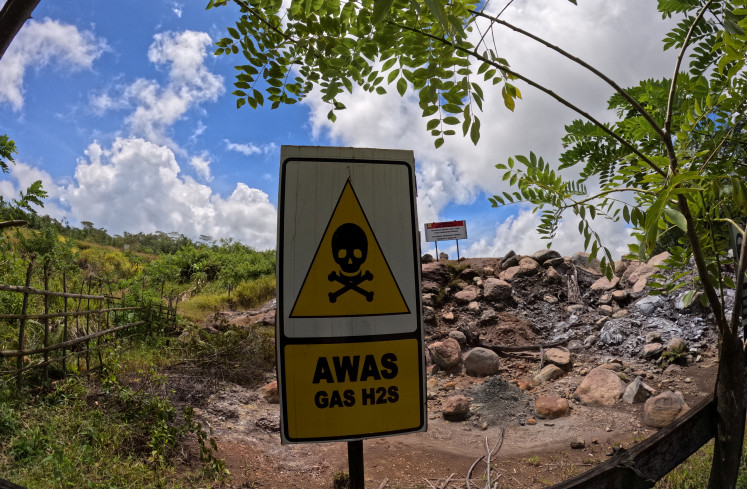
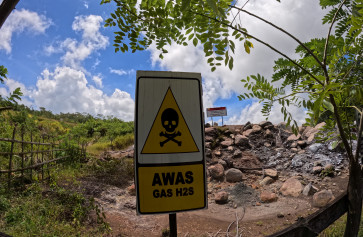
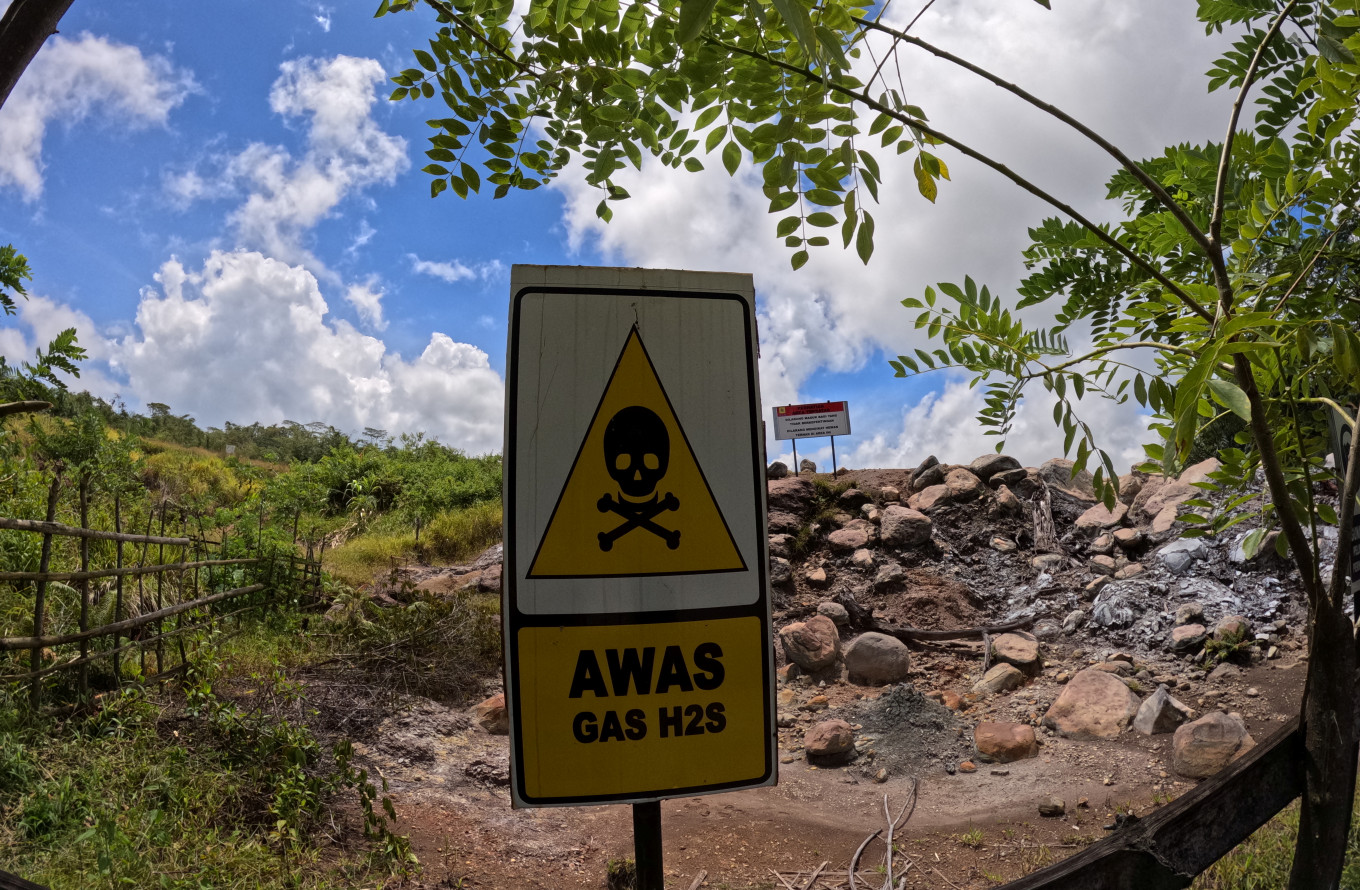 Danger zone: A hydrogen sulfide warning sign stands near a geothermal project in Ijen Blawan, Bondowoso, East Java, in this undated photo. Hydrogen sulfide is a toxic gas commonly found around geothermal and volcanic sites. (Magdalene/-)
T
he government is pressing ahead with geothermal development as part of Indonesia's energy transition. Under the 2025-2034 Electricity Supply Business Plan (RUPTL), installed geothermal capacity is targeted to increase by 5,200 megawatts. The projects have been designated National Strategic Projects (PSN) and National Vital Objects (Obvitnas).
Behind those targets, however, Magdalene has found recurring environmental, economic and social concerns among communities living near geothermal projects. Over nearly a year, its reporting team investigated three geothermal regions: Bondowoso in East Java, Mandailing Natal in North Sumatra and Ngada in East Nusa Tenggara.
The three locations represent different stages and characteristics of geothermal development. Bondowoso is home to a newly operational project; Mandailing Natal has an operating geothermal plant with a history of hydrogen sulfide (H₂S) gas leaks; while Ngada is undergoing renewed development after the Mataloko geothermal power plant ceased operations.
To examine the projects' impacts, Magdalene used the Gender Impact Assessment (GIA) framework published by Oxfam in 2017. Rather than serving as a comprehensive gender audit, the framework was used to assess changes in domestic workloads, health, livelihoods and access to communal resources.
Drawing on field observations, interviews with residents, government officials, academics and civil society organizations, as well as a review of public documents, Magdalene identified four recurring patterns across the three regions.
To examine the projects' impacts, Magdalene used the Gender Impact Assessment (GIA) framework published by Oxfam in 2017. Rather than serving as a comprehensive gender audit, the framework was used to assess changes in domestic workloads, health, livelihoods and access to communal resources.

Environmental concerns