The Jakarta Post
Please Update your browser
Your browser is out of date, and may not be compatible with our website. A list of the most popular web browsers can be found below.
Just click on the icons to get to the download page.


Popular Reads
Top Results
No results found. Please check your search term and try again
Can't find what you're looking for?
View all search results
Popular Reads
Top Results
No results found. Please check your search term and try again
Can't find what you're looking for?
View all search results52 percent of Jakarta Schools located near heavy metal-contaminated sites: study
Schools in the wealthiest neighborhood quintile were 49 times more likely to be near documented contaminated sites than those in the poorest areas, as industrial activity and affluent communities often overlap in urban areas.
Change text size
Gift Premium Articles
to Anyone
Share the best of The Jakarta Post with friends, family, or colleagues. As a subscriber, you can gift 3 to 5 articles each month that anyone can read—no subscription needed!
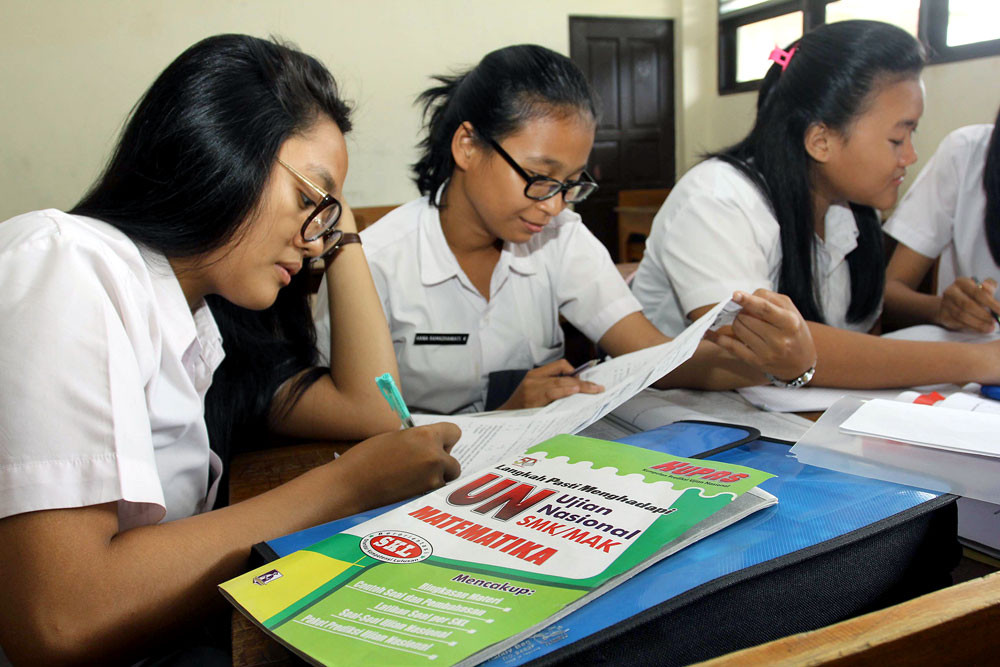 Better together: Students of SMA Taman Siswa state senior high school in Kemayoran, Central Jakarta, study together to prepare for national exams in this file photo. Students aspiring to enroll in their dream universities often resort to taking extra classes provided by school or private institutions. (Warta Kota/Angga Bhagya Nugraha)
A
new study has found that more than half of schools in Jakarta are located within 5 kilometers of documented contaminated sites, potentially putting hundreds of thousands students at risk of exposure to hazardous pollutants such as lead, mercury and cadmium.
Published in June by the Center for Global Development (CGD), the study analyzed the locations of polluted sites and schools across 17 low- and middle-income countries including India, Mexico, Vietnam, Ghana, Brazil and Indonesia.
The research found that more than 250,000 schools, or 10 percent of those studied, are located within five km of contaminated sites, including battery recycling facilities, industrial areas, mining and smelting operations and waste-processing sites.
In Jakarta, 52 percent of the 7,895 schools analyzed were located within five km of contaminated sites, with nearly 370 schools within one km. The proportion was far above the national average, as about 8 percent of schools across Indonesia, roughly 31,600 schools affecting 6.5 million students, were located within five km of documented polluted areas.
The study also revealed a striking inequality pattern: private schools were more likely than public schools to be located near polluted sites. In Indonesia, schools in the wealthiest neighborhood quintile were 49 times more likely to be near documented contaminated sites than those in the poorest areas, as industrial activity and affluent communities often overlap in urban areas.
Lee Crawfurd, a senior research fellow at the CGD and lead author of the study, said lead was the most common pollutant found near schools in Jakarta.

"Lead has no safe level of exposure for children and can permanently reduce IQ and learning outcomes," Crawfurd said.