The Jakarta Post
Please Update your browser
Your browser is out of date, and may not be compatible with our website. A list of the most popular web browsers can be found below.
Just click on the icons to get to the download page.


Popular Reads
Top Results
No results found. Please check your search term and try again
Can't find what you're looking for?
View all search results
Popular Reads
Top Results
No results found. Please check your search term and try again
Can't find what you're looking for?
View all search resultsIndonesia can offer experience in growth, environment: Senior UN official
Indonesia’s experience offers important lessons on the value of partnership, innovation and long-term investment, United Nations Assistant Secretary-General and Regional Director for Asia and the Pacific at the UN Development Program (UNDP) Kanni Wignaraja said.
Change text size
Gift Premium Articles
to Anyone
Share the best of The Jakarta Post with friends, family, or colleagues. As a subscriber, you can gift 3 to 5 articles each month that anyone can read—no subscription needed!
 Set as preferred source
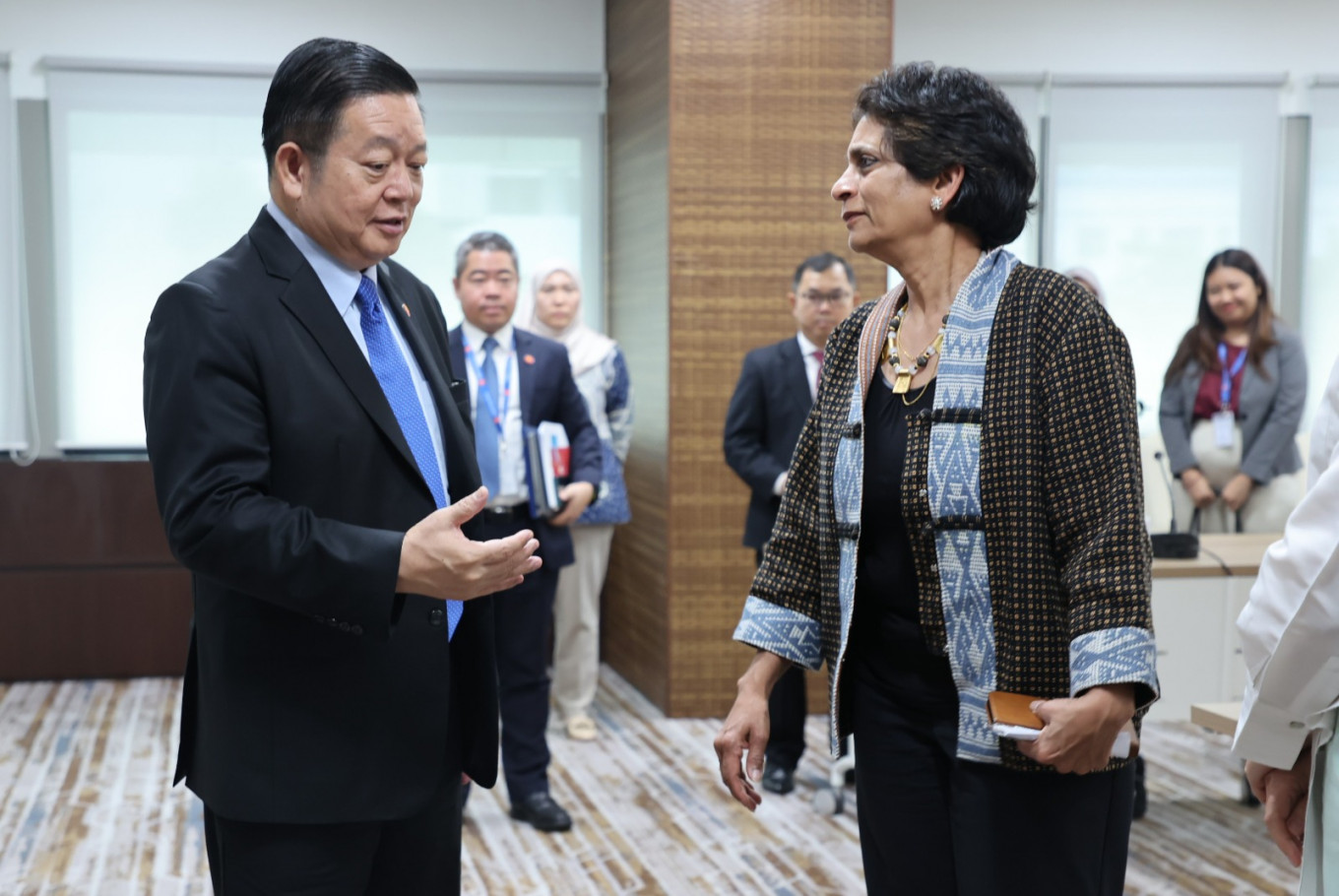 ASEAN Secretary-General Kao Kim Hourn (left) talks with United Nations Assistant Secretary-General and Regional Director for Asia and the Pacific at the UN Development Program (UNDP) Kanni Wignaraja during the latter's courtesy visit at the ASEAN Secretariat in Jakarta in this undated photo released by the UNDP on June 23, 2026. Wignaraja concluded her week-long official visit to Indonesia, reaffirming the UNDP’s commitment to supporting the country’s efforts to advance sustainable development, strengthen climate resilience and create opportunities for people and communities across the archipelago. (Courtesy of UNDP/-)
I
ndonesia shows that development can go hand in hand with environmental stewardship and can offer its experiences to other countries to push sustainable growth, a senior United Nations official said.
“Indonesia is demonstrating how economic progress, environmental stewardship and social inclusion can advance together,” UN Assistant Secretary-General and Regional Director for Asia and the Pacific at the UN Development Program (UNDP) Kanni Wignaraja said as quoted by a press release issued by the UNDP on Tuesday.
“As countries across the region seek pathways to sustainable growth, Indonesia’s experience offers important lessons on the value of partnership, innovation and long-term investment.”
Wignaraja concluded her week-long official visit to Indonesia, reaffirming the UNDP’s commitment to supporting the country’s efforts to advance sustainable development, strengthen climate resilience and create opportunities for people and communities across the archipelago.
She met with senior government officials, ASEAN leaders, youth representatives, private sector partners, conservation practitioners and development partners to discuss Indonesia’s development priorities and its growing role in shaping sustainable development across the region.
The mission began in Jakarta with a series of high-level engagements with government counterparts, including Coordinating Food Minister Zulkifli Hasan and Maritime Affairs and Fisheries Deputy Minister Adm. (ret) Didit Herdiawan Ashaf, as well as representatives from the Foreign Ministry, the Finance Ministry and the National Economic Council.

Discussions focused on climate action, biodiversity conservation, the blue economy, innovative and blended finance, food systems, sustainable waste management and circular economy and digital transformation.
A key highlight of the visit was a youth roundtable on employability and digital transformation, where young entrepreneurs, innovators and community leaders shared their perspectives on the opportunities and challenges facing Indonesia’s current and future generations.
The discussion underscored the importance of investing in digital skills, decent work and youth leadership to help shape a more inclusive future.
Wignaraja also met with ASEAN Secretary-General Kao Kim Hourn and representatives of the United Nations Country Team, reaffirming the importance of regional cooperation in addressing shared challenges and advancing the Sustainable Development Goals.
In North Sumatra, Wignaraja met with the Medan Mayor Rico Tri Putra Bayu Waas and local leaders before visiting community-based initiatives that demonstrate how local action can contribute to national development priorities.
The field visit was also joined by representatives from the Forestry Ministry, the Office of Coordinating Food Minister and the national park authority.
In Medan, she visited the Terjun landfill and met with waste workers and community representatives working to improve waste management and livelihoods by reducing, reusing and recycling waste.
The visit highlighted the role of local innovation and community participation in building more sustainable and resilient cities.
The mission continued to Mount Leuser, one of Southeast Asia’s most important ecosystems.
Protecting biodiversity
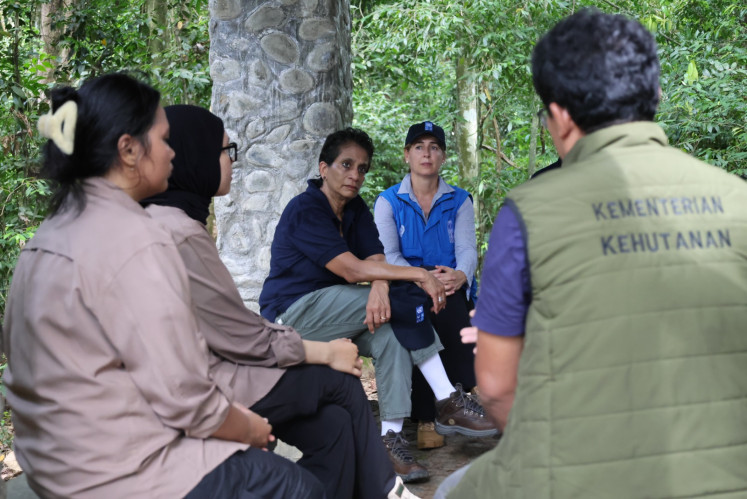
In the Tangkahan and Bukit Lawang ecotourism spots, Wignaraja met with conservation authorities, forest rangers and community representatives working to protect biodiversity while supporting sustainable livelihoods.
She learned how community stewardship has helped transform former areas affected by illegal logging into a recognized model for conservation and ecotourism.
“From urban communities managing waste to local groups protecting forests and wildlife, the examples we saw in North Sumatra show that lasting progress begins at the local level,” Wignaraja said.
“When communities are empowered and supported, their ideas and solutions can create impacts far beyond their immediate surroundings.”
Throughout the mission, discussions with government leaders, development partners, local community members and the private sector highlighted the importance of policies and standards that can drive impact at scale - tightly connecting delivery of policies and programs with reliable and affordable financing.
Concluding her visit, Wignaraja reaffirmed the UNDP’s commitment to supporting Indonesia’s priorities of climate resilience, sustainable finance, digital inclusion and nature-based development.
“As one of the region’s largest economies and most biodiverse countries, Indonesia is helping demonstrate that more inclusive and sustainable development pathways are possible, where the economy and ecology can thrive together without one diminishing the other,” she said. “Its experience offers practical lessons not only for ASEAN, but for countries across the Asia-Pacific region.”
The mission concluded with renewed commitments to strengthen collaboration between government, communities, the private sector and development partners in support of Indonesia’s national priorities and long-term prosperity.