The Jakarta Post
Please Update your browser
Your browser is out of date, and may not be compatible with our website. A list of the most popular web browsers can be found below.
Just click on the icons to get to the download page.


Popular Reads
Top Results
No results found. Please check your search term and try again
Can't find what you're looking for?
View all search results
Popular Reads
Top Results
No results found. Please check your search term and try again
Can't find what you're looking for?
View all search resultsRegional planning still leaves vulnerable groups behind: Study
People with disabilities often lacked adequate accommodation in policymaking forums, including accessible meeting venues and the availability of sign language interpreters, SMERU study finds.
Change text size
Gift Premium Articles
to Anyone
Share the best of The Jakarta Post with friends, family, or colleagues. As a subscriber, you can gift 3 to 5 articles each month that anyone can read—no subscription needed!
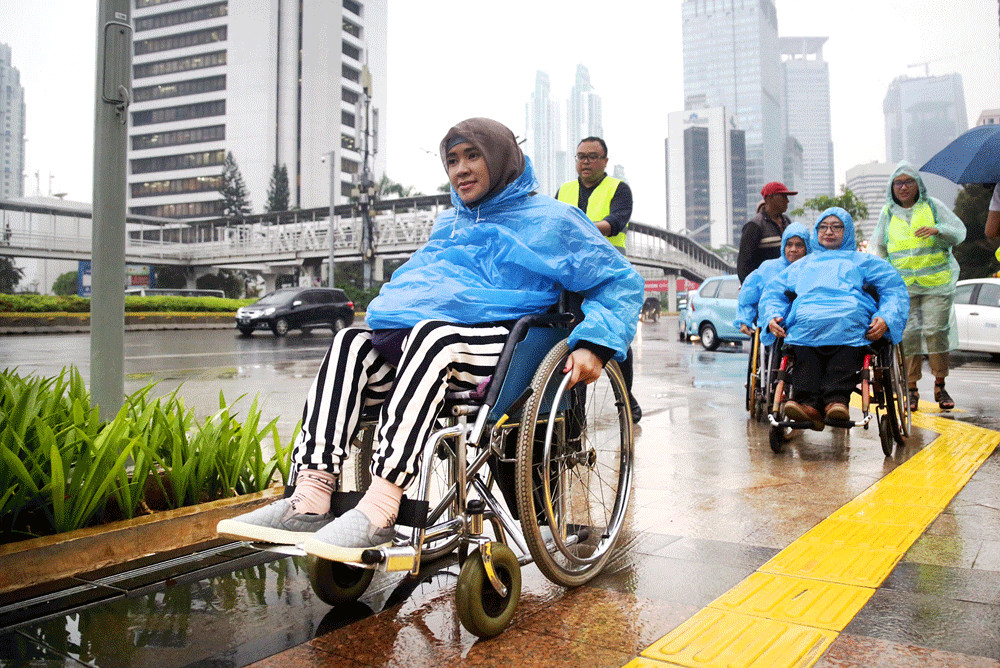 People with disabilities try out recently built pedestrian facilities on Jl. Sudirman, Jakarta, in this file photo. The activity was organized by the Institute for Transportation and Development (ITDP) to celebrate International Day of Persons with Disabilities, which falls on Dec. 3. (The Jakarta Post/Wendra Ajistyatama)
V
ulnerable groups, including women, people with disabilities and the elderly, remain underrepresented in regional development planning across Indonesia, according to a study by the SMERU Research Institute, prompting calls for more inclusive policy making.
The study, supported by a multistakeholder partnership on gender mainstreaming and social inclusion involving the National Development Planning Agency (Bappenas), the Australian government and other partners, covered six provinces: Aceh, East Nusa Tenggara, West Nusa Tenggara, North Kalimantan, Maluku and Gorontalo.
It found that vulnerable groups had only limited participation in regional planning discussions, particularly in musrenbang, the state-mandated public consultation forum for participatory planning from the village level upward.
SMERU researcher Palmira Permata Bachtiar said during the study’s dissemination on Monday that many institutions still failed to involve vulnerable groups in the process, largely due to weak understanding of gender mainstreaming and inclusive development.
“Local governments do not fully understand the importance of involving vulnerable groups in regional development planning, so there have been no concrete efforts to position them as facilitators, proposers or decision-makers in deliberation forums,” Palmira said.
Read also: One year on, pressure builds on govt to enforce free education ruling

She explained that greater involvement of vulnerable groups in policymaking, including in drafting regional regulations, managing natural resources and improving public services, could actually help make government programs and facilities more accessible to marginalized communities.