The Jakarta Post
Please Update your browser
Your browser is out of date, and may not be compatible with our website. A list of the most popular web browsers can be found below.
Just click on the icons to get to the download page.


Popular Reads
Top Results
No results found. Please check your search term and try again
Can't find what you're looking for?
View all search results
Popular Reads
Top Results
No results found. Please check your search term and try again
Can't find what you're looking for?
View all search resultsRiau Islands Police clamp down on fuel fraud, smuggling in border areas
The Riau Islands Police are coordinating with several security agencies to monitor the maritime border in the province against fuel smuggling and other illegal practices by unscrupulous groups seeking to profit from the global oil price shocks.
Change text size
Gift Premium Articles
to Anyone
Share the best of The Jakarta Post with friends, family, or colleagues. As a subscriber, you can gift 3 to 5 articles each month that anyone can read—no subscription needed!
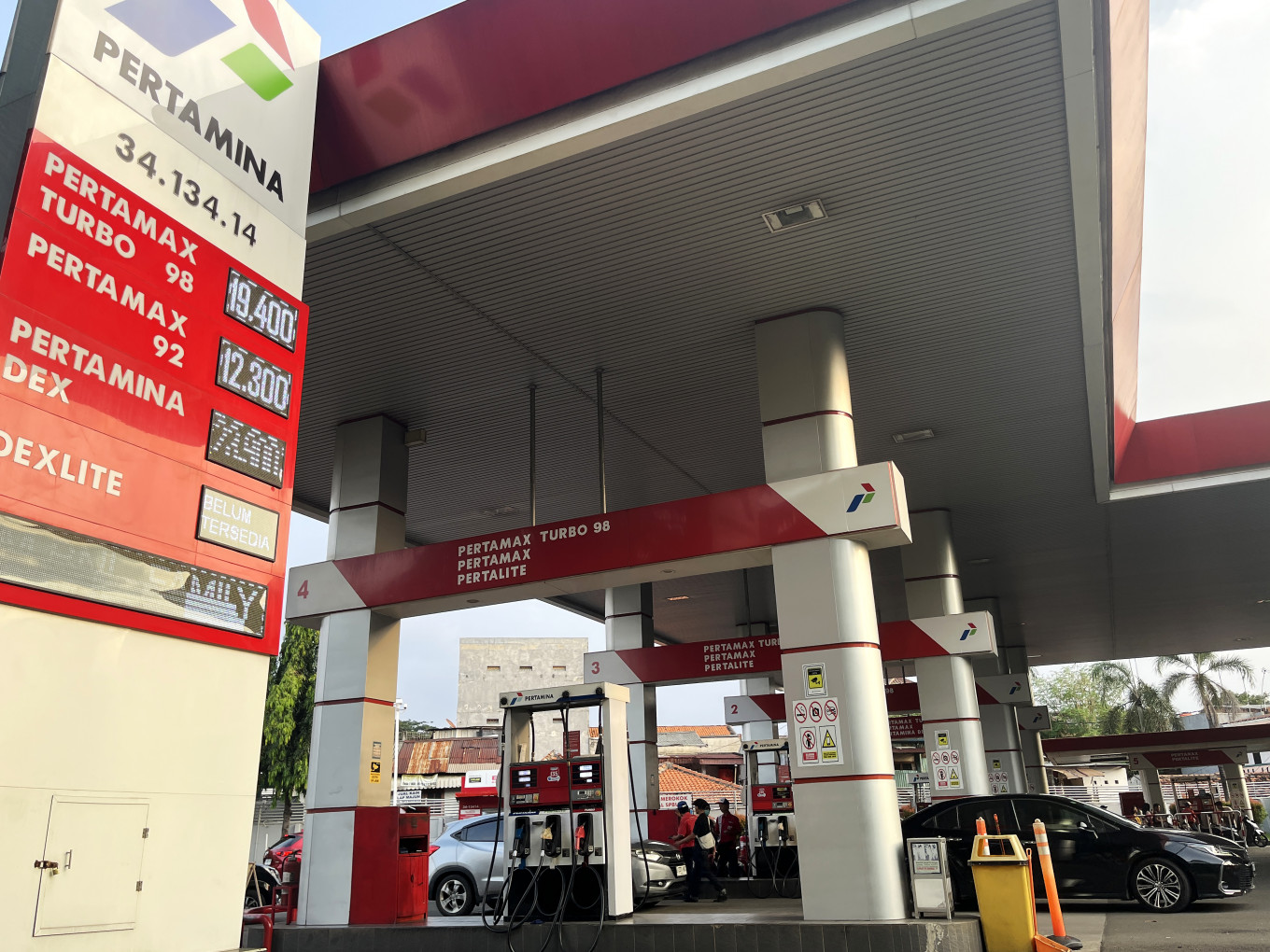 A price board displays current fuel prices on April 19, 2026, at a gas station on Jl. Basuki Rachmat in Jatinegara, East Jakarta. (JP/Iqro Rinaldi)
P
olice in the Riau Islands are clamping down on illicit fuel flows in border areas following an instruction from National Police chief Gen. Listyo Sigit Prabowo in response to geopolitical oil price shocks.
“The current focus is to prevent the smuggling of subsidized fuel abroad amid the global economic uncertainty,” Riau Islands Police chief Insp. Gen. Asep Safrudin told The Jakarta Post on Friday.
“The measure is an immediate response from the National Police leadership to anticipate the impacts of tension in West Asia,” Asep added.
Geopolitical oil price shocks could lead to illegal fuel trading practices in the maritime borders surrounding the province, he said, particularly in the sale and distribution of subsidized fuels due to the wide price gap with nonsubsidized fuels in the international market.
Asep highlighted the potential smuggling of subsidized fuel for cross-border sales at market prices.
“This must be anticipated. We cannot allow subsidized fuel to be sent abroad,” he said. “We must ensure that domestic distribution, especially in the Riau Islands, remains safe and on target.”

The Riau Islands Police are collaborating with the Indonesian Navy, the Maritime Security Agency (Bakaml) and other agencies to secure vulnerable border points, in line with the broader government policy on heightening vigilance across multiple sectors.
On March 3, Listyo instructed the Densus 88 counterterrorism unit to increase surveillance against a potential rise in global terrorism threats due to the heated situation in the Middle East.
“We will continue intensive coordination to maintain economic stability and security as the frontier guard in Indonesia’s border areas,” Asep said.
Separately, officers from the criminal investigation unit of the Batam, Rempang and Galang (Barelang) Police uncovered a case of fuel fraud involving Pertalite subsidized fuel in Batam.
During a raid on May 6, they detained two suspects, identified as AA and AS, and confiscated 26 jerricans containing 815 liters of Pertalite and a pickup truck as evidence.
Read also: Indonesia rations fuel as prices soar over Mideast war
AA allegedly acquired a fraudulent recommendation letter from a middleman denoting a monthly quota of 25 tonnes of subsidized fuel. The suspect then illegally transferred the consignment to AS and other parties for resale.
Police are yet to discover any sales of Indonesia’s subsidized fuel abroad or to foreign-flagged ships in the Malacca Strait since global oil prices skyrocketed following the United States and Israel launched joint strikes against Iran on Feb. 28.
Fuel hikes
Amid the ongoing global energy crisis, the government has maintained the prices of subsidized fuels sold by state-owned oil and gas giant Pertamina at Rp 10,000 (0.57 US cents) per liter for 90 octane gasoline brand Pertalite and Rp 6,800 for 48 cetane biodiesel brand Solar.
The government has also maintained the per-liter prices of several nonsubsidized fuel products, including 92 octane gasoline Pertamax at Rp 12,300 and 95 octane gasoline Pertamax Green at Rp 12,900.
On May 4, the government increased the per-liter prices of other nonsubsidized fuels, including 98 octane gasoline Pertamax Turbo to Rp 19,900.
Read also: Nonsubsidized fuel prices hiked sharply as supply strains worsen
The per-liter price of 51 cetane diesel fuel Dexlite has been increased from Rp 23,600 to Rp 26,000, while that of 53 cetane Pertamina Dex has been hiked from Rp 23,900 to Rp 27,900.
Gas stations in neighboring countries have also hiked fuel prices, some nearly four times Pertamina’s prices.
For example, 92 octane gasoline in Singapore is priced at between S$3.39 (Rp 46,700) and S$3.43 per liter, while 98 octane gasoline is being sold for S$3.93-3.98 per liter. (nvn)