The Brief: Analytical Commentary by Tenggara Strategics
Please Update your browser
Your browser is out of date, and may not be compatible with our website. A list of the most popular web browsers can be found below.
Just click on the icons to get to the download page.


Popular Reads
Top Results
No results found. Please check your search term and try again
Can't find what you're looking for?
View all search results
Popular Reads
Top Results
No results found. Please check your search term and try again
Can't find what you're looking for?
View all search resultsthe-brief

Opinion 1 day ago
PREMIUM
Analysis: A sugar excise too small to matter
A tax on sugar-sweetened beverages (SSB) is planned from the second half of 2027, the government has said, after making similar promises almost every year since 2022. The levy is expected to raise Rp 1.7 trillion (US$95 million), while diabetes care alone cost the national health insurance an estimated Rp 12.6 trillion in 2024. At its planned scale, the proposed levy risks falling short as both a public health measure and a revenue-generating instrument.
Opinion 2 days ago
PREMIUM
Analysis: SOE IPOs face an uphill battle against historical pitfalls
State asset fund Danantara plans to take several state-owned enterprises (SOEs) public in 2027, but whether the listings will attract investor interest remains uncertain. The companies have yet to be identified, and Danantara has pledged to conduct rigorous reviews before determining which are ready to enter the stock market. The key question, however, is whether the selected companies can offer sustainable returns and adequate investor protection, or whether the IPOs will serve primarily as a fundraising measure, leaving investors exposed to losses rather than potential capital gains, as previous cases suggest.
Opinion 3 days ago
PREMIUM
Analysis: Forest fires prove governance failures have gone too far
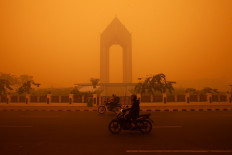
For nearly four months wildfires have ravaged Indonesia, exposing acute, systemic failures in government response and law enforcement. While the ongoing dry spell has exacerbated the crisis, suspected corporate land clearing by burning points to a deliberate, recurring practice that authorities have repeatedly failed to halt.
Opinion 4 days ago
PREMIUM
Analysis: BMRI’s bond issue: Himbara’s government financing under scrutiny
State-owned lender Bank Mandiri (BMRI) recently issued US$750 million in perpetual bonds, an uncommon instrument among Indonesian corporates, with an initial annual distribution rate of 7.35 percent. The issuance is intended to strengthen the bank’s capital base by bolstering its Additional Tier 1 (AT1) capital and supporting business expansion. However, it has also fuelled speculation that BMRI, along with other Himbara banks, may be facing mounting financial demands from their involvement in financing government programmes.
Opinion 5 days ago
PREMIUM
Analysis: Gibran won’t be impeached, but that’s not the point
The controversy surrounding Vice President Gibran Rakabuming Raka has entered a new phase. Criticism of how he reached office is increasingly channeled into talk of impeachment. Paradoxically, the more it is discussed, the less likely it seems to happen. The mechanism exists, but the politics suggest its impact will be symbolic rather than institutional.
Opinion 6 days ago
PREMIUM
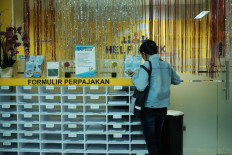
Analysis: Who pays when Indonesia’s tax ambitions fall short?
With three months left in the year, Indonesia has collected barely two-thirds of its annual tax target. The government now faces an uncomfortable choice over how aggressively to pursue the remainder and where to restrain spending. Every effort to balance the books carries consequences for businesses and people who depend on public services. Who will bear the cost if the government's revenue ambitions exceed its capacity to collect?
Opinion 1 week ago
PREMIUM
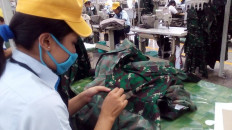
Analysis: Indonesia's textile rescue: Revival or another failed SOE?
President Prabowo Subianto wants to revive Indonesia's struggling textile industry by establishing a new state-owned enterprise (SOE), potentially drawing on assets left behind by bankrupt textile giant Sritex. The plan comes amid factory closures, mass layoffs and mounting competition from cheaper imports. But with much of the industry's production capacity already underutilized, the government faces a difficult question: Will another state-owned company restore the industry's competitiveness or merely add to its problems?
Opinion 1 week ago
PREMIUM
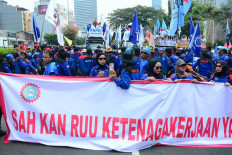
Analysis: Will Indonesia’s new labor law deliver on its promises?
The new Labor Protection Law, approved by the House of Representatives on Oct. 6, promises stronger severance entitlements, tighter dismissal rules and greater employment security. But stronger legal protections mean little if employers circumvent restrictions on temporary employment or fail to pay compensation. The real test of the new law lies not in its promises but in whether its provisions translate into effective protection for workers when their livelihoods are most vulnerable.

Opinion 1 week ago
PREMIUM
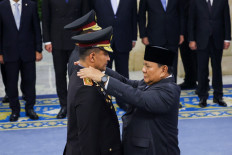
Analysis: Can Hashim’s group succeed in Indonesia’s toughest gas block?
PT Nations Petroleum, an oil and gas company linked to businessman Hashim Djojohadikusumo, President Prabowo Subianto’s younger brother and special climate and energy envoy, has committed US$103.3 million to three years of work on the Natuna D-Alpha block, prompting questions over why the relatively new player is willing to take on such an ambitious bet.
Editor's Picks
Popular
- Prabowo begins third year with tighter grip as public support slips
- Power for the people
- How worried should we be about the global economy?
- France to deploy 70,000 police for fresh weekend protests
- The world's oldest cave paintings in Indonesia under threat of wildfires
- Indonesia cuts gas exports to Singapore
- Two years of Prabowo: Resilience today, bills tomorrow
- ‘Panic’ blamed for record foreign outflows from stock market
- Prabowo's allies distance themselves from flagship free meals program
- MSCI warning triggered ‘manageable’ outflow from bond market, BI reveals


