The Jakarta Post
Please Update your browser
Your browser is out of date, and may not be compatible with our website. A list of the most popular web browsers can be found below.
Just click on the icons to get to the download page.


Popular Reads
Top Results
No results found. Please check your search term and try again
Can't find what you're looking for?
View all search results
Popular Reads
Top Results
No results found. Please check your search term and try again
Can't find what you're looking for?
View all search resultsFrom knowledge to collective action: Building a better future for young children
Regional leaders and partners gathered in Jakarta to explore how evidence, sustainable financing and collective action can strengthen early childhood development (ECD) across the Asia-Pacific.
Change text size
Gift Premium Articles
to Anyone
Share the best of The Jakarta Post with friends, family, or colleagues. As a subscriber, you can gift 3 to 5 articles each month that anyone can read—no subscription needed!
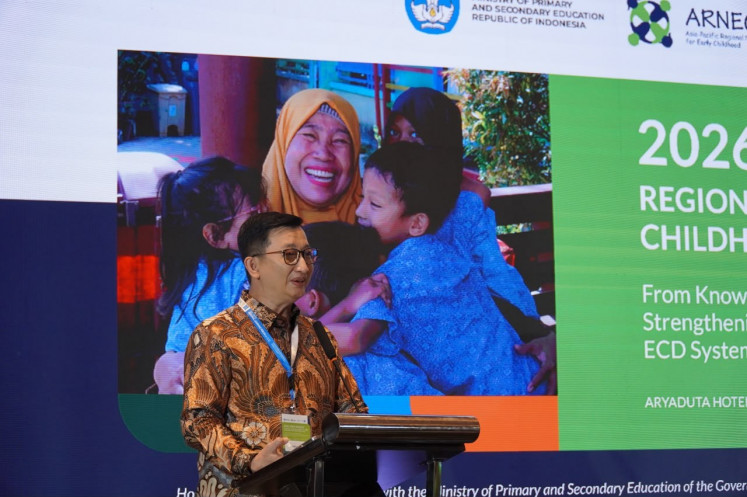
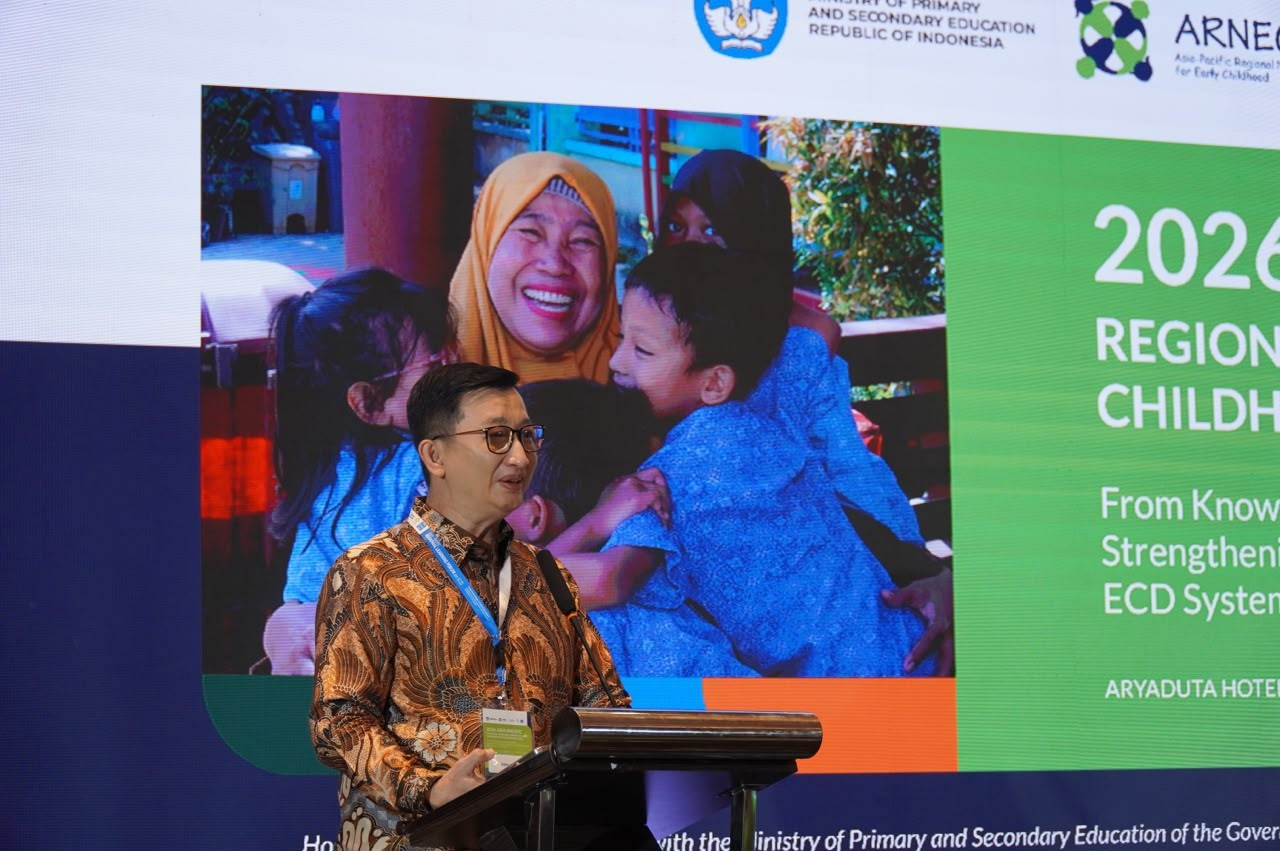 Eddy Henry, Head of Policy and Advocacy at Tanoto Foundation, urges policymakers to recognise early childhood development as a foundational investment in human capital and long-term development. (All images courtesy of Tanoto Foundation)
A
cross East Asia and the Pacific, millions of young children face challenges that threaten their development, including malnutrition, unequal access to quality early learning and insufficient support for parents and caregivers. Addressing these interconnected challenges requires sustained investment and stronger coordination across sectors.
Jakarta hosted the 2026 Asia-Pacific Regional Learning Forum on Early Childhood Development from 20 to 22 October. Convened by the Asia-Pacific Regional Network for Early Childhood (ARNEC) in partnership with the Ministry of Elementary and Secondary Education, Tanoto Foundation, SEAMEO CECCEP and Koalisi Nasional PAUD Holistik Integratif (National Coalition of Holistic, Integrative Early Childhood Education), the forum explored the theme “From Knowledge to Collective Action: Strengthening Climate-Responsive and Well-Financed ECD Systems in Asia-Pacific”.
“I think we are holding this learning forum at a time when young children are really faced with a prolonged period of polycrisis,” said Evelyn Santiago, Executive Director of ARNEC. She pointed to climate change, economic instability, conflicts and rapid technological shifts as interconnected pressures affecting children’s development and well-being.

Evelyn emphasised that the forum provided an opportunity for countries and organisations to exchange knowledge, deepen partnerships and explore how early childhood development (ECD) could be better financed. It also highlighted the importance of moving beyond discussion towards practical, coordinated responses.
ECD as investment
Research by Nobel laureate James Heckman estimates a 13.7 percent annual return on investment in high-quality early childhood programmes for disadvantaged children. Separately, UNICEF estimates that every dollar invested in pre-primary education generates approximately US$9 in societal benefits. Although drawn from different studies and contexts, these findings reinforce the long-term value of investing early.
Despite growing recognition of ECD’s importance, investment remains insufficient and fragmented. According to Eddy Henry, Head of Policy and Advocacy at Tanoto Foundation, policymakers and those responsible for public spending must recognise ECD as a foundational investment in human capital and long-term development.
“In Indonesia, we have other competing priorities as well,” Eddy said. “We need to make sure that the policymakers, the lawmakers, those who are responsible or have authority to allocate their resources, can consider the critical importance of early childhood.”
He also highlighted gaps in budget coordination among ministries and government agencies. Better alignment, he argued, could help ensure that programmes and resources reinforced one another rather than operate in silos, particularly where children’s needs cut across health, nutrition, education and social protection.
The region’s diversity makes locally appropriate solutions essential. “Really, there is no one size fits all,” Evelyn said. “We are a platform. We are a knowledge broker.”
She explained that ARNEC facilitated exchanges among partners, researchers and practitioners while recognising the different circumstances and priorities of individual countries.
In Indonesia, challenges include equitable access, service quality and sustained public investment. According to UNICEF, approximately 36 percent of children aged 3 to 6 were enrolled in pre-primary education in 2024. Stunting remains a major concern alongside the growing challenge of overweight and obesity. These issues underscore the need for an integrated approach to children’s health, nutrition and development.
One collaborative response is PASTI, a stunting prevention and reduction programme involving the Ministry of Population and Family Development, Tanoto Foundation, PT Amman Mineral Nusa Tenggara and Bank Central Asia (BCA). The programme aims to improve nutrition and strengthen coordinated action through January 2027, illustrating how partners can contribute different capabilities towards a shared objective.

Climate change was another important forum topic, given environmental risks to children’s health, learning and development. Evelyn described ARNEC’s work with the National Coalition and SEAMEO CECCEP to explore integrating climate education into early learning curricula. The broader discussion also considered how ECD services could respond to increasingly complex pressures on families.
From knowledge to collective action
Turning knowledge into action requires sustainable financing and collaboration across government, philanthropy, business, academia and communities.
In Indonesia, major public initiatives such as the Free Nutritious Meal (MBG) programme demonstrate the government’s commitment to improving nutrition. Other partners can complement public investment through evidence, innovation, technical expertise and support for effective implementation.
“Collaboration is one of our four principles of working at Tanoto Foundation, and we believe that without collaboration, we will not achieve the impact at scale that we want,” Eddy said.
Working independently might offer greater control, he continued, but collaboration was essential for reaching more children and sustaining results over time.
Government partnership is central to this approach. Eddy describes additionality as a principle “where one plus one should equal three or four”, with organisations contributing complementary capabilities rather than necessarily equal financial resources.
The value of a partnership, in this view, lies in what participants can achieve together that none could deliver alone.
Similarly, Evelyn emphasised ARNEC’s partnership model: “The philosophy that we have in ARNEC is really to work with partners. In fact, we don't have offices or branches in the countries.”
Through national and regional relationships, the network helps connect knowledge, institutions and opportunities for collective action.
One of philanthropy’s distinctive contributions is its ability to support innovation and test promising approaches before wider adoption. By investing in evidence generation, piloting and adaptation, philanthropic organisations can help identify solutions that governments and other partners may institutionalise and scale.
Yet even effective interventions can prove difficult to sustain if they are too costly or complex. Eddy emphasises affordability, implementation capacity and long-term sustainability from the outset.
Tanoto Foundation’s Rumah Anak SIGAP illustrates this pathway. The programme provides parenting support and early stimulation for children aged zero to 3 through community-based centres. Drawing on lessons from this experience, the foundation is working with the Ministry of Health to pilot the integration of parenting and early stimulation services into village-level primary healthcare facilities, including Pustu and Posyandu, in five villages.
Evidence from the pilot will inform further refinement and assess the potential for larger-scale implementation through Indonesia’s existing healthcare system. Rather than simply replicating foundation-run centres, the aim is to adapt effective practices to services already reaching families and make them more accessible and sustainable.
Long-term impact depends on effective approaches becoming part of government programmes and regular public budgets. Engaging government partners from the outset can build shared ownership, align interventions with local priorities and create a realistic pathway towards institutionalisation.
Eddy highlights a Rumah Anak SIGAP centre in Semarang where the municipal administration is taking over responsibility after several years of foundation support, linking the initiative to local stunting reduction priorities. This example demonstrates why planning for government adoption matters as much as designing a successful pilot.
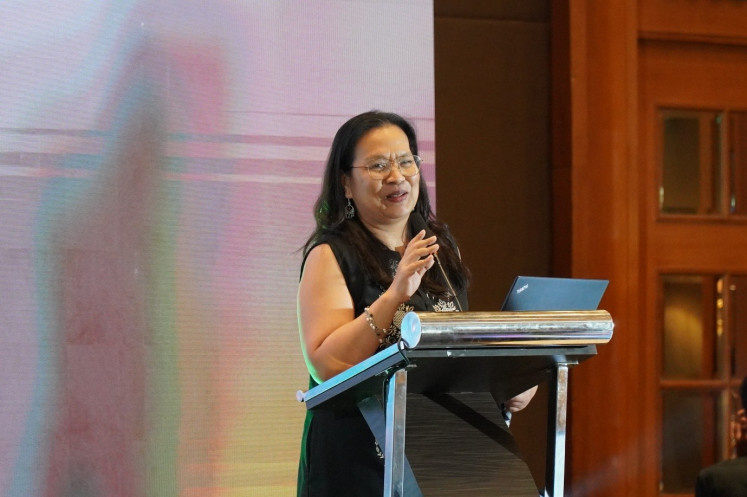
Evelyn reinforces the importance of public ownership.
“The key to having it owned and sustained by the government is really to make sure that they know their role in the project,” she said, adding: “If it is a public good, it should be funded primarily by the government.”
For Eddy, philanthropy should build on existing public infrastructure and strengthen services rather than establish competing programmes.
The forum’s central message is that evidence achieves lasting impact when partners translate it into coordinated action, government ownership and sustainable systems that give young children the opportunity to thrive.


More from The Weekender

Machines Without a Beating Heart?
As electric cars reshape the driving experience, enthusiasts wrestle with what makes a car special: the roar of its engine, the quirks of an aging machine, or the memories we leave behind the wheel.

FX Harsono revisits Indonesia’s unresolved past in Ambang/Threshold
The veteran artist reworks familiar images of violence and discrimination to confront a history that continues to shape the present.

Farewell, good breast
A cancer diagnosis brings more than the fear of illness. It raises difficult questions about how to protect those we love while revealing unexpected reserves of tenderness and resilience.