The Jakarta Post
Please Update your browser
Your browser is out of date, and may not be compatible with our website. A list of the most popular web browsers can be found below.
Just click on the icons to get to the download page.


Popular Reads
Top Results
No results found. Please check your search term and try again
Can't find what you're looking for?
View all search results
Popular Reads
Top Results
No results found. Please check your search term and try again
Can't find what you're looking for?
View all search resultsOctora challenges the colonial gaze in 'Menamai | Naming'
Through archival photographs, handwoven textiles and an aluminum Rafflesia, Octora questions who has the power to name, classify and define.
Change text size
Gift Premium Articles
to Anyone
Share the best of The Jakarta Post with friends, family, or colleagues. As a subscriber, you can gift 3 to 5 articles each month that anyone can read—no subscription needed!
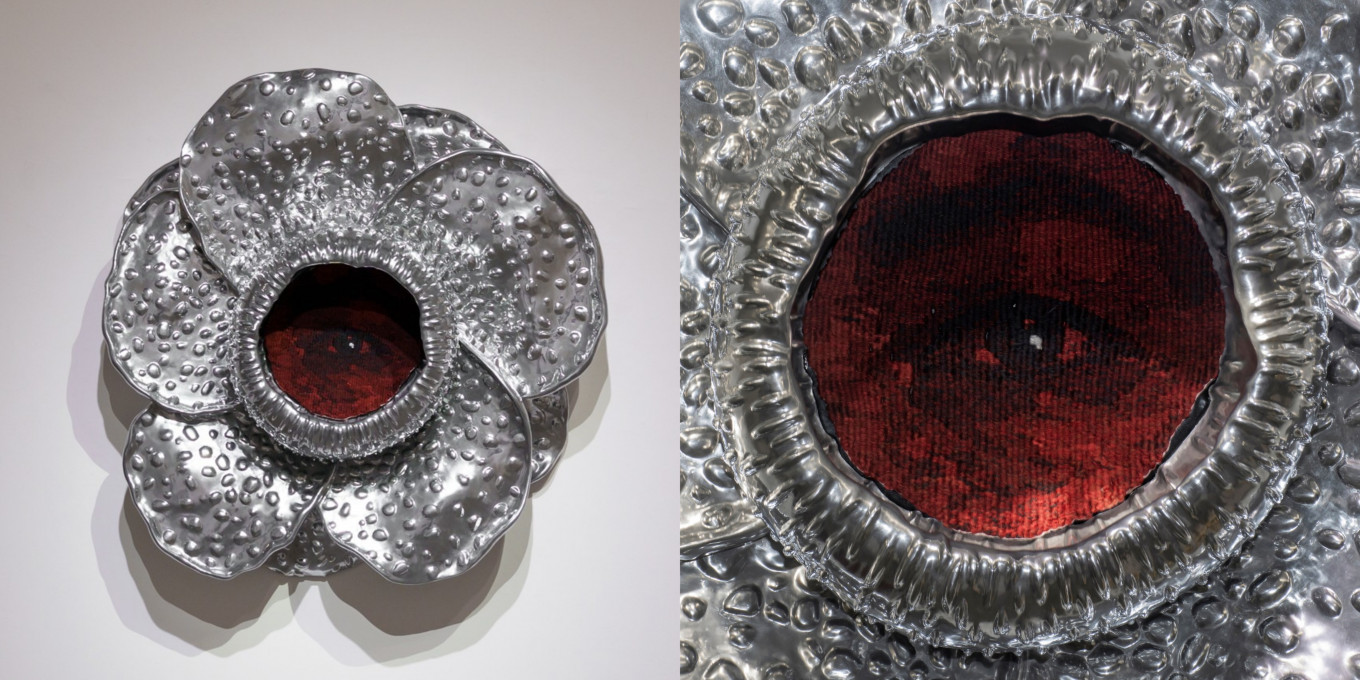 The flower that remembers: Octora’s 'The Flower That Remembers', created in 2025-2026, is made of merino wool and aluminum and measures 100 centimeters in diameter and 30 cm in height. (Courtesy of Gajah Gallery Jakarta/-)
T
he new solo exhibition Menamai | Naming by artist Octora at Gajah Gallery Jakarta reveals an enduring inquiry into power dynamics and the supposed neutrality of the ways we see, particularly in archival images and ethnographic records produced under the colonial hierarchy of the Dutch East Indies.
Often regarded as historical documents, these images and records were, in Octora’s view, constructed according to whoever held the camera, wrote the narrative or controlled the archive under colonial rule.
Her efforts to confront archival collections, including those held by Leiden University, are not new. In this exhibition, however, the materiality of her work takes on an added dimension through the use of merino wool, which she describes as intricate, slow and tactile. Its physicality embodies a sense of care, undoing the sterile objectification embedded in colonial archives and ethnographic photography.

While many of the works sharply critique the colonial gaze preserved in such images, Octora’s concerns extend beyond the archive. Her practice is driven by a broader sensitivity to injustice and the ways authenticity can be diminished when human lives are reduced to categories, data and objects of study.
Rectifying and disrupting the authority of the archive, Octora cuts apart images from different disciplines and reassembles them into entirely new compositions, using materials such as merino wool and cotton. The process itself becomes an act of reclamation.
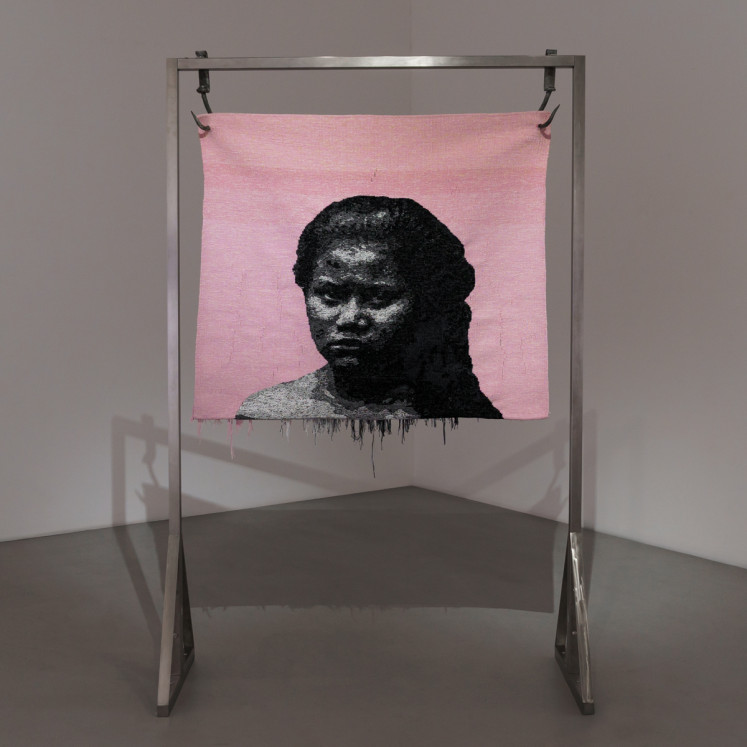
The flower looks back


More from The Weekender

Citra Awards 2026: Who makes the cut?
An updated selection process brings fresh questions about recognition at the upcoming Citra Awards. Three movie-focused accounts weigh in on the favorites, the snubs and what makes a movie worthy of an ‘Indonesian Oscar’.

Old habits, new China
What does it take to change a city’s habits? In Beijing, rising prosperity, better public spaces and ever-watchful cameras are reshaping how people behave — with room for a little old-fashioned unruliness

My mother’s magic jar of happiness
In a jar of notes left by her mother, Pallavi finds the small comforts of recovery as they become something to hold on to through the untethering force of grief.