The Jakarta Post
Please Update your browser
Your browser is out of date, and may not be compatible with our website. A list of the most popular web browsers can be found below.
Just click on the icons to get to the download page.


Popular Reads
Top Results
No results found. Please check your search term and try again
Can't find what you're looking for?
View all search results
Popular Reads
Top Results
No results found. Please check your search term and try again
Can't find what you're looking for?
View all search resultsYacko's 'Unbreakable Me' finds power in vulnerability
At a time when few local artists are openly tackling women's issues, the rapper is using music, as well as marathons, to challenge gender inequality and the stigma around mental health.
Change text size
Gift Premium Articles
to Anyone
Share the best of The Jakarta Post with friends, family, or colleagues. As a subscriber, you can gift 3 to 5 articles each month that anyone can read—no subscription needed!
 Set as preferred source
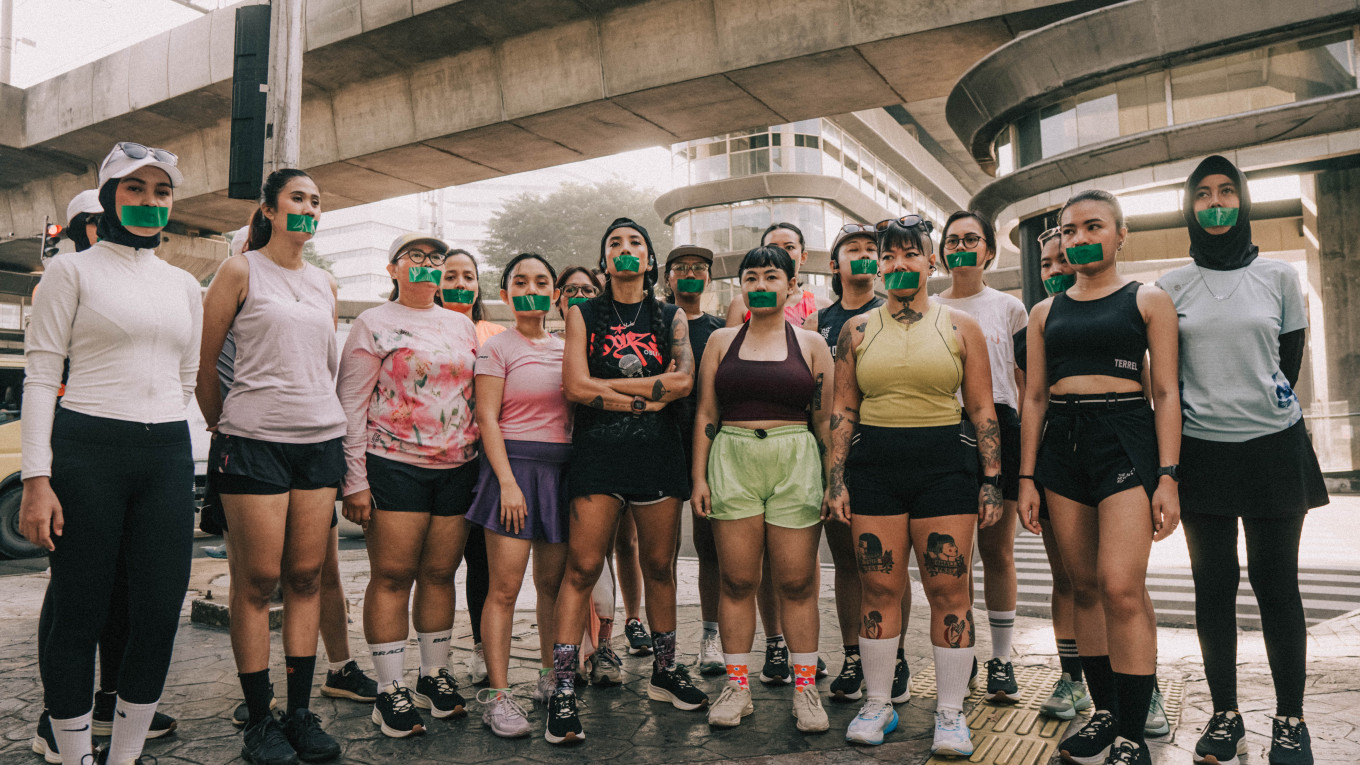 Muting, undone: Yacko (center, front row) stands among 18 other women, their mouths covered with green tape, in a still from the music video for ‘Unbreakable Me’, which premiered on YouTube on April 21, 2026, Kartini Day, and is dedicated “To all the women who struggle to stay sane every day and heal through running”. (Courtesy of NODAYSOFF Production/-)
Some songs are meant for the charts; others are meant to start conversations.
With Unbreakable Me, Indonesian hip-hop artist and emcee Yacko delivers both a rallying cry and a personal testimony, drawing from her experiences as a musician, academic and runner to explore the invisible burdens many women carry and the strength it takes to keep moving forward.
Premiering on April 21 on YouTube, the music video for her latest single, Unbreakable Me, is dedicated to "all the women who struggle to stay sane every day and recover by running", according to its description. It was later released on digital streaming platforms starting from May 1.

The music video stands out for its portrayal of running as a modern expression of female agency in the context of the persistent patriarchal culture in Indonesia. In the 3-minute, 49-second track blending hip-hop with rap rock influences, Yacko declares in the chorus: "No more silence / No more hiding / We are rising / We are fighting / It's the unbreakable me."
At a time when sexual harassment, female objectification and gender-based pay inequality continue to dominate public discourse, Unbreakable Me feels both timely and urgent.
Yet Yacko's advocacy extends beyond music. In August, she is taking part in this year’s TCS Sydney Marathon, using the event to champion and raise awareness about women's mental health.
Running mind

More from The Weekender

A year after Affan: The anger that stayed
A year after Affan Kurniawan’s death, the fury that spilled into Jakarta’s streets has not disappeared. It has settled into other forms: exhaustion, distrust and a lingering sense that nothing has really changed.

The ludicrous economics of Pokémon cards in Indonesia
How did pieces of cardboard go from childhood collectibles to billion-rupiah commodities?

A fair national exam is radical politics
When India's medical entrance scandal drove students into the streets, a writer watching from Beijing asked what exam systems are really protecting.



Your Opinion Matters
Share your experiences, suggestions, and any issues you've encountered on The Jakarta Post. We're here to listen.
Enter at least 30 characters
0
/ 30
Thank you
Thank you for sharing your thoughts. We appreciate your feedback.