The Jakarta Post
Please Update your browser
Your browser is out of date, and may not be compatible with our website. A list of the most popular web browsers can be found below.
Just click on the icons to get to the download page.


Popular Reads
Top Results
No results found. Please check your search term and try again
Can't find what you're looking for?
View all search results
Popular Reads
Top Results
No results found. Please check your search term and try again
Can't find what you're looking for?
View all search resultsNational Museum at 248: Where centuries linger and history lives
Housing everything from Java Man to historic banknotes and Majapahit-era artifacts, the National Museum of Indonesia proves why it remains one of the country’s most compelling cultural destinations.
Change text size
Gift Premium Articles
to Anyone
Share the best of The Jakarta Post with friends, family, or colleagues. As a subscriber, you can gift 3 to 5 articles each month that anyone can read—no subscription needed!
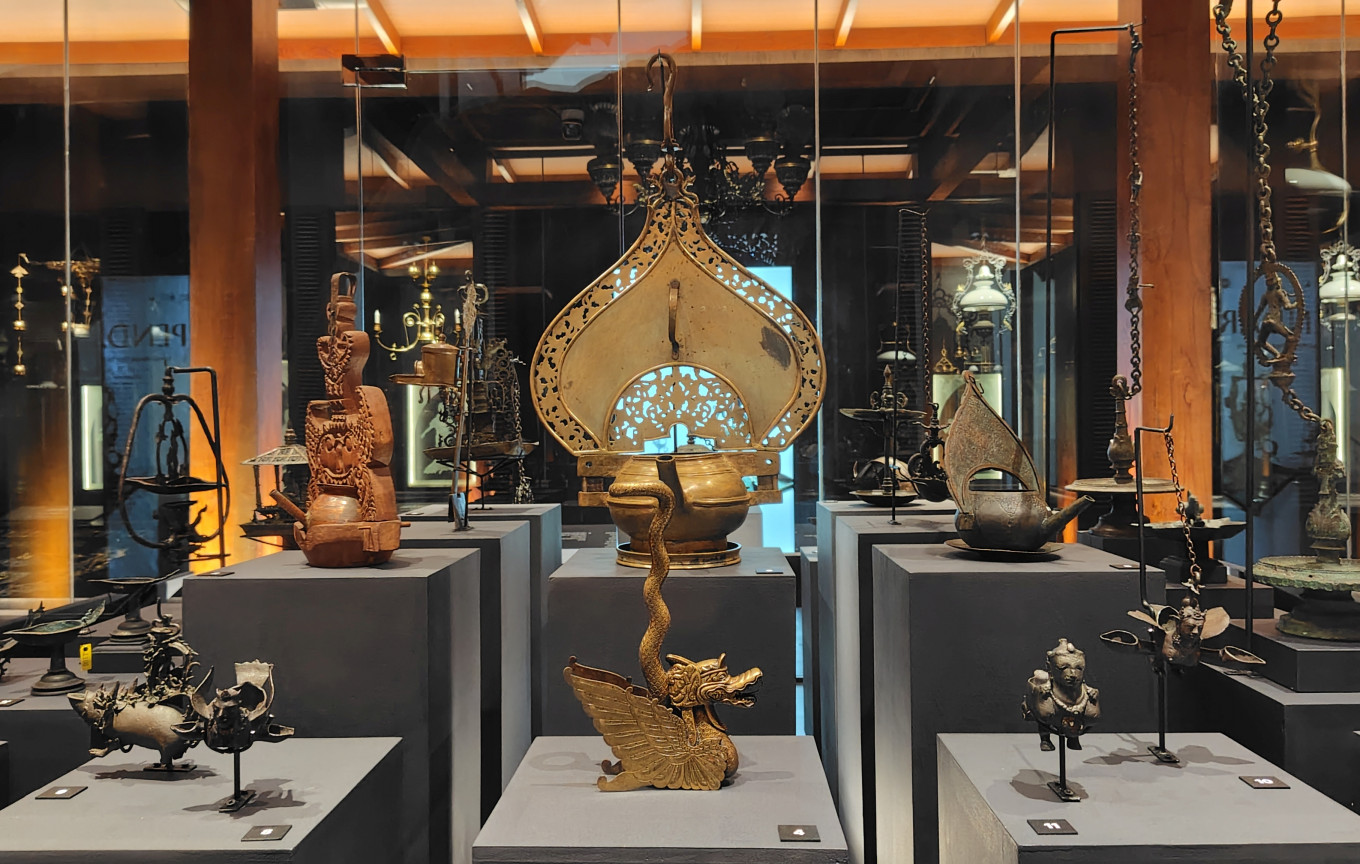 Light through time: A look of "Pendar", a permanent exhibition at the National Museum of Indonesia in Central Jakarta, is pictured on May 13, 2026, showcasing intricately carved oil lamps, chandeliers and lanterns spanning centuries of Indonesian history. (JP/Sylviana Hamdani)
T
he National Museum of Indonesia, nestled in the heart of Jakarta, celebrates its 248th anniversary this year with renewed facilities, new exhibitions and ongoing development plans.
Founded on April 24, 1778, as the Bataviaasch Genootschap van Kunsten en Wetenschappen (Batavian Society of Arts and Sciences), the museum has grown into Indonesia’s largest, with around 190,000 objects in its care, ranging from prehistoric fossils and Hindu-Buddhist sculptures to ancient coins, royal heirlooms and artifacts linked to the nation’s roots.
The institution has also endured upheaval. In 2023, a fire tore through the rear of Building A, damaging part of its neoclassical structure and hundreds of collection objects. Its reopening featured a landmark repatriation exhibition showcasing more than 300 objects returned from the Netherlands.

More recently, the museum received more than 28,000 fossils from the collection of Dutch physician Eugène Dubois, including Java Man, the first Homo erectus fossil ever discovered. Unearthed near the Bengawan Solo River in East Java in the 1890s, the fossils had remained in the Netherlands for over a century before returning to Indonesia. They are now displayed in Building A as part of the permanent exhibition “Sejarah Awal” (Early History).
“This year, another 28,000 fossils from Eugène Dubois’ collection are also scheduled to be returned to Indonesia,” said Esti Nurjadin, head of Museum and Cultural Heritage, a public service agency under the Culture Ministry that manages the National Museum and several other museums and heritage sites, during a press gathering on April 24 in Jakarta.
Since reopening, the museum has expanded beyond exhibitions into a gathering space animated by gamelan rehearsals, yoga sessions, concerts and public events. To mark the anniversary, the museum unveiled two new permanent exhibitions and one temporary exhibition across Buildings A and B.
“This year, another 28,000 fossils from Eugène Dubois’ collection are also scheduled to be returned to Indonesia.” — Esti Nurjadin, head of Museum and Cultural Heritage


More from The Weekender

A passport to the kingdom of the sick
A breast cancer diagnosis, a journey to the kingdom of the sick and a determination to describe what lies there without metaphor, euphemism or the word “fight.”

The weight of time
Richard Mille’s newest ultralight timepiece pares down haute horlogerie to its mechanical necessities, proving that sophistication often comes from knowing what to leave out.

At this wellness retreat, your poo is everybody’s business
Ayurvedagram promises balance through ancient Ayurvedic practices. For four days, I surrendered my schedule, my modesty and, almost, my digestive tract.