The Jakarta Post
Please Update your browser
Your browser is out of date, and may not be compatible with our website. A list of the most popular web browsers can be found below.
Just click on the icons to get to the download page.


Popular Reads
Top Results
No results found. Please check your search term and try again
Can't find what you're looking for?
View all search results
Popular Reads
Top Results
No results found. Please check your search term and try again
Can't find what you're looking for?
View all search resultsLost in Java: Tracing French poet Arthur Rimbaud's mythical trail in Indonesia
But it took a true visionary, a determined one, to prophesize his own future. Legendary French poet Arthur Rimbaud did so at the age of 18 years old, and it led him to an odyssey to what was then the Dutch East Indies, specifically the city of Salatiga in Central Java.
Change text size
Gift Premium Articles
to Anyone
Share the best of The Jakarta Post with friends, family, or colleagues. As a subscriber, you can gift 3 to 5 articles each month that anyone can read—no subscription needed!
 Set as preferred source
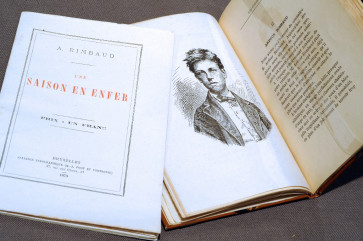
 A picture taken on Dec. 14, 2010 at Sotheby's in Paris shows collections of poems prior to being sold at auction : “Une saison en enfer“ (A Season in Hell) (left) by French writer Arthur Rimbaud and “Les poetes maudits“ (Accursed poets) by French writer Paul Verlaine. (AFP/Bertrand Guay)
I
t took a savant—the likes of English poet T. S. Eliot—to predict the wastelands that would emerge in the modern world we know today.
But it took a true visionary, a determined one, to prophesize his own future. Legendary French poet Arthur Rimbaud did so at the age of 18 years old, and it led him on an odyssey to what was then the Dutch East Indies, specifically the city of Salatiga in Central Java.
A highly influential figure for renowned modernists from Eliot to James Joyce, Rimbaud put in ink his destiny in one of the lines from his landmark prose-poem "A Season in Hell" in 1873:

“My day is done: I’m leaving Europe. The marine air will burn my lungs; unknown climates will tan my skin.”
Six years later, in 1876, he boarded a ship sailing to the Dutch East Indies—after enlisting as a soldier for the Dutch Royal Army. He set foot in Batavia (now Jakarta) with the other recruits, crossed the island of Java by train, boat and foot to reach Salatiga, and spent only two weeks there before deserting the colonial army to sail back home to France.
Mystery in an enigma
Rimbaud’s trip has long been scrutinized by critics who wonder why one of France’s brightest minds would cease writing and leave it all behind for a journey halfway across the globe.


More from The Weekender

Here, there, everywhere: The geography of belonging
For children raised across borders, the relationship between place and identity can become complicated, raising new questions about roots, privilege and belonging.

Saya Orang Indonesia?
Born an Indonesian citizen but raised in Hong Kong, a transnational writer with a hyphenated identity reflects on language, inheritance and the complicated question of what it means to call a country home.

The storied past of wayang in Indonesia’s currency
Nearly a century ago, Indonesia’s banknotes featured gods, heroes and demon kings from the world of wayang. Their story reveals how culture can shape our relationship with money.