The Jakarta Post
Please Update your browser
Your browser is out of date, and may not be compatible with our website. A list of the most popular web browsers can be found below.
Just click on the icons to get to the download page.


Popular Reads
Top Results
No results found. Please check your search term and try again
Can't find what you're looking for?
View all search results
Popular Reads
Top Results
No results found. Please check your search term and try again
Can't find what you're looking for?
View all search resultsSri Lankan baker 'cried' when he won best baguette in Paris
A Paris baker of Sri Lankan origin said he "cried" when he heard he had won best baguette in the French capital this week.
Change text size
Gift Premium Articles
to Anyone
Share the best of The Jakarta Post with friends, family, or colleagues. As a subscriber, you can gift 3 to 5 articles each month that anyone can read—no subscription needed!
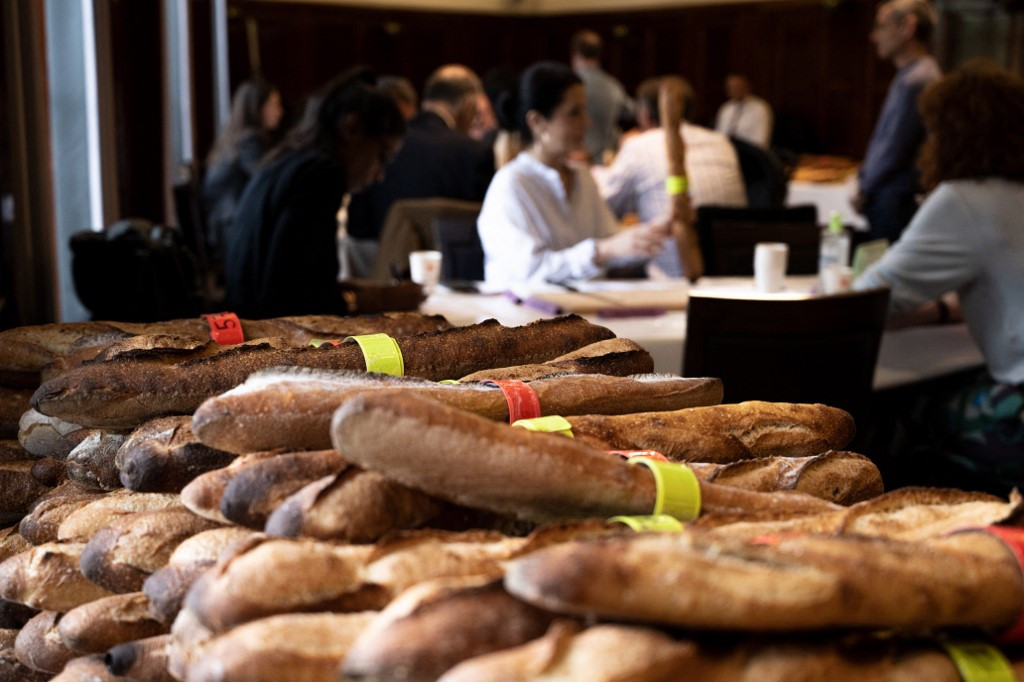 A photograph taken on May 10, 2023 shows baguettes in front of members of the jury during the annual “Grand prix de la baguette de tradition française de la Ville de Paris, aka the best baguette in Paris competition, in Paris. (AFP/Alain Jocard)
A
Paris baker of Sri Lankan origin said he "cried" when he heard he had won best baguette in the French capital this week and would be delivering the bread to the presidential palace.
"I cried because we are foreigners and we came here to learn how to make traditional French bread," Tharshan Selvarajah told AFP on Thursday.
"I am very happy to have won the prize."
Fifteen baguette connoisseurs on Wednesday selected Selvarajah's version of the iconic French bread as the best among 175 anonymous contenders.
Members of the jury, including six ordinary Parisians, had to rate dozens of baguette on their taste, crust, crumb, air bubbles, and overall aspect.
"Don't drink at the start or you won't be able to make it to the end of the tasting," Paris official Olivia Polski warned judges before they started.
A video she shared on Twitter shows her then ringing up the baker based in eastern Paris to tell him the good news.
"Noooo," he can be heard saying on the other end of the line.
Selvarajah told AFP he always makes his long loaves "with love", while "smiling, laughing and singing", and the result is well-cooked, delicious and crusty.
He has won 4,000 euros (more than $4,300) and the opportunity to supply baguettes to the presidential palace.
"I'm so happy that the president will taste my bread. Just taking it to the palace is exciting," he told AFP.
UN cultural body UNESCO awarded the baguette world heritage status in November last year.
More from The Weekender

Siapa Anda? Mengapa Anda?
What begins as a small grammatical curiosity becomes a larger question about language, culture and the way we understand ourselves in relation to others - and, ultimately, about what we risk losing in a world increasingly impatient with reflection, ambiguity and the humanities.
A passport to the kingdom of the sick
A breast cancer diagnosis, a journey to the kingdom of the sick and a determination to describe what lies there without metaphor, euphemism or the word “fight.”

The weight of time
Richard Mille’s newest ultralight timepiece pares down haute horlogerie to its mechanical necessities, proving that sophistication often comes from knowing what to leave out.