The Jakarta Post
Please Update your browser
Your browser is out of date, and may not be compatible with our website. A list of the most popular web browsers can be found below.
Just click on the icons to get to the download page.


Popular Reads
Top Results
No results found. Please check your search term and try again
Can't find what you're looking for?
View all search results
Popular Reads
Top Results
No results found. Please check your search term and try again
Can't find what you're looking for?
View all search resultsAs Thailand greenlights cannabis, patients welcome cheaper supplies
Change text size
Gift Premium Articles
to Anyone
Share the best of The Jakarta Post with friends, family, or colleagues. As a subscriber, you can gift 3 to 5 articles each month that anyone can read—no subscription needed!
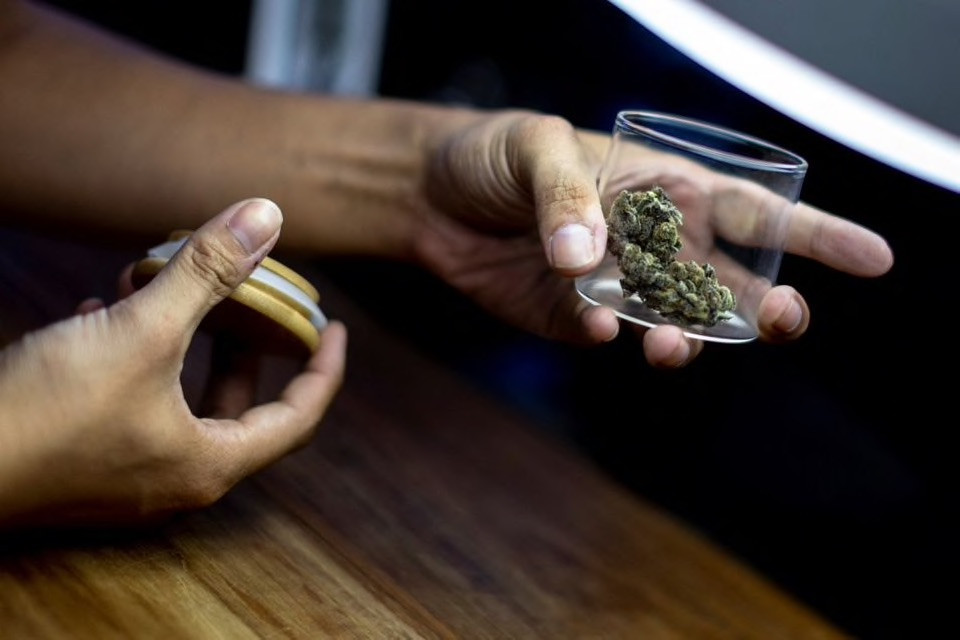 Legalized: A customer holds up a piece of cannabis at the Highland Cafe on June 9, after it was removed from the narcotics list under Thai law, in Bangkok, Thailand. (Reuters/Athit Perawongmetha)
F
or Jiratti Kuttanam, Thailand's relaxation of cannabis restrictions meant one thing above all — a cheaper supply of the products she uses to manage the pain and sickness caused by her breast cancer treatments.
Thailand last week became the first Asian country to legalize the growing and private consumption of marijuana, a move authorities said would boost agriculture by giving farmers a valuable new cash crop.
Jiratti, 42, said she and other patients would also feel the benefits closer to home.

Medical marijuana has been legal there since 2018. But, before the law changed, she had to rely on pricey foreign imports. Some patients went to illegal dealers.
Imported cannabis buds used to cost up to 700 baht (US$20) per gram, but prices have since halved, Jiratti said.
"I've been taking cannabis regularly so I don't have to feel pain," she said as she shredded and boiled marijuana leaves to make infused tea, filling her one-bedroom Bangkok apartment with its distinctive smell.
She was diagnosed with advanced stage breast cancer five years ago. Two years later she started using cannabis oil and other products to ease the pain, vomiting, fatigue and anxiety she suffered after chemotherapy.
A legal, local crop would mean a more reliable supply of those products — a good thing as long as patients know how to use them, she said.
"I think you need education. You need to study how to use it [...] the right way. It can be harm[ful]. It can be dangerous as well, you know."
Thailand's relaxation of restrictions has not meant a total free-for-all. Last week, new regulations went into effect forbidding public smoking of cannabis as well as its sale to people under 20, pregnant women and breastfeeding mothers.

More from The Weekender

Citra Awards 2026: Who makes the cut?
An updated selection process brings fresh questions about recognition at the upcoming Citra Awards. Three movie-focused accounts weigh in on the favorites, the snubs and what makes a movie worthy of an ‘Indonesian Oscar’.

Old habits, new China
What does it take to change a city’s habits? In Beijing, rising prosperity, better public spaces and ever-watchful cameras are reshaping how people behave — with room for a little old-fashioned unruliness

My mother’s magic jar of happiness
In a jar of notes left by her mother, Pallavi finds the small comforts of recovery as they become something to hold on to through the untethering force of grief.