The Jakarta Post
Please Update your browser
Your browser is out of date, and may not be compatible with our website. A list of the most popular web browsers can be found below.
Just click on the icons to get to the download page.


Popular Reads
Top Results
No results found. Please check your search term and try again
Can't find what you're looking for?
View all search results
Popular Reads
Top Results
No results found. Please check your search term and try again
Can't find what you're looking for?
View all search resultsSwiss museum gives up art treasures stolen by Nazis
Change text size
Gift Premium Articles
to Anyone
Share the best of The Jakarta Post with friends, family, or colleagues. As a subscriber, you can gift 3 to 5 articles each month that anyone can read—no subscription needed!
 Set as preferred source
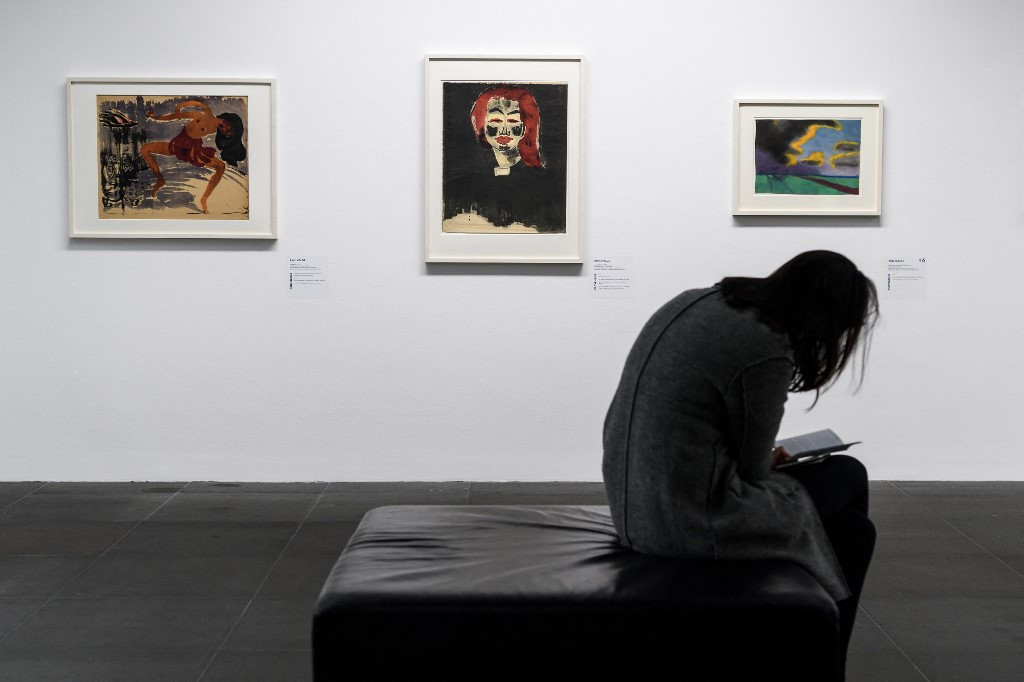 A visitor sits next to lithographs 'The Dancer' (L), 'Young Danish Woman' (C) and 'Wide landscape with clouds' by German-Danish painter and printmaker Emil Nolde during a press visit of the first exhibition of the Cornelius Gurlitt's collection, on the eve of the public opening at the Museum of Fine Arts in Bern, on November 1, 2017. (AFP/Fabrice Coffrini)
A
Swiss museum said on Friday it would give up almost 40 works of art after a years-long investigation concluded they were either stolen by the Nazis or of doubtful origin.
But the Museum of Fine Arts Bern said almost 1,100 other works from the same trove would be retained despite their provenance remaining unproven.
German-Austrian collector Cornelius Gurlitt died in 2014 and left more than 1,600 works to the museum, including paintings by Pierre-Auguste Renoir, Paul Cezanne, Max Beckmann, Eugene Delacroix and Edvard Munch.
Gurlitt's father was one of four art dealers tasked by the Nazis with selling art stolen from Jews or confiscated as "degenerate".
The museum accepted the collection in November 2014 but renounced the rights to all artworks that once belonged to Jewish owners dispossessed by the Nazis, following an agreement with Germany.
The institution launched a years-long study that labelled the works with a traffic-light system where looted works were labelled "red".
It said on Friday it had already given up nine works stolen by the fascist regime, which Germany had since returned to their owners.
It also refused to accept 29 works "of uncertain origin but with doubtful signs and/or circumstances, even if proof of Nazi dispossession is lacking".
Five of those works have already been returned to Germany, two are subject to restitution applications and 22 remain in the museum for further research on their provenance.
Almost 1,100 other works of doubtful origin will remain with the museum despite the institution saying that their "provenance from 1933 to 1945 has not been unambiguously clarified; gaps in the ownership history remain".
In deciding to retain the art, it concluded: "There are no implications of looted art and/or conspicuous circumstances."
Gurlitt's collection was only discovered in 2012 after customs officials entered properties in the southern German city of Munich and Salzburg, Austria.

More from The Weekender

Is AI really making us better workers?
AI can make our work faster and more polished. But by eliminating the struggle, mistakes and imperfections, it may also be eliminating some of the ways we learn and become better workers.
Travels in the land of Gen Z
To become a professor to Gen Z today is to take a disorienting journey to an exotic land. First of two parts.
More trains, more stations, but Greater Jakarta still isn’t connected
Jakarta now has more trains and stations. But getting to them from Depok, Bogor, Tangerang or Bekasi still means an ojek or a car ride.