The Jakarta Post
Please Update your browser
Your browser is out of date, and may not be compatible with our website. A list of the most popular web browsers can be found below.
Just click on the icons to get to the download page.


Popular Reads
Top Results
No results found. Please check your search term and try again
Can't find what you're looking for?
View all search results
Popular Reads
Top Results
No results found. Please check your search term and try again
Can't find what you're looking for?
View all search resultsHealing wounds: Papuan art collective delivers activism through fine art
Udeido brings to focus art inspired by cases of human rights violation, women’s rights and environmental issues in Papua.
Change text size
Gift Premium Articles
to Anyone
Share the best of The Jakarta Post with friends, family, or colleagues. As a subscriber, you can gift 3 to 5 articles each month that anyone can read—no subscription needed!
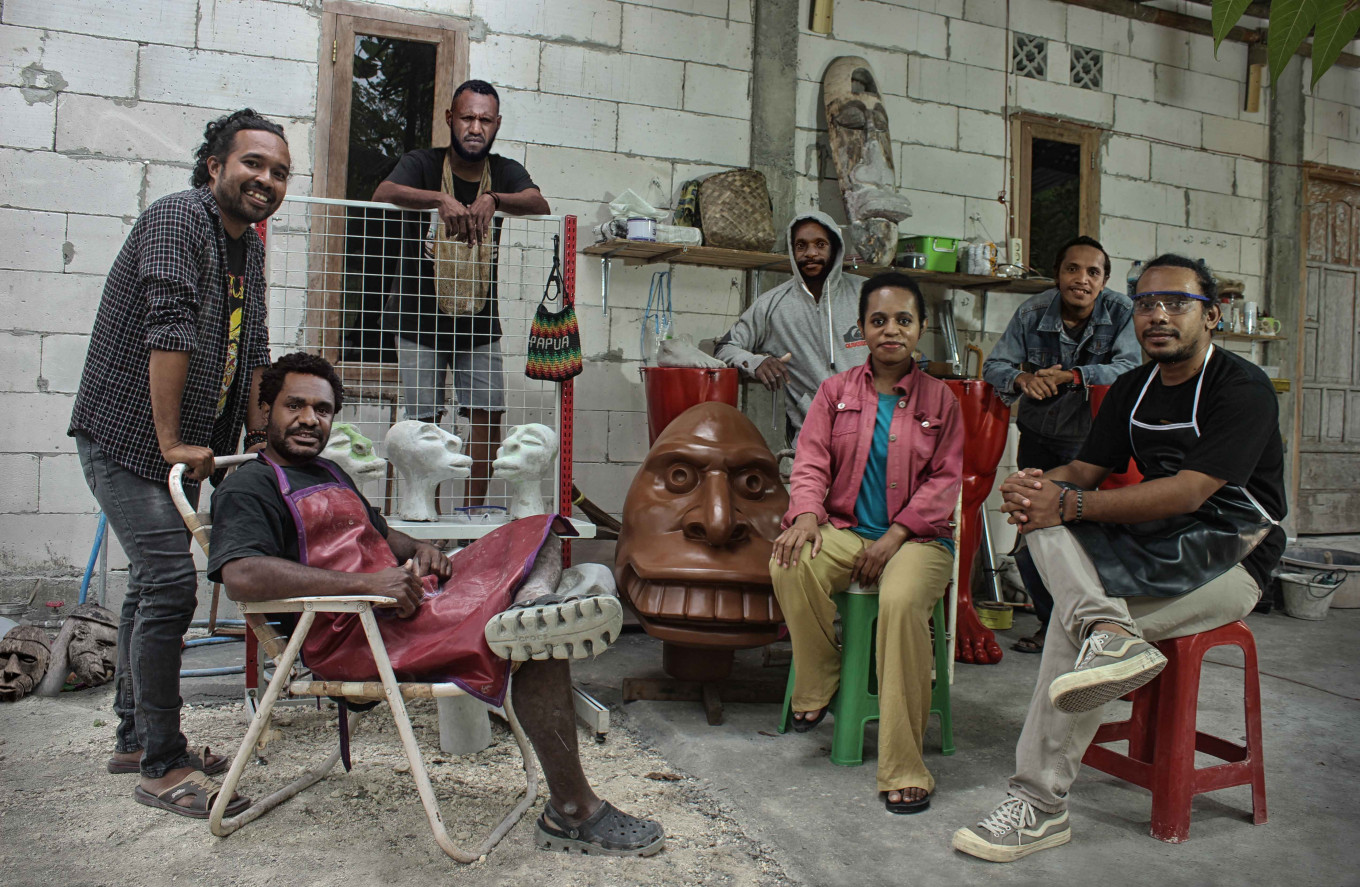 Art collective: Udeido members (from left) Dicky Takndare, Nelson Natkime, Yanto Gombo, Andre Takimai, Betty Adii, Constantinus Ruharusun and Michael Yan Devis. (Courtesy of the Organizing Commitee Biennale Jogja XVI Equator #6 2021) (Personal collection/Courtesy of the Organizing Commitee Biennale Jogja XVI Equator #6 2021)
A
rt collective Udeido brings to focus art inspired by cases of human rights violation, women’s rights and environmental issues in Papua.
In October, 23-year-old artist Betty Adii showcased her first ever art installation at one of Yogyakarta's most prominent art exhibitions, Jogja Biennale XVI.
The Sentani-born artist had previously focused on acrylic and watercolor painting. For the exhibition, she created statues of bullets made from resin, their shape purposely evoking the male genitalia, shaped grotesquely with images of skeletons. On the bullets, shapes that look like women’s underwear appear stuck.

"Dystopian Reality: The Agony of Existence" came from Betty’s research and feelings on the issue of violence against women in her native Papua.
One of her references for this piece was a report published by the National Commission on Violence Against Women (Komnas Perempuan) titled, Testimony of Papuan Women Victims of Violence and Human Rights Violations 1963-2009: Stop It. She learned of the impact of a culture centered upon toxic ideas about masculinity.

"When I learned about the issue, I found a connection between domination and masculinity [in conflicts]. That's how I came up with the idea of the bullets," Betty said.


More from The Weekender

Citra Awards 2026: Who makes the cut?
An updated selection process brings fresh questions about recognition at the upcoming Citra Awards. Three movie-focused accounts weigh in on the favorites, the snubs and what makes a movie worthy of an ‘Indonesian Oscar’.

Old habits, new China
What does it take to change a city’s habits? In Beijing, rising prosperity, better public spaces and ever-watchful cameras are reshaping how people behave — with room for a little old-fashioned unruliness

My mother’s magic jar of happiness
In a jar of notes left by her mother, Pallavi finds the small comforts of recovery as they become something to hold on to through the untethering force of grief.