The Jakarta Post
Please Update your browser
Your browser is out of date, and may not be compatible with our website. A list of the most popular web browsers can be found below.
Just click on the icons to get to the download page.


Popular Reads
Top Results
No results found. Please check your search term and try again
Can't find what you're looking for?
View all search results
Popular Reads
Top Results
No results found. Please check your search term and try again
Can't find what you're looking for?
View all search resultsIndonesia’s digital wallet race shifts toward cost efficiency, consumer benefits: Study
A recent study found that 90.3 percent of some 400 participants had been using digital wallets for more than two years, reflecting the growing maturity of digital financial services in Indonesia.
Change text size
Gift Premium Articles
to Anyone
Share the best of The Jakarta Post with friends, family, or colleagues. As a subscriber, you can gift 3 to 5 articles each month that anyone can read—no subscription needed!
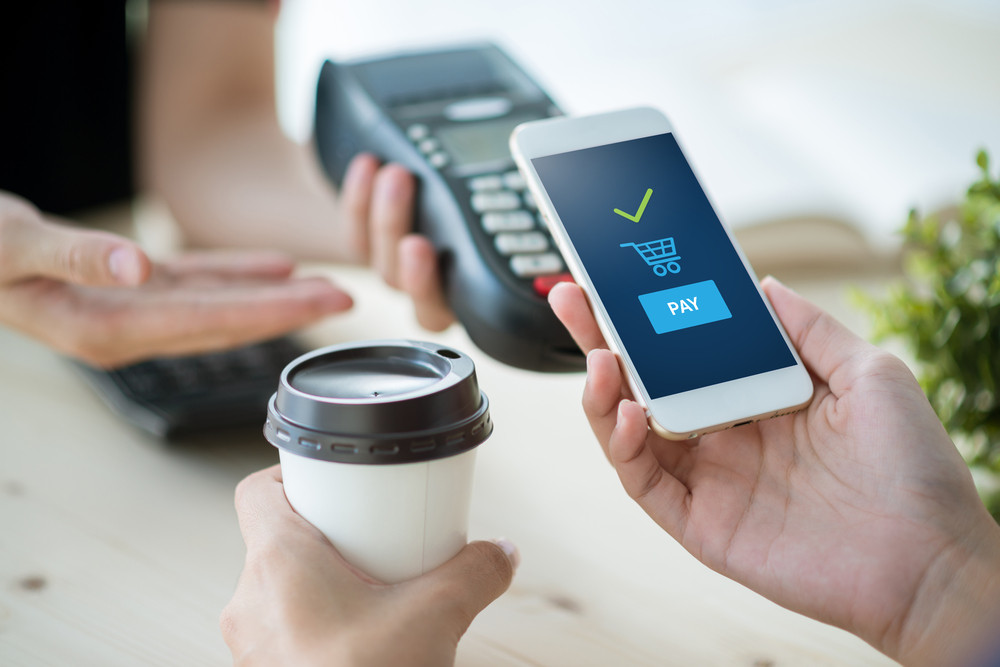 Illustration of a payment transaction using a digital wallet. (Shutterstock/Paisit Teeraphatsakool)
T
he increasingly competitive digital payment industry is entering a new phase, with providers facing growing pressure to offer more than convenient and fast transactions.
A study by MarkPlus, titled E-Wallet Research 2026: Usage Behavior & QRIS Landscape, involving 400 respondents across several Indonesian cities, found that 90.3 percent of participants had been using digital wallets for more than two years, marketing and consulting firm MarkPlus said in a statement recently.
The shift reflects the growing maturity of digital financial services in the country, where e-wallets have become an integral part of everyday economic activities, from online shopping and merchant payments to money transfers and purchases of digital products.
MarkPlus Corp. chief marketing officer Yosanova Savitry said consumer expectations of digital wallet services continued to evolve.
“While convenience and transaction speed remained important, users were also paying closer attention to flexibility and direct financial benefits,” she said in the statement.
“Understanding these changing preferences and consistently delivering relevant, accessible and rewarding transaction experiences are key to remaining competitive and building long-term relationships with consumers.”

Yosanova added that digital payment providers needed to deliver consistent value to retain users, rather than relying solely on short-term promotional campaigns.
“Practical, affordable and reliable services would be essential to maintaining consumer trust and loyalty,” she said.
“The intensifying competition reflects the broader opportunities and challenges facing Indonesia’s digital economy.”
The findings suggest that digital payments are no longer a novelty for Indonesian consumers. Instead, users are increasingly evaluating platforms based on the practical and financial benefits they provide.
ShopeePay emerged as the most frequently used digital wallet, accounting for 40 percent of respondents, followed by GoPay at 34.3 percent, DANA at 15.3 percent and OVO at 1.8 percent.
ShopeePay also led in consumer recommendations, with 38 percent, ahead of GoPay at 35.5 percent, DANA at 13.8 percent, LinkAja at 2.5 percent and OVO at 1.8 percent.
The growing adoption of the Quick Response Code Indonesian Standard (QRIS) has also become a major driver of digital transactions.
According to the study, 85.3 percent of respondents used QRIS through digital wallets, making it the most widely used transaction feature. Money transfers to bank accounts or other digital wallets followed at 77.3 percent, while online shopping accounted for 70.8 percent and digital product purchases 69 percent.
Convenience and transaction speed were the main considerations for 80.8 percent of QRIS users. Meanwhile, 54.4 percent considered the breadth of merchant networks important, while 51.3 percent took promotions and cashback into account.
In the QRIS segment, ShopeePay ranked first in both brand recall and usage, recording 37.7 percent and 40.5 percent, respectively. The survey also found that 30 percent of QRIS users considered the availability of multiple funding sources when choosing a payment service.
Transfer costs have likewise become an important consideration. ShopeePay was selected by 41.8 percent of respondents for money transfers, followed by GoPay at 33.7 percent and DANA at 17.7 percent.






