The Jakarta Post
Please Update your browser
Your browser is out of date, and may not be compatible with our website. A list of the most popular web browsers can be found below.
Just click on the icons to get to the download page.


Popular Reads
Top Results
No results found. Please check your search term and try again
Can't find what you're looking for?
View all search results
Popular Reads
Top Results
No results found. Please check your search term and try again
Can't find what you're looking for?
View all search resultsIndonesia considers subsidized fuel price hike as fiscal pressure mounts: Reports
Indonesia's Government Communication Agency said that the government had promised not to raise subsidized fuel prices this year, but, for next year, the president had not given a directive.
Change text size
Gift Premium Articles
to Anyone
Share the best of The Jakarta Post with friends, family, or colleagues. As a subscriber, you can gift 3 to 5 articles each month that anyone can read—no subscription needed!
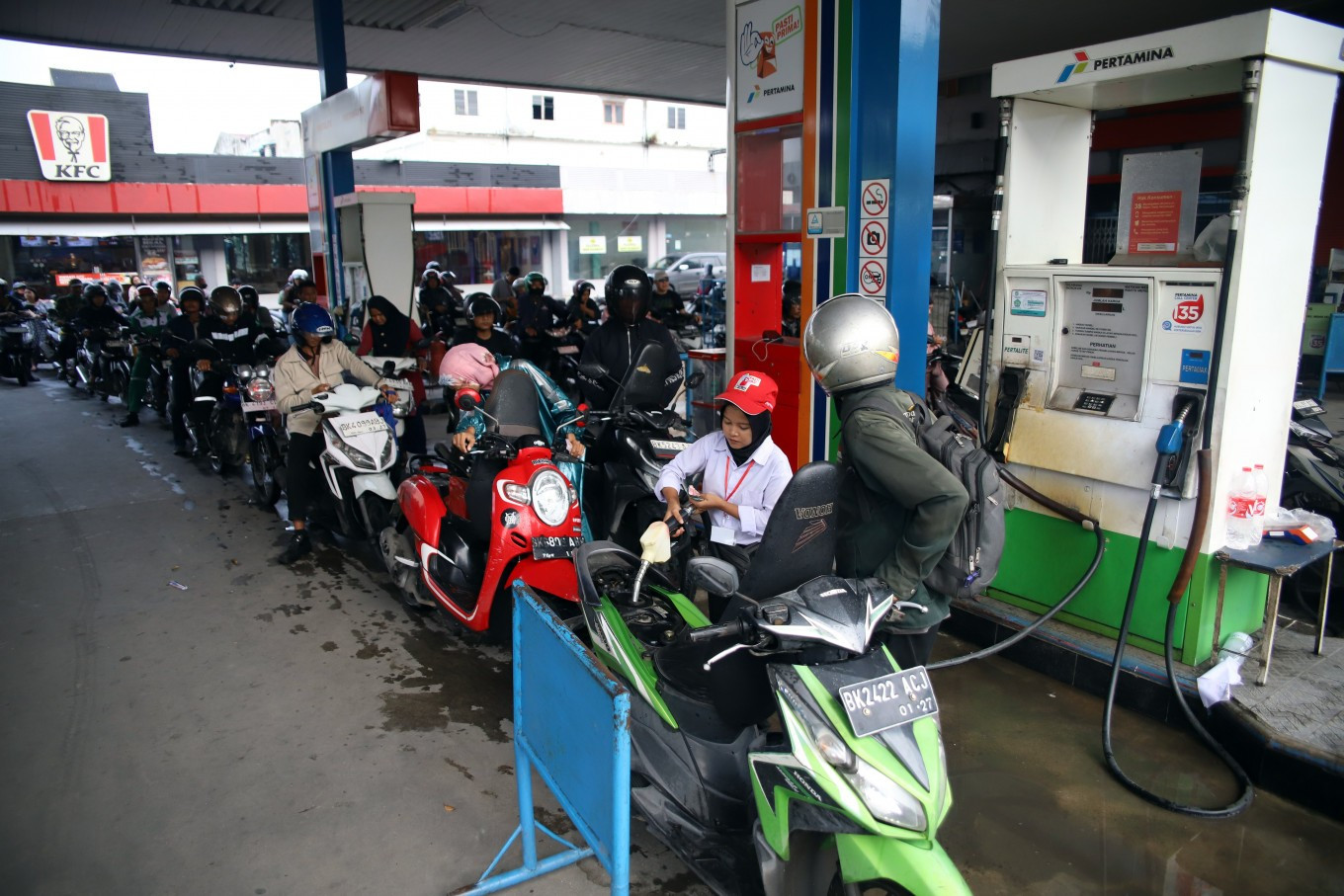 Motorists wait to buy Pertalite gasoline at a gas station in Medan, North Sumatra, on July 16, 2026. (Antara/Yudi Manar)
T
he government is considering raising subsidized fuel prices in early 2027 for the first time in five years, four people familiar with the matter told Reuters, as high global oil prices and a weak rupiah increase pressure on the G20 economy's finances.
Stable fuel prices have played a major part in anchoring inflation at benign levels in Southeast Asia's largest economy, although a string of economic setbacks has driven the rupiah to multiple record lows this year, made Indonesia's stock market the world's worst-performing market, and caused investor confidence to fall fast.
Fuel prices are a particularly sensitive political matter in the world's fourth-most populous country, and hikes have historically been followed by protests. On the political front, polls show President Prabowo Subianto's approval ratings have fallen fast this year, mostly over his handling of the economy.
The price hike proposal was discussed at a meeting last week, attended by officials from Bank Indonesia, state energy company Pertamina, state asset fund Danantara and the Office of the Coordinating Economy Minister, one source, a state official with direct knowledge of the discussion, told Reuters.
All four sources, two of whom are officials from state-linked institutions involved in the meeting, told Reuters no decision had been reached, and the size of the proposed price hike had not been determined.
The first source said the proposal had come from the state energy company over worries about its financial situation, and factors being weighed included the impacts on Prabowo's popularity and Pertamina's finances.

Indonesia's Government Communication Agency, in response to Reuters queries, said that the government had promised not to raise subsidized fuel prices this year, but, for next year, the president had not given a directive.
The Finance Ministry said through a spokesperson it had no knowledge of any discussion about the future of fuel subsidies. The economic ministry, Bank Indonesia, Danantara, Pertamina and the president's office did not immediately respond to a request for comment.
Fiscal pressures
Indonesia has kept subsidized fuel prices unchanged despite global oil prices being elevated since conflict in the Middle East disrupted international energy markets. The country's energy subsidy budget is expected to balloon to Rp 500 trillion (US$27.2 billion) this year, 30 percent higher than originally earmarked.
The finance ministry has already said it could increase the allocation further.
The second source said Pertamina had not received full reimbursements for distributing subsidized fuel, as the government tried to keep its fiscal balance in check.
By law, the government's annual budget deficit is capped at 3 percent of GDP, a limit that is already being tested by Prabowo's costly flagship programs, such as distributing free meals to millions of students and pregnant women.
This year's official deficit estimate is 2.85 percent of GDP.
Political impact
Fuel price hikes in 1998 contributed to violent demonstrations against then-President Suharto, which ultimately led to his ouster. In 2015, a fuel price hike caused Prabowo's predecessor's approval rating to plummet.
Raising subsidized fuel prices could hurt Prabowo's approval rating as well, said Djayadi Hanan, executive director of pollster Lembaga Survei Indonesia.
"If the public feels economically strained, their assessment of the economic situation will be negative," he said. "When it is negative, it politically leads to public dissatisfaction with the government's performance, especially the president."
With subsidies, 90-octane gasoline is sold at Rp 10,000 per liter, about $2.1 per gallon, about half its estimated economic price, while diesel is sold at Rp 6,800 rupiah per liter, about $1.4 per gallon, less than a third of its economic price, according to the finance ministry's estimate using October prices.
The subsidy bill has also increased because many buyers who usually consume higher-quality fuel, the price of which has risen periodically, have shifted to subsidized fuel because of the increasing price difference. The energy ministry was considering an increase in the subsidized fuel volume quota, after reports of queues stretching outside fuel stations in several cities.
Indonesia is a net oil importer. The rupiah has fallen to new depths this year and sank to another record low on Thursday of 18,395 to the dollar.