The Jakarta Post
Please Update your browser
Your browser is out of date, and may not be compatible with our website. A list of the most popular web browsers can be found below.
Just click on the icons to get to the download page.


Popular Reads
Top Results
No results found. Please check your search term and try again
Can't find what you're looking for?
View all search results
Popular Reads
Top Results
No results found. Please check your search term and try again
Can't find what you're looking for?
View all search resultsOn the cusp of change: creating waves in climate investment
Nadia Chiarina details her career journey, driven by her passion for lifelong learning and her courage to pursue new things, culminating in her discovery of her true calling. She is now leading an important work in investing and embedding climate considerations on an international level
Change text size
Gift Premium Articles
to Anyone
Share the best of The Jakarta Post with friends, family, or colleagues. As a subscriber, you can gift 3 to 5 articles each month that anyone can read—no subscription needed!
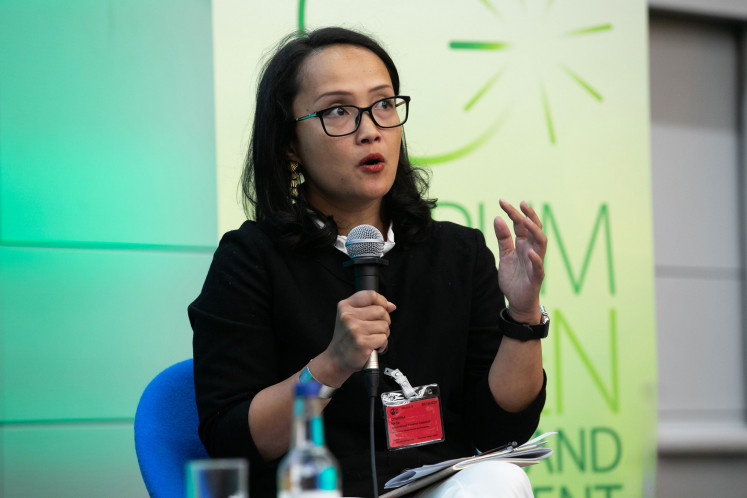
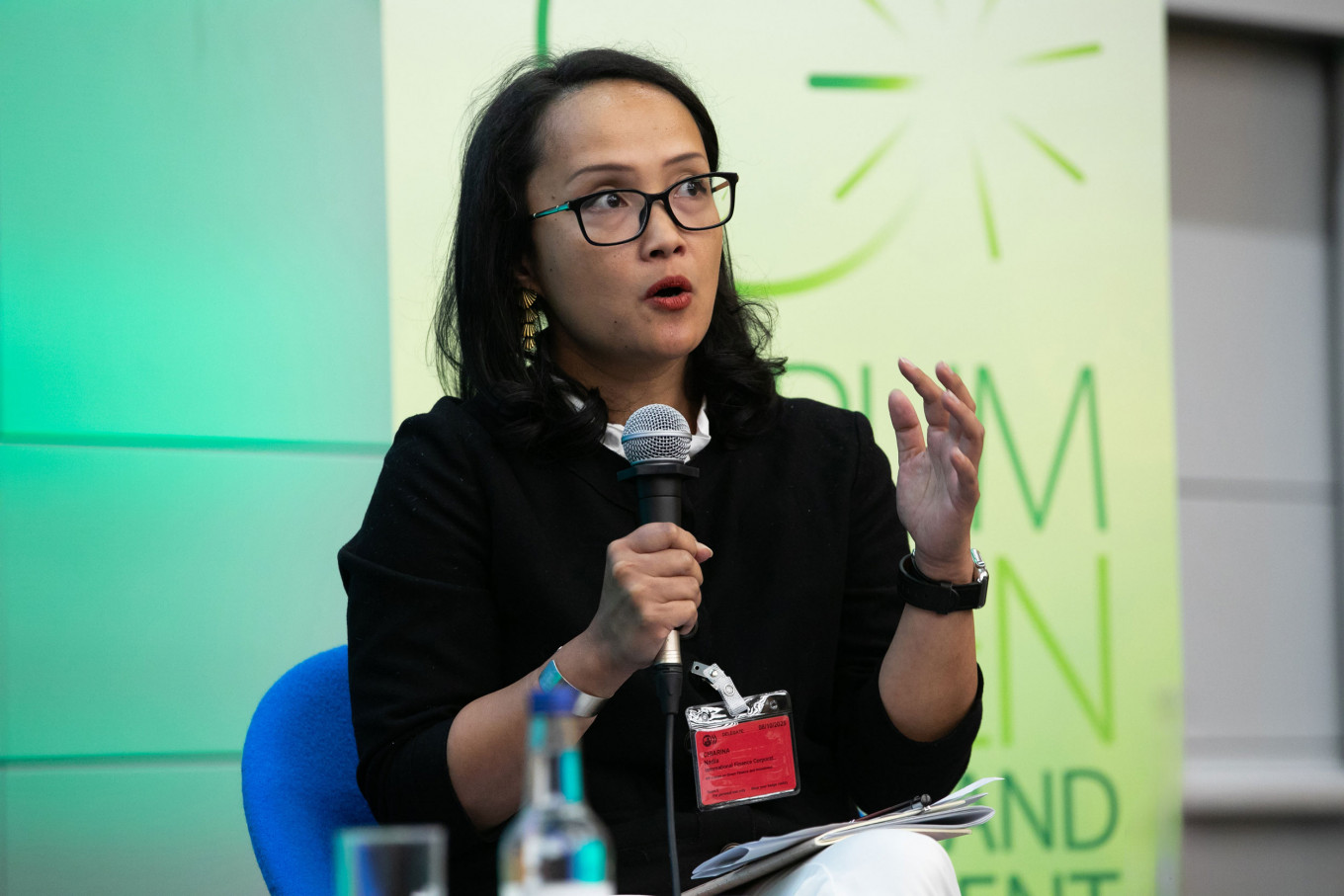 Nadia Chiarina recounts her journey on how she found her calling in the climate investment sector, from her upbringing to joining the World Bank Group. (Images courtesy of Nadia Chiarina)
C
limate change impact is now already a part of our lives, evidently rising global temperatures, melting glaciers, and increasing sea levels posing threats to our sinking capital city of Jakarta. Children and young people today have more awareness of the challenges brought on by climate change. From kids of school to adults with powerful influences, we need to do our bit to keep our mother earth a livable and thriving place to live.
At home, Indonesia is one of the countries that adopted the Paris Agreement, a legally binding international treaty on climate change adopted by nearly all nations to combat global warming. Indonesia signed and ratified the agreement in 2016, declaring a goal that is rooted on the commitment to lower greenhouse gas emissions by 29 percent independently, or up to 41 percent with international support.
While it is a step towards the right direction, the world of pure investment and climate policy formulation were operating on separate tracks, even though effective climate investment required a strong bridge between the two, and every investment needs to consider its climate impacts.
That gap however still remains. Perhaps, no one understands that more than Nadia Chiarina, who is part of a pivotal position to build the bridge towards a better future for all through her work in climate investment.
Nadia is currently serving as the Sector Lead for Financial Institutions and Funds investments in the Global Climate Department within the World Bank Group. She and the team are responsible for leading project evaluations and developing evaluation methodologies for projects funded by the World Bank Group to ensure that project designs do not undermine the Paris Agreement’s goals.
However, the path that she created for herself can be considered new, which maybe did not present itself as a career option when she first pursued higher education in 1999. For Nadia, education builds the door for her and others to walk through the paths not taken.

Laying the groundwork
She was born into a family of educators; her father was a lecturer at Institut Teknologi Bandung (ITB) who also worked on development projects with international organizations. From an early age, inspired by the work her father did, Nadia held a steadfast dream of becoming an industrial engineer, working on systems and designs to find optimal solutions. For that, she pursued an undergraduate degree in Industrial Engineering at ITB in 1999 and worked at the Boston Consulting Group (BCG) immediately upon graduation. She decided to join after becoming captivated by the BCG Matrix she had studied in class.
At BCG, she launched her career in strategic consulting as a case team analyst, which consists of a lot of data crunching, working on various topics such as potential mergers and consolidations of various entities, synergy analysis, and process optimization among others.
“In BCG, they didn’t have that [case team analyst] program before, so it was the first one, and then BCG asked me to run the recruitment program for them and since then, it has become a continuous batch that even produces BCG partners. I applied the old style back then handed my paper CV to the lovely receptionist at BCG, named Wala, as they did not do any recruitment locally. So I think that having somebody at the time who is just like them made some of the recent graduates see the potential opportunities,” she said, who was the only local graduate at the time, with most employees getting their degrees from the United States and overseas.
However, she didn’t stop there. After honing her skills for several years, she felt the need to complement her operational management background with financial expertise through a Master of Business Administration (MBA) program.
Around that time, her father spotted an advertisement for the Putera Sampoerna Foundation scholarship in the newspaper. Nadia applied and became part of the scholarship's inaugural cohort after navigating a rigorous selection process that included psychometric testing and multiple interview rounds.
“I think it really tests your ability to compete as well. It has been a long time now, I don’t remember how many interviews that I had to do, and then we had to do a full day of various tests. I think we had an offsite psychological tests, and essays, and there was a team game that was designed as a test setting,” she remembered, adding that it was as tough as applying to business school itself.
“I think it was more the philosophy of the foundation that they wanted people who are receiving the scholarship to be successful in their schools. Because to be going global, you have to bring Sampoerna’s name, and Indonesia’s name, and they want to make sure that there is an impact, they want to make sure that the people who get this will eventually apply the skills to their careers, be a leader in whatever field they are going towards,” she clarified.
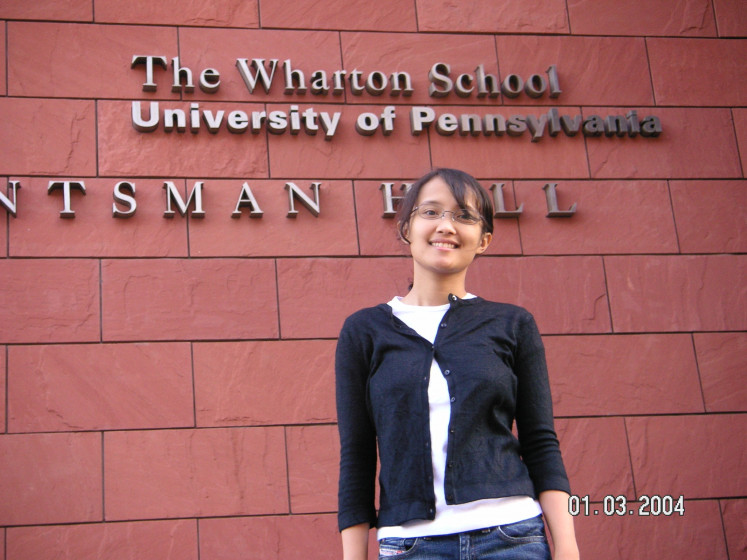
With the new opportunity, she sets her sights on the University of Pennsylvania to deepen her knowledge of finance. She decided to enroll at the prestigious Wharton School from 2002 to 2004, attributing to the school’s strong branding of finance and investment.
Making her pivot
While initially coming back to BCG, her strong interest in the investment world led her to the International Finance Corporation (IFC) in Jakarta as an Associate Investment Officer. She was able to pursue a different path here.
Her investment career flourished over the next decade, taking her from a private equity fund founded by Tom Lembong to a role with OCBC Bank in Singapore, where she broadened her regional experience across Southeast Asia.
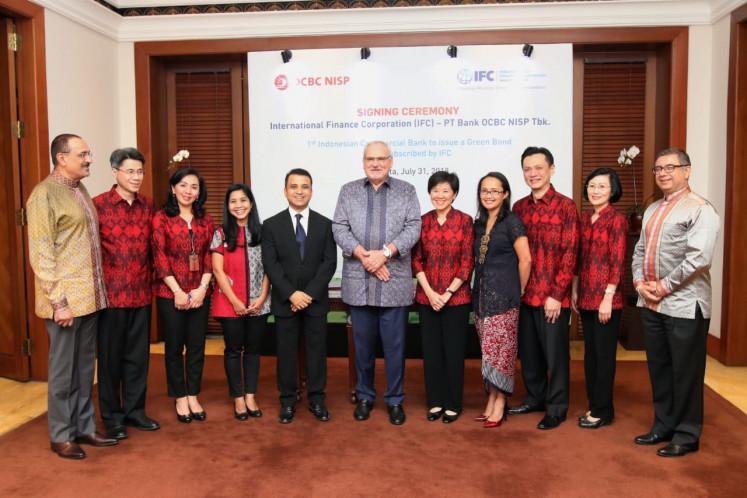
Eventually, another door appeared, promising a greater life mission when Nadia returned to IFC Indonesia as Financial Sector Lead in 2016. This was where she noticed the gap and the misalignment between investment and climate policymaking.
Driven by a desire to enhance her professional capabilities, she made the bold decision to take a leave of absence and pursue another Master’s degree. Motivated by Europe’s ambitious climate regulations, she pursued a degree in Environmental Finance and Renewable Energy at University College Dublin. While the world stalled amid the COVID-19 pandemic, Nadia didn’t waiver and stood her ground.
Nadia emphasizes that to effectively channel climate finance, the world needs investment professionals who understand climate science or policy, and vice versa. The world needs leaders to realize that climate risk is no longer merely a non-financial risk, but is a tangible financial risk that directly impacts cash flow and banking non-performing loan (NPL) ratios when infrastructure projects are disrupted by extreme weather.
She returned to the IFC, but worked for the eGlobal Climate Department at the headquarter working remotely from Dublin. When the work required her to move to Washington DC, the possible move was challenging for her family circumstances. She decided to prioritize her family.
She stayed in Dublin and worked for EY, with her last role as Global Sustainability Solution Director. Until, the Global Climate Department of the World Bank Group opened a senior position in Paris and she rejoined the institution.
Today, the climate cross-institutional unit of the World Bank Group operates globally to maximize service delivery to clients by integrating efforts across policy, the public sector, and the private sector. Through this role, Nadia's work has a real impact on bringing together investments and policy with climate lens at the global level, giving her the platform to create a bigger change. This includes her active role in the World Bank Group Paris Climate Network that brings together the fertile ecosystem in Paris, private sector, policy makers, international organizations and academic institutions to explore concrete solutions.
When projects are undertaken by private sector developers, it is the responsibility of Nadia and her team to integrate climate risk and impact analysis into the assessment and design of the project. For example, many critical community infrastructure projects face operational risks due to extreme weather or heatwaves. Nadia’s evaluation can help these infrastructure projects to be more resilient to climate change. This ensures uninterrupted service to the community and avoids the risk of financial failure, which could negatively impact cash flow and increase the banking sector's NPL ratios.
Investing in people
Nadia admitted that the greatest pride and happiness is witnessing her team members grow personally and professionally. She finds it deeply moving when team members engage in self-reflection and share that her guidance or words inspired them to make significant decisions.
After a career that spans 20 years, Nadia notes that while concluding a well designed project is satisfying, seeing someone evolve into a better person through her leadership provides a unique, profound, and irreplaceable sense of inner fulfilment.
To her, this kind of personal impact serves as a powerful reminder that our influence on the world is not measured solely by project completion, but by the impact we have on the people around us. After all, being a community leader is one of the values that are taken into consideration on the rigorous process of PSF scholarship, one that Putera Sampoerna saw early on in her career.
For some on her team, her influence made them look into higher education: “The support from PSF in my early career allows me to continue reinventing myself, grow professionally, and go international. This is what I see the best impact I could make is on people, and the best investment we can make is on people. On this, I am forever grateful to PSF.”
And perhaps, that is her biggest legacy. In today’s era of fierce competition and rapid AI
advancement, technical knowledge quickly becomes obsolete. Nadia advises the younger generation that the most crucial attributes to possess are curiosity and the ability to continuously learn new things.
From her dream of becoming an industrial engineer to becoming a sector lead with the Global Climate Department in the World Bank Group, Nadia had to open a lot of doors and create her own path, equipped with confidence, an appetite for knowledge, and the courage to follow her passion. And she can serve as an inspiration to many.
"You always try your best, right? I guess if I were reflecting on the experience, like applying to BCG at the time, when there was not even a recruitment happening, and then be bold and determined to try that path and work your best, and try to be resourceful. Those attributes are also what led me to the PSF scholarship, which contributed to this whole journey too," she concluded.