The Jakarta Post
Please Update your browser
Your browser is out of date, and may not be compatible with our website. A list of the most popular web browsers can be found below.
Just click on the icons to get to the download page.


Popular Reads
Top Results
No results found. Please check your search term and try again
Can't find what you're looking for?
View all search results
Popular Reads
Top Results
No results found. Please check your search term and try again
Can't find what you're looking for?
View all search resultsInvesting in Indonesia’s future: Why five strategic sectors matter
From toll roads and data centers to geothermal energy, healthcare and battery materials, INA is putting long-term capital behind Indonesia’s future.
Change text size
Gift Premium Articles
to Anyone
Share the best of The Jakarta Post with friends, family, or colleagues. As a subscriber, you can gift 3 to 5 articles each month that anyone can read—no subscription needed!
 Set as preferred source
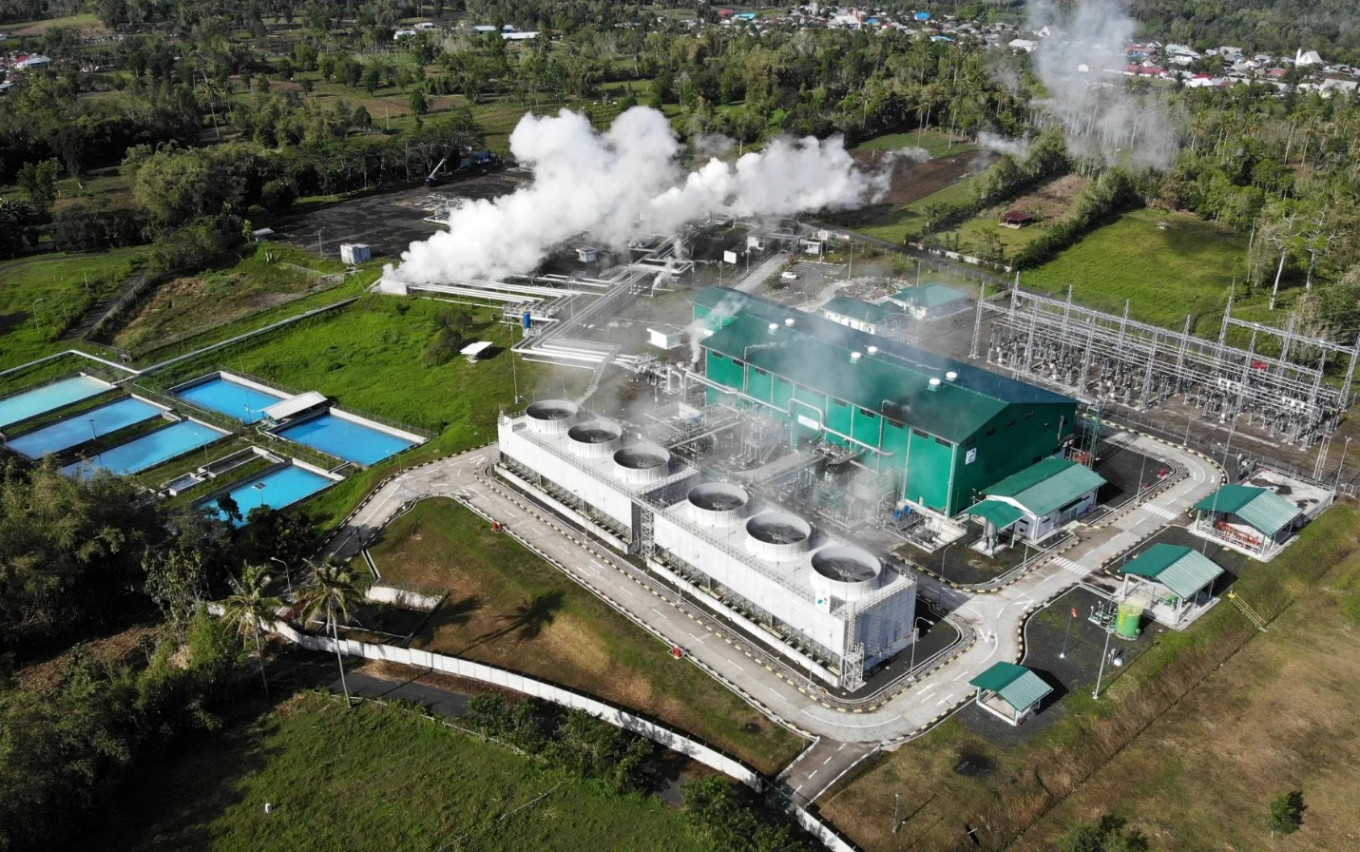 The geothermal facility operated by PT Pertamina Geothermal Energy Tbk (PGE) in Sulawesi forms part of the company’s development of Indonesia’s geothermal resources. PGE is among the portfolio companies of the Indonesia Investment Authority (INA). (Images courtesy of the Indonesia Investment Authority (INA))
Indonesia has made significant economic progress, but its next phase of growth will require more than conventional investment.
The country needs long-term capital to strengthen infrastructure, improve productivity, accelerate the digital economy, support the energy transition, expand access to quality healthcare and strengthen its downstreaming agenda.
This is partly why Indonesia established the Indonesia Investment Authority (INA) in December 2020. According to its website, INA was established to strengthen the country’s economic foundation and create long-term value for future generations. INA operates under a dual mandate: generating long-term financial returns while supporting national development and public welfare.
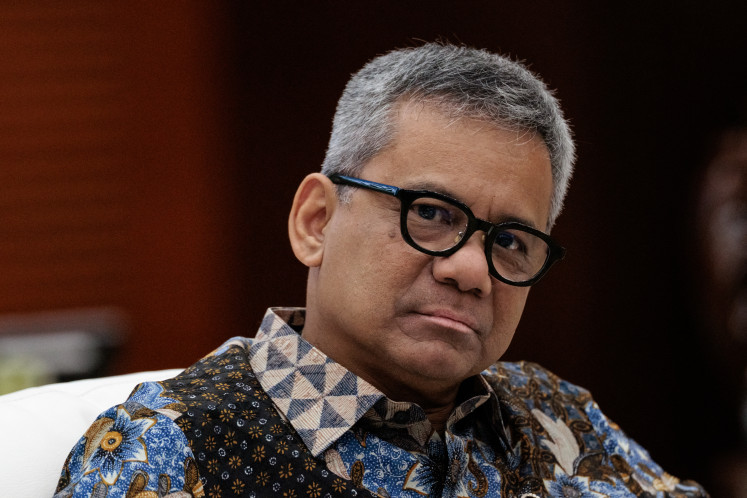
INA Senior Director of Investment Rhesa T. Hanani said that investments made by INA are not simply intended to finance today’s growth, but also to help build the foundations of tomorrow’s economy.
Explaining INA’s focus on five strategic sectors, Rhesa said they were selected because they are generally non-cyclical, offering relatively stable and defensive characteristics while complementing one another.
“Developing digital infrastructure requires reliable power, which brings us to the development of green energy. Advanced materials, meanwhile, also require logistics, which brings INA to the development of transportation and logistics,” he said.

“As we mature, we will have more company portfolios and potentially develop synergies among the five sectors.”
Building Connectivity
Indonesia’s geography makes connectivity critical to economic development, which is why INA has placed transportation and logistics among its strategic priorities.
According to INA’s 2025 Annual Report, transportation and logistics remains its largest cumulative sector allocation, accounting for 44 percent of total cumulative investment deployment.
Together with Abu Dhabi Investment Authority (ADIA) and APG Asset Management, INA has supported the development of more than 250 kilometers of toll roads. INA has also partnered with DP World to develop the Belawan New Container Terminal, a major key port on the Strait of Malacca, as part of efforts to strengthen Indonesia’s port and logistics infrastructure. Furthermore, INA has partnered with ESR in developing approximately 200,000 square meters of modern logistics properties.
Accelerating the Digital Economy
INA is also investing in digitalization and artificial intelligence, recognizing AI’s potential to become an important driver of productivity and competitiveness.
Investment can help Indonesian businesses move from being digital consumers to becoming participants in the digital and AI value chain.
Digital infrastructure accounts for 29.5 percent of INA’s total cumulative investment deployment, covering telecommunications towers, fiber-optic infrastructure and hyperscale data centers. Its investments include Dayamitra Telekomunikasi (Mitratel), a major telecommunications tower operator with more than 40,000 towers across Indonesia and over 57,000 km of fiber-optic networks, and DayOne, a leading developer and operator of high-performance data centers in Asia, where INA’s investment began with a 72.4 MW hyperscale campus in Batam and is now supporting the platform’s expansion to approximately 390 MW of capacity.
Supporting the Energy Transition
Indonesia needs increasing amounts of reliable energy while pursuing decarbonization. The transition requires substantial capital, technology and infrastructure.
INA’s investments alongside Masdar in Pertamina Geothermal Energy support one of Indonesia’s largest geothermal portfolios, generating approximately 395 GWh of clean electricity per month and contributing to the reduction of around 0.3 million tonnes of CO₂-equivalent emissions monthly.
Strengthening Healthcare
Healthcare is fundamental to productivity and quality of life, while private and global capital can help bring technology, expertise and scale to the sector.
INA sees opportunities to strengthen healthcare infrastructure, manufacturing, services and access. It supports Indonesia Healthcare Corporation (IHC), Indonesia’s largest hospital network, and Kimia Farma Apotek, a retail pharmacy platform. Together with SK Plasma, INA is also investing in Indonesia’s first—and Southeast Asia’s largest—blood plasma fractionation facility, with a projected processing capacity of 600,000 liters per year.
Advancing Downstreaming
In advanced materials, INA aims to support Indonesia’s downstreaming agenda and strengthen the country’s position in global value chains.
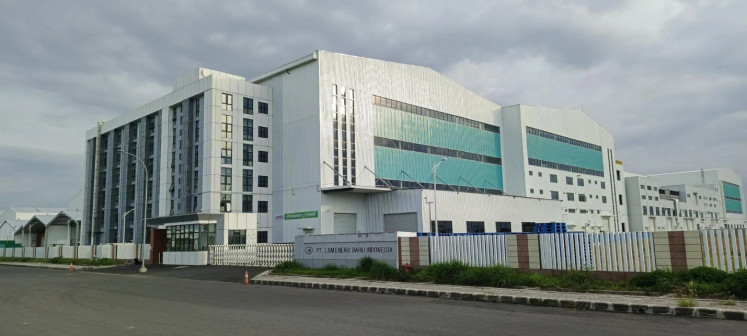
INA’s investment alongside Changzhou Liyuan supports the development of one of the world’s largest lithium iron phosphate (LFP) cathode production platforms outside China. The first phase reached an annual production capacity of 30,000 tonnes in 2025, followed by a second phase of 110,000 tonnes that commenced operations in early 2026, while a third phase of 120,000 tonnes is expected to become operational in early 2027.
The expansion is expected to strengthen Indonesia’s role in the global battery value chain while supporting domestic downstream industrial development.
Although the five sectors are different, Rhesa said they share an important characteristic: their development can generate economic value beyond individual investment.
How INA Selects Investments
Rhesa said INA considers four key factors when evaluating an investment: the sector, company or asset; valuation and structure; and the partner or operator. “All of the four factors must be good,” he said.
Within the five strategic sectors, INA focuses on specific sub-sectors with durable, non-cyclical demand. Healthcare, for example, encompasses hospitals, clinics, and pharmaceutical-related businesses.
Valuation is equally important. “As an investor, INA is very cognizant—we are very much aware of how much we pay,” Rhesa said. A good asset can become a bad investment if its valuation is too high, while a weaker asset can become attractive if the valuation falls sufficiently.
The partner and operator are also critical. INA considers who it is investing with and who will run the company, as the right partner can add value to the investment.
Opportunities may emerge in areas such as data centers and semiconductors, provided they offer adequate returns and durable demand.
“Sound companies can reinvest in sectors that Indonesia needs and at the end of the day, create job opportunities, and potentially generate technology transfer and innovation,” he said.
The broader economic impact can be seen in INA’s investments in infrastructure. A 2025 study by LPEM UI on the social and economic impacts of INA’s long-term investment partnerships found that the 141-kilometer Bakauheni–Terbanggi Besar (BTB) Toll Road in Lampung is projected to contribute around Rp 400 trillion to Indonesia’s GDP over its 2015–2067 concession period and support an average of 20,000 jobs annually.
Its Economic Cost-Benefit Ratio (EBCR) amounting to 2.59 is equivalent to Rp 2.59 in economic value generated for every Rp 1 invested. Travel time between Bakauheni and Bandar Lampung has fallen from about five hours to two, generating an estimated Rp 170 trillion in total economic savings, including time, vehicle operating and safety-related savings. The toll road has also boosted local economic activity, with MSME revenues increasing by an average of 12 percent, while 46 percent of MSMEs expanded into new provincial markets.
“Over the past five years, INA and its investment partners have deployed approximately Rp 74.5 trillion, including Rp 33.3 trillion of INA’s own capital and Rp 41.2 trillion mobilized from investment partners,” Rhesa said.
The Santiago Principles
Rhesa also highlighted the importance of applying the Santiago Principles, which provide an internationally recognized governance framework for sovereign wealth funds, covering the legal framework, institutional structure, as well as investment and risk management. For INA, adherence to these principles supports operational independence, prudent investment decision-making and strong risk oversight.
INA operates under a two-tier governance structure that establishes a clear separation between oversight and executive management. The Supervisory Board provides strategic oversight and ensures alignment with INA’s mandate and regulatory framework, while the Board of Directors is responsible for operational execution and institutional management. Within this structure, proposed transactions are rigorously reviewed from financial, risk, legal and ESG perspectives through the Investment Committee before receiving Board approval.
INA has been a full member of IFSWF since September 2022. During its three years as a full member of IFSWF, INA continued to make refinements across all aspects of the Santiago Principles. In 2025, INA conducted a reassessment of its compliance with the Principles, with the results submitted to IFSWF, accepted, and published on the official IFSWF website on 5 November 2025.
“Before making an investment, we begin with screening against INA’s exclusion list. This is followed by ESG due diligence or assessment to identify material risks as well as potential areas for sustainable value creation within the target company. Material ESG findings and recommendations form part of the investment deliberation process and, where relevant, are incorporated into the transaction documentation,” he said.
“The process continues after the investment. We work with portfolio companies to develop ESG roadmaps and targets aligned with the investment structure and our level of ownership. Portfolio companies report their sustainability performance periodically based on agreed arrangements, while INA monitors ESG performance in line with its ownership stake and level of control,” he added.
Creating Value Beyond Capital
For Rhesa, sound investment is not simply about putting money into a company. It is about what the company can deliver beyond the capital invested. “That is called value creation,” he said.
A key part of value creation is people. INA assesses whether the existing management and workforce have the capabilities needed to deliver the investment’s objectives and provides support where necessary.
In some cases, however, new capabilities must be built. Rhesa cited toll-road investments where a holding company had not yet been established, requiring INA to build the organization and recruit the necessary people.
“Looking ahead, INA’s dual mandate to generate long-term returns while contributing to Indonesia’s sustainable economic development will remain constant, while its sector selection can evolve with market conditions. As valuations and demand change, INA may adjust its priorities,” Rhesa concluded.