The Jakarta Post
Please Update your browser
Your browser is out of date, and may not be compatible with our website. A list of the most popular web browsers can be found below.
Just click on the icons to get to the download page.


Popular Reads
Top Results
No results found. Please check your search term and try again
Can't find what you're looking for?
View all search results
Popular Reads
Top Results
No results found. Please check your search term and try again
Can't find what you're looking for?
View all search resultsAI 'widening economic inequality', IMF boss warns
Change text size
Gift Premium Articles
to Anyone
Share the best of The Jakarta Post with friends, family, or colleagues. As a subscriber, you can gift 3 to 5 articles each month that anyone can read—no subscription needed!
 Set as preferred source
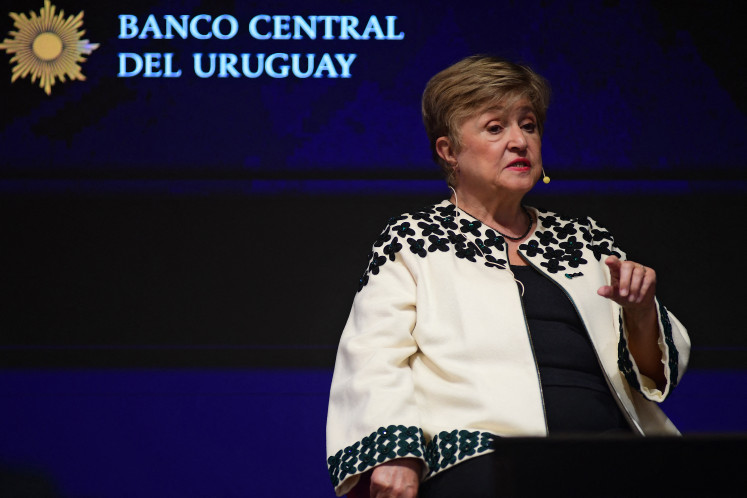
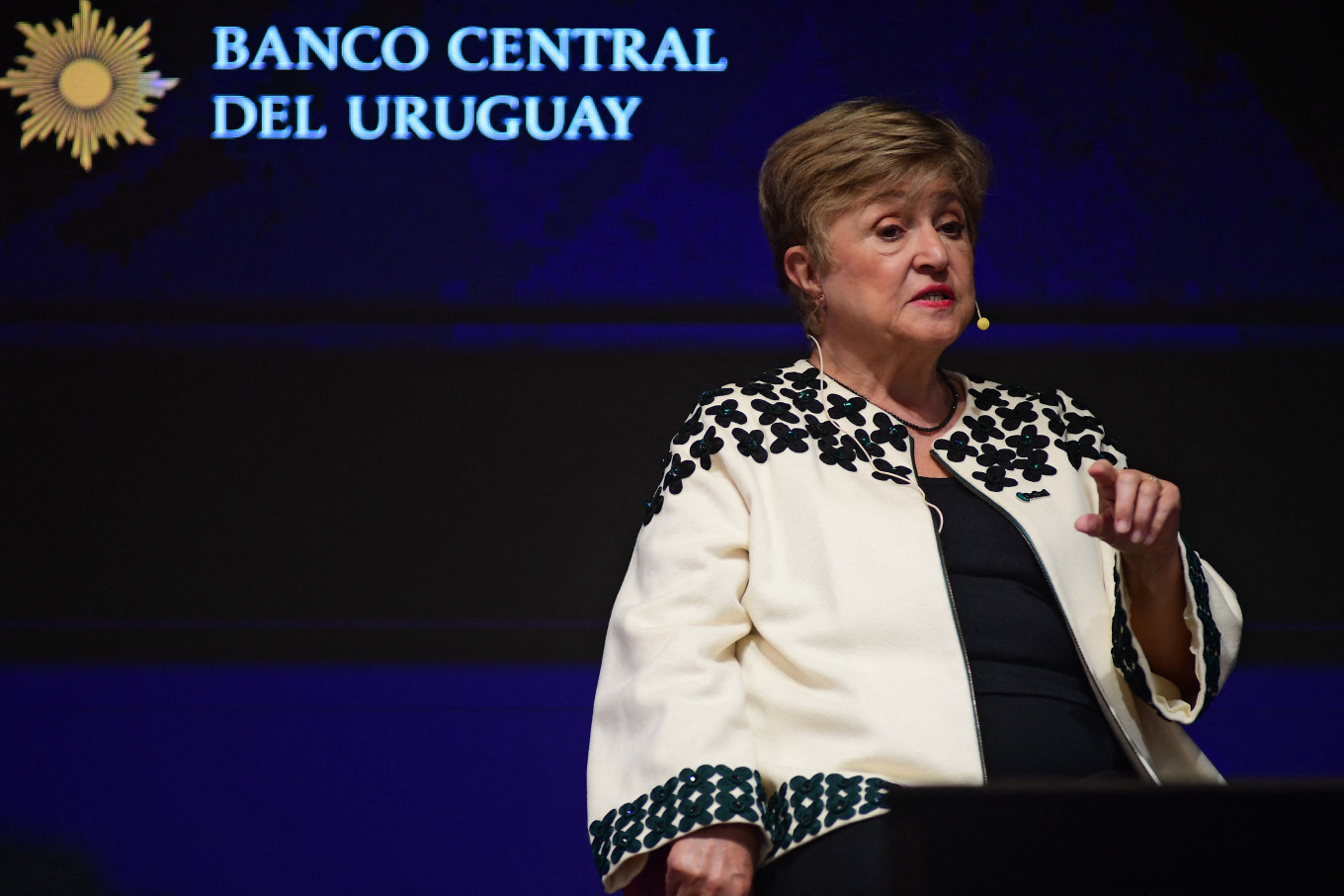 International Monetary Fund Managing Director Kristalina Georgieva speaks during the 41st Annual Economics Conference organized by the Central Bank of Uruguay (BCU), in Montevideo on July 30, 2026. (AFP/Dante Fernandez)
T
he global artificial intelligence boom is fast becoming the key driver of economies around the world, but the boom is risking wider global inequality by leaving some nations behind, IMF chief Kristalina Georgieva warned on Wednesday.
She also lamented a lack of "decisive action" in heavily indebted advanced nations and called for "very tough policy choices" to restore the health of their public finances.
Georgieva said in a speech ahead of the International Monetary Fund's annual meetings in Singapore next week that AI investment-to-GDP will likely top the cash pumped into railroads, the electricity grid or the telecommunication network.
Growth in AI-related trade was being seen most in the United States, China and India, where companies splashed out on data centers and other infrastructure, while others were benefiting from the manufacture of chips and robotics.
"Love it, hate it, or fear it, AI is here, rapidly becoming a key driver of countries' relative fortunes in the world economy," Georgieva said.
"Yet as this drives forward today's AI economies, it largely bypasses most others, increasing the risk of widening economic inequality across the globe," she warned.

"Success requires everybody be taken along to harvest the transformative power of AI, which is why it will be so important to deliver AI access around the globe.
"And that, of course, calls for cooperation. In our interconnected world, countries cooperate not out of charity but out of self-interest."
The speech comes amid growing concern about the vast sums pumped into the sector, and when investors will see returns, after the boom fueled a market rally to record levels over the past two years.
Tech firms continue to rise even after a summer rout, with chipmaker Nvidia hitting a record high on Tuesday to push its market capitalization to almost US$5.7 trillion.
"Should earnings fall short, however, hyperscaler leverage and large and growing global holdings of US equities could turn a disappointment into a far-reaching shock," Georgieva said.
Tough choices ahead
She also addressed rising debt levels among governments, as borrowing costs fueled by rising inflation and interest rates are compounded by massive bond issuance by companies to fund their AI investments.
"Elevated yields are inflating the interest bill at a time of tight budget constraints and competing spending priorities, including defense," she said.
"Higher policy rates then lift the short end, feeding directly into the cost of short-term debt.
"And yet we don't see decisive action in high-debt advanced economies where the need of the hour is for credible medium-term fiscal consolidation plans, supported in some cases by upfront fiscal measures."
The spike in inflation has been largely driven by a surge in oil prices since the start of the Middle East war, but Georgieva said the shock, though large, had been contained by access to stockpiles, energy efficiency and contingency planning among others.
However, she pointed out that oil was still above $100, with diesel at record highs and natural gas supplies from the Gulf still severely impaired, affecting Asia and Europe particularly hard.
And she warned that, even with a swift end to the Iran war, "the problem of high energy prices will likely persist for some time".
She praised some central banks for moving to fight inflation by lifting interest rates, saying that "now may be a good time for a prudently hawkish bias in many countries’ monetary policy".
Emerging markets, she said, faced higher borrowing rates and more volatile capital flows, while low-income countries could be forced to cut crucial development spending.
"My message to the world's economic policymakers next week will be this: we cannot keep delaying necessary policy action – you have the tools, now have the wisdom to use them," Georgieva said.
"Some very tough political choices stare us in the face."
She said policymakers needed to "explain to people why consolidation is needed, why it is in their interest. Take some pain today for growth tomorrow".
Secondly, they had to "make plans to limit the cost to future growth to the extent possible, and to protect the most vulnerable in society", and also "pursue complementary structural reforms".