The Jakarta Post
Please Update your browser
Your browser is out of date, and may not be compatible with our website. A list of the most popular web browsers can be found below.
Just click on the icons to get to the download page.


Popular Reads
Top Results
No results found. Please check your search term and try again
Can't find what you're looking for?
View all search results
Popular Reads
Top Results
No results found. Please check your search term and try again
Can't find what you're looking for?
View all search resultsThe shortening life of food trends
Indonesians are not steadily abandoning small treats, nor are they rapidly increasing the share of their food budgets devoted to them, but the products competing for that pool are changing faster.
Change text size
Gift Premium Articles
to Anyone
Share the best of The Jakarta Post with friends, family, or colleagues. As a subscriber, you can gift 3 to 5 articles each month that anyone can read—no subscription needed!
 Set as preferred source
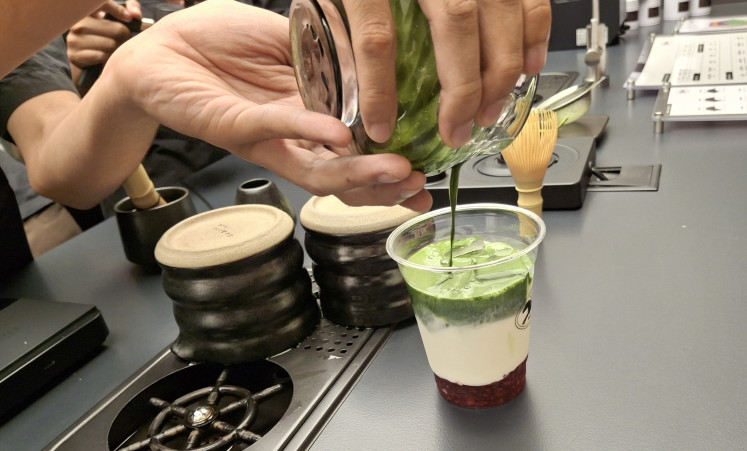
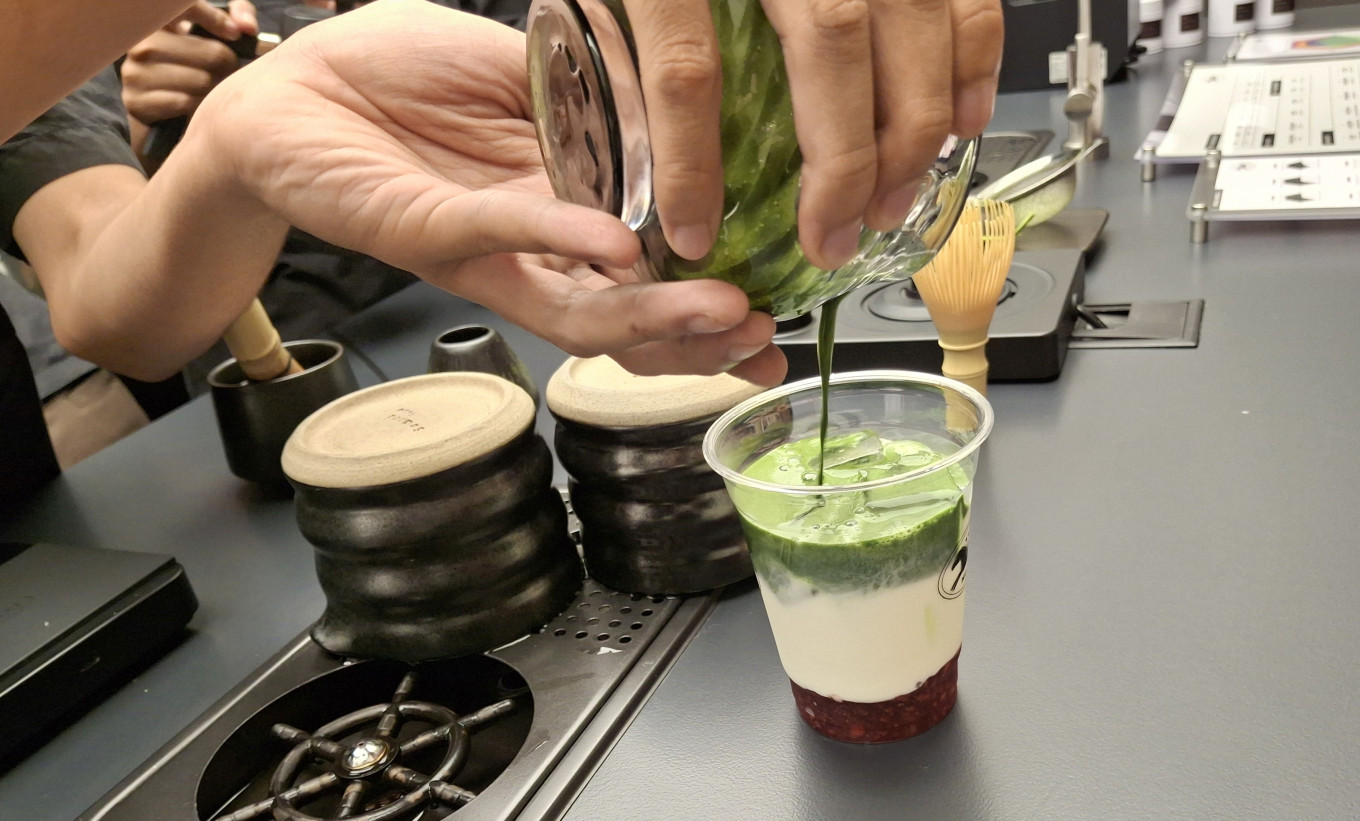 Modern way: A barista prepares a matcha latte with strawberry jam on Dec. 13, 2025, at Moku Matcha Honten in Jakarta. (JP/A. Muh. Ibnu Aqil)
M
atcha has moved from specialist cafés into coffee chains, convenience stores and supermarket shelves. Around it came strawberry matcha, ube-matcha and other variations. Bakery counters have gone through their own sequence of croffles, milk buns and salt bread. The products change, but the pattern is familiar: something becomes difficult to avoid, then suddenly there is another thing to try.
The industry itself has noticed the faster rotation. A September Bisnis article quoted an industry executive as saying that a new food or beverage trend can now emerge in Indonesia roughly every three months.
We wanted to see whether that impression showed up in consumer attention. We tracked weekly Google search interest for more than 30 Indonesian food and beverage trends over roughly the past decade. Earlier product trends, mostly peaking by 2021, stayed above half of their peak search interest for around 30 weeks. More recent ones, peaking from 2024 onward, lasted only about 12 weeks.
The climb, however, has not become much faster. Products still take roughly as long as before to build search interest. The shortening happens mainly after the peak: food trends are fading sooner rather than taking off faster.
At first, that might look like weakening consumer interest in discretionary food. The broader economy suggests otherwise. Indonesia's accommodation and food-service sector still grew around 6.9 percent year-on-year in the second quarter of 2026, while the economy as a whole expanded 5.29 percent. So, the shorter product cycle is not simply a story of weaker demand.
Household spending looks similarly stable. Using the National Socioeconomic Survey (Susenas), we built a narrow basket of small, ready-to-consume indulgences: bakery products, snacks, prepared non-alcoholic drinks and desserts. Across expenditure groups, these purchases accounted for roughly 9 percent of food spending in 2025. Nationally, the share has also remained around that level since 2019.

That is the more useful way to read the shortening lifecycle. Indonesians are not steadily abandoning small treats, nor are they rapidly increasing the share of their food budgets devoted to them. The pool of spending is relatively stable. The products competing for that pool are changing faster.
A new viral drink, in other words, does not necessarily create a new budget. It often has to displace something that was already there.
That makes novelty unusually important in this market. A 2022 Frontiers in Psychology review, “Consumer Variety-Seeking Behavior,” covering 61 consumer studies, found that people often switch between products even when they could simply return to something they already like. Repetition can reduce some of the appeal of the same choice, leaving room for something different.
But variety seeking itself is not new, so it cannot fully explain why product lifecycles appear shorter today. One possibility is that novelty is now exhausted more quickly: once a product becomes visible, similar versions can spread quickly, making it familiar sooner.
Consumers are also less impulsive than viral queues might suggest. In a 2026 Jakpat survey on viral food trends, 44.6 percent of respondents said they preferred to wait for other people's reviews before trying something themselves. Only 11.9 percent said they would immediately seek out a food once it went viral.
So what separates something that goes viral from something that actually lasts? Our analysis suggests that more reinvention does not necessarily mean more longevity. New flavors and formats may create another reason to try, but they do not reliably keep attention high.
The longer-lasting trends in our sample also tend to be products that fit more naturally into repeat consumption. Coffee is an obvious example: people already have reasons to buy it repeatedly, even when it is no longer new. That is the difference between virality and durability. Virality helps win the first purchase through curiosity. After that, consumers return to more basic considerations.
We examined more than 4,500 reviews across 80 viral food and beverage venues in Jakarta and found that price and taste were the two issues that came up most often when customers discussed whether a place was worth returning to.
For businesses, a queue or a spike in searches is only the first part of the story. The harder question comes a few months later, when the novelty is gone and customers decide whether the product is still worth buying. Shorter trend cycles make that gap more important, especially for businesses that have already bought stock, added capacity or opened new outlets around a popular product.
The same pattern can be hidden in the aggregate data. Spending on small indulgences has stayed fairly steady, while the products receiving that spending change much more often. A category can remain healthy even when individual products inside it have very short lives.
This is also relevant for small-business policy. Financing and market access can help businesses grow, but shorter product cycles make it more important to test whether demand lasts before committing more capital.
*****
The writer is an analyst at Mandiri Institute.