The Jakarta Post
Please Update your browser
Your browser is out of date, and may not be compatible with our website. A list of the most popular web browsers can be found below.
Just click on the icons to get to the download page.


Popular Reads
Top Results
No results found. Please check your search term and try again
Can't find what you're looking for?
View all search results
Popular Reads
Top Results
No results found. Please check your search term and try again
Can't find what you're looking for?
View all search resultsStocks tumble as oil and inflation fan rate hike bets
Change text size
Gift Premium Articles
to Anyone
Share the best of The Jakarta Post with friends, family, or colleagues. As a subscriber, you can gift 3 to 5 articles each month that anyone can read—no subscription needed!
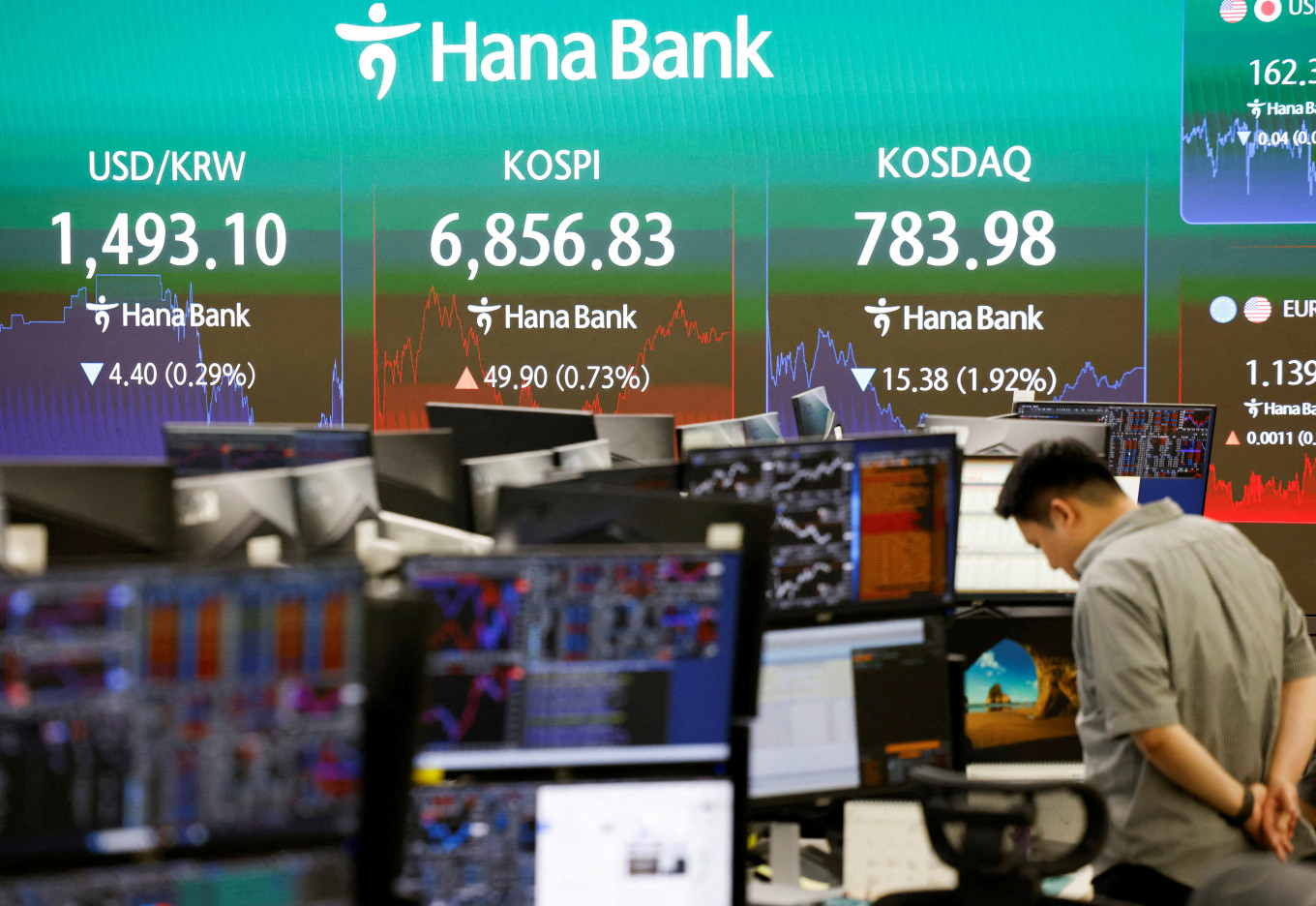 A currency dealer works as an electronic board displays the Korea Composite Stock Price Index (KOSPI), the exchange rate between the US dollar and South Korean won and the Korea Securities Dealers Automated Quotations (KOSDAQ) at the dealing room of a bank in Seoul on July 14, 2026. (Reuters/Kim Soo-hyeon)
A
sian stocks tumbled Friday as oil prices extended gains and bond yields held at multi-year highs as the Middle East crisis stoked supply concerns and a forecast-topping US inflation report ramped up rate hike bets.
Crude prices have soared more than 30 percent over the past week as the US and Iran exchanged strikes around the Strait of Hormuz, while Tehran has said it is prepared for a more intense conflict.
At the same time, Yemen's Houthis have hit several Saudi Arabian energy targets in a drive toward another key waterway that could cut off a crucial alternative route for global energy.
The rebels seized control of the strategic Red Sea port city of Mocha on Thursday.
Brent oil almost touched $110 per barrel Friday – its highest since May – and the US benchmark West Texas Intermediate hit a peak of more than $104, last seen around the same time.
With the war showing no sign of ending, investors are bracing for another surge in inflation that will put pressure on central banks to tighten monetary policy further.

In turn, government bond yields have jumped again this week to levels last seen during the global financial crisis. The 30-year Treasury yield reached 5.36 percent, a new post-2007 peak.
The 10-years are close to five percent and nearly at a 19-year high.
Adding to pressure on bonds was a $6 billion government buyback that disappointed traders who had expected a bigger number.
The European Central Bank on Thursday lifted rates and warned of an extended period of rising prices, and eyes are now on the Federal Reserve's policy meeting next week.
That comes after the release later Friday of the US consumer price index, with a strong figure likely to force the policymakers to hike.
Investors see a more than 70 percent chance that officials will opt for a quarter-point lift, according to CME Group's FedWatch tool.
The report comes a day after figures showed the producer price index accelerated to 5.4 in August, driven by energy prices. That was up from 4.8 percent in July and more than expected.
"The data suggests that cost pressures in the economy are rising and could feed through into higher consumer price inflation, strengthening expectations that the Federal Reserve may need to keep interest rates higher for longer or raise them further," said Fiona Cincotta at FOREX.com.
With oil continuing to rise, rate expectations growing and the war rumbling on, risk assets are taking a hit.
After all three indexes on Wall Street ended deep in the red, along with Europe, Asia followed suit.
Tokyo and Seoul -- which are filled with tech firms that rely on cheap debt to fuel investments -- tumbled more than two percent, while Hong Kong, Shanghai, Sydney, Singapore, Taipei, Wellington and Manila also suffered intense selling.
The increase in US rate expectations saw the dollar jump against the yen, having fallen for the past week on bets for a series of hikes by the Bank of Japan.
"Attacks on shipping are now feeding directly into oil, natural gas and diesel prices," said Quintex Intel's Stephen Innes.
"Iran has shown no inclination to back away, and the longer the confrontation continues, the harder it becomes for markets to treat the energy shock as temporary.
"Temporary inflation, temporary supply shocks, temporary geopolitical premiums. Markets are generous with temporary problems because they can look through them, but what they hate is when temporary begins overstaying its visa, and oil is starting to do exactly that."