The Jakarta Post
Please Update your browser
Your browser is out of date, and may not be compatible with our website. A list of the most popular web browsers can be found below.
Just click on the icons to get to the download page.


Popular Reads
Top Results
No results found. Please check your search term and try again
Can't find what you're looking for?
View all search results
Popular Reads
Top Results
No results found. Please check your search term and try again
Can't find what you're looking for?
View all search resultsIEE Series Engineering Week 2026 aims to drive Indonesia’s industrial transformation
The four-day series brings eight strategic industrial sectors under one roof, highlighting how collaboration, technology and sustainability can accelerate Indonesia’s industrial transformation
Change text size
Gift Premium Articles
to Anyone
Share the best of The Jakarta Post with friends, family, or colleagues. As a subscriber, you can gift 3 to 5 articles each month that anyone can read—no subscription needed!
 (Courtesy of Pamerindo Indonesia)
T
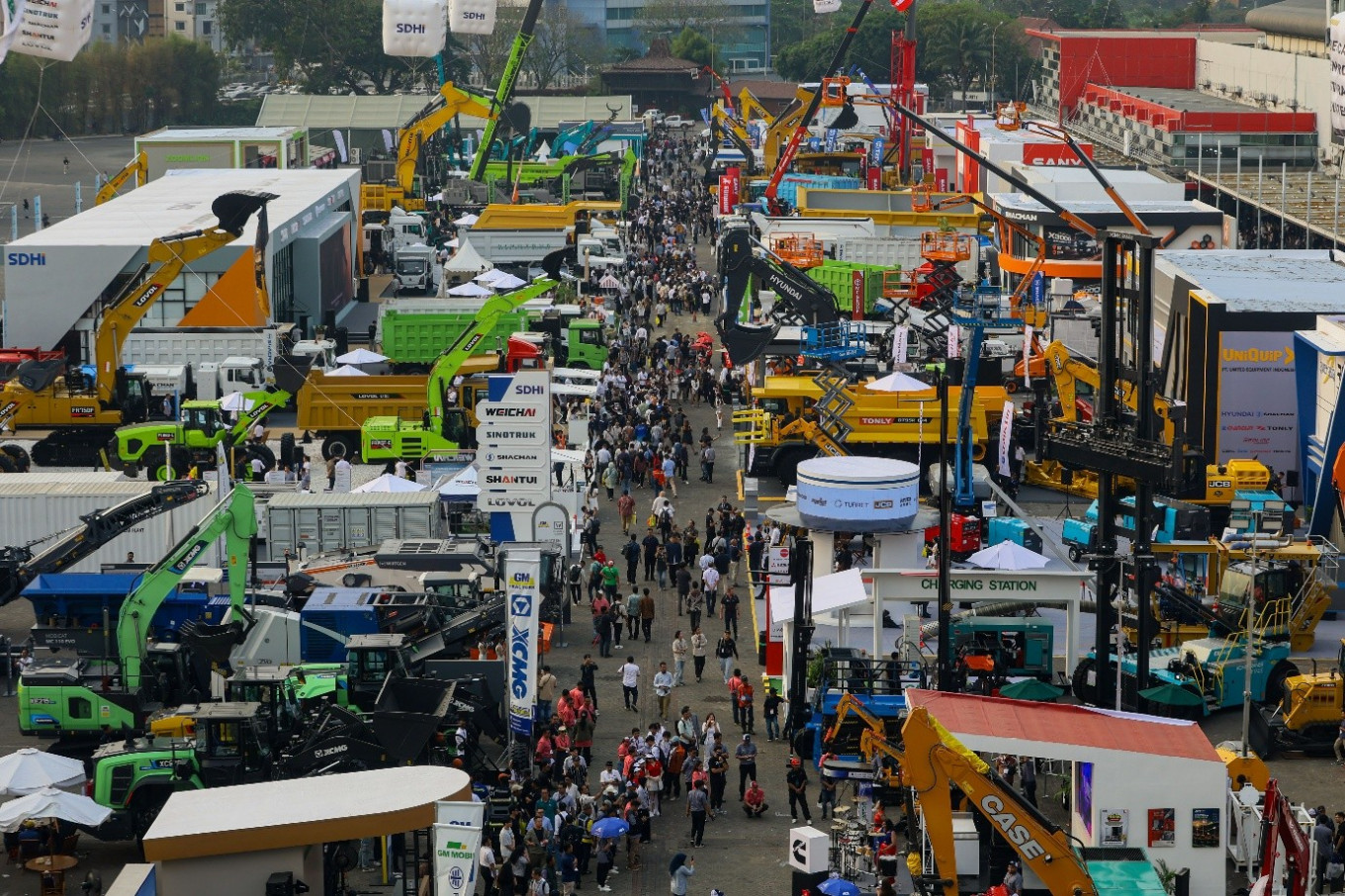
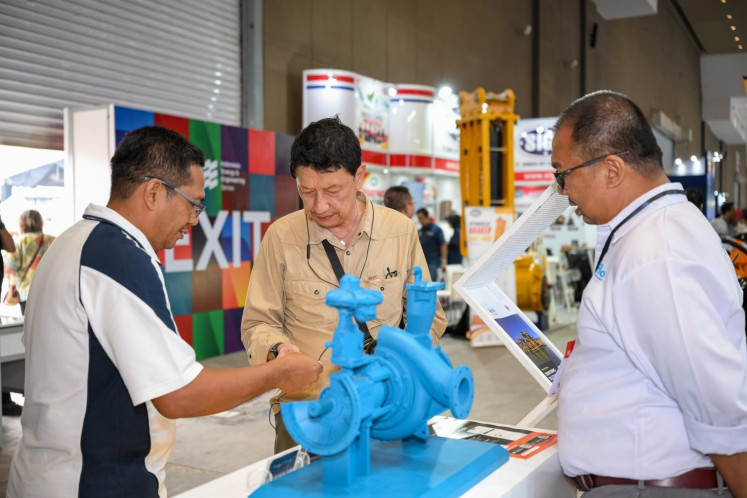
he second week of Indonesia Energy & Engineering (IEE) Series 2026, which officially opened on Sept. 9 at Jakarta International Expo (JIExpo) in Kemayoran, Central Jakarta, brings together eight strategic industrial sectors in a single event series, providing a platform for industry players to explore technological developments, infrastructure needs, resource management and innovative ways to address resilience challenges shaping the future of Indonesia’s industries.
The eight featured sectors are: construction and infrastructure, mining and resources, oil and gas, water management, disaster management and resilience, as well as foundry, metallurgy and material processing.
Themed “Sustainability for Industrial Transformation”, IEE Series – Engineering Week runs through Sept. 12.
The event involves the participation of 1,694 companies from 34 countries and regions in a total exhibition area of more than 88,000 square meters. It also marks the first use of the new hall at JIExpo, providing an expanded platform for industry players to connect and address the challenges of industrial transformation.
Lia Indriasari, Country General Manager of organizer Pamerindo Indonesia, said the diversity of sectors and scale of participation reflected the increasingly interconnected needs of industries.
“For us, Engineering Week is part of our commitment to continuously provide a platform that brings together various industrial sectors, especially as the needs across industries become increasingly interconnected,” said Lia.

“We hope this forum will foster strategic partnerships, innovative solutions and shared commitments that can be directly implemented across various sectors. This can be achieved through collaboration among the government, industry, academia, communities and society,” she added.
This interconnectedness is reflected in the eight sectors featured at Engineering Week 2026. In resource and material processing, Mining Indonesia represents the mining and natural resources sector, Oil & Gas Indonesia contributes to the energy and industrial operations ecosystem, while GIFA Indonesia & METEC Indonesia showcase foundry, metal processing and metallurgy technologies that support greater value creation in materials and manufacturing.
The event is further strengthened by sectors that support infrastructure development and the continuity of industrial activities. Construction Indonesia and Concrete Show South East Asia – Indonesia represent infrastructure development needs and construction material technologies, Water Indonesia focuses on water and utility management, while ADEXCO (Asia Disaster Management & Civil Protection Expo & Conference) brings perspectives on disaster management, civil protection, preparedness, safety and resilience.
The presence of these sectors within a single event series highlights the links between resource and energy availability, material processing, infrastructure development, utility management and preparedness for potential risks.
Ultimately, this cross-sector connectivity positions sustainability not as a stand-alone agenda but as an integral part of how industries plan and execute development. Strengthening the industrial ecosystem therefore requires collaboration that brings together diverse interests, resources and capabilities.
At the opening ceremony, Deputy Minister of National Development Planning (PPN) Febrian Alphyanto Ruddyard underscored the importance of interinstitutional collaboration in creating a stronger ecosystem: “The quality of development depends on how we plan, invest, build and measure progress,” he said.
According to the deputy minister, the challenge in supporting cross-sector collaboration is not simply to create more policies, frameworks or institutions.
“We already have these elements. The challenge is to make them work together, moving toward a system of shared responsibility supported by integrated information, coordinated financing and shared accountability,” said Febrian.
Collaboration is also increasingly important as industries seek to expand capacity while maintaining efficiency and competitiveness.
In line with the government’s agenda to promote downstream processing and strengthen national industrial resilience, Deputy Minister of Energy and Mineral Resources Yuliot Tanjung highlighted the importance of technology-driven efficiency.
“Indonesia’s industrial transformation needs to be supported by increased production and processing capacity accompanied by stronger technology, infrastructure and efficiency. Indonesia’s resource potential must be translated into greater added value domestically,” Yuliot said in his opening remarks.
“Therefore, future industrial development should not focus solely on increasing production volumes but also on strengthening value chains, enhancing competitiveness and ensuring that resources are utilized sustainably.”
From this perspective, sustainability is inseparable from efforts to improve industrial performance and competitiveness. Energy and material efficiency, productivity improvements, responsible resource utilization, operational safety, water management and risk preparedness are becoming increasingly important priorities for industries.
According to Hanung Hanindito, Deputy Event Director at Pamerindo Indonesia, sustainability is integrated into IEE Series 2026 at both the event operation and industry impact levels.
“From the operational side, we have introduced a number of initiatives including waste management, water refill stations, sustainable mobility initiatives such as EV shuttles and EV charging facilities, Better Stands solutions and sustainable hotel options,” Hanung said.
“We also have programs that create social impact. One example is the IEE Run for Charity 2026, where proceeds support scholarship programs for students pursuing energy and engineering degrees as well as disabled running communities.”
Industrial transformation, therefore, is not only about increasing capacity and adopting technology but also about building industrial systems that are more efficient, resilient and sustainable.
Hanung said what distinguished this year’s event from previous editions was “the scale and the way we are positioning the exhibition as a cross-sector industry platform”.
“We want to reflect how industrial development itself is becoming increasingly interconnected, where developments in one sector can directly influence demand, technology and opportunities in another.”
He added that Indonesia was entering a period where industrial development required stronger integration between infrastructure, energy and resources, manufacturing, water management and resilience.
“Growth in one sector creates demand and opportunities across other parts of the industrial value chain. For example, infrastructure development requires construction technologies and materials, while mining and oil and gas require equipment, engineering services and supporting infrastructure. Water management and disaster resilience are also increasingly important to the reliability of infrastructure and industrial operations,” said Hanung.
“This is why we believe a platform that brings these sectors together is particularly relevant today. Engineering Week provides an opportunity for industry players, technology providers, associations, policymakers and other stakeholders to understand these interconnections and explore how collaboration can create greater long-term value.”
Visitors can expect a combination of product and technology showcases, industry knowledge, networking and business opportunities.
Beyond showcasing technology, IEE Series – Engineering Week 2026 also features discussion forums led by thought leaders in their respective fields.
In the utilities sector, the series presents Indonesia Water Forum (IWF) 2026, organized by PERPAMSI, which opened with a keynote speech by Nazib Faizal, Deputy for Basic Infrastructure Coordination at the Office of the Coordinating Minister for Infrastructure and Regional Development. The forum focuses on the direction of drinking water governance toward water self-sufficiency and the realization of the Golden Indonesia 2045 vision, as well as the transformation of drinking water and wastewater governance in the country.
The resilience dimension is highlighted through ADEXCO and the 3rd Global Forum for Sustainable Resilience (GFSR) 2026. ADEXCO brings together industry players focused on disaster management, civil protection, mitigation and recovery, while GFSR brings together government representatives, the private sector, academia, international organizations and other stakeholders to discuss strengthening sustainable resilience.
Together, these platforms reinforce the broader message of IEE Series Engineering Week: Industrial development must consider not only capacity and efficiency but also the ability to manage risks and maintain operational continuity.
By bringing together eight sectors in a single platform, IEE Series – Engineering Week 2026 demonstrates that Indonesia’s industrial transformation requires stronger connectivity across resources, energy, materials, infrastructure, utilities, technology and resilience.