The Jakarta Post
Please Update your browser
Your browser is out of date, and may not be compatible with our website. A list of the most popular web browsers can be found below.
Just click on the icons to get to the download page.


Popular Reads
Top Results
No results found. Please check your search term and try again
Can't find what you're looking for?
View all search results
Popular Reads
Top Results
No results found. Please check your search term and try again
Can't find what you're looking for?
View all search resultsGermany backs $250m Surabaya rail project set for construction next year
The financing package comprises a concessional loan of approximately 230 million euros and a 6-million-euro technical assistance grant from KfW, alongside counterpart funding from the Indonesian government.
Change text size
Gift Premium Articles
to Anyone
Share the best of The Jakarta Post with friends, family, or colleagues. As a subscriber, you can gift 3 to 5 articles each month that anyone can read—no subscription needed!
 Set as preferred source
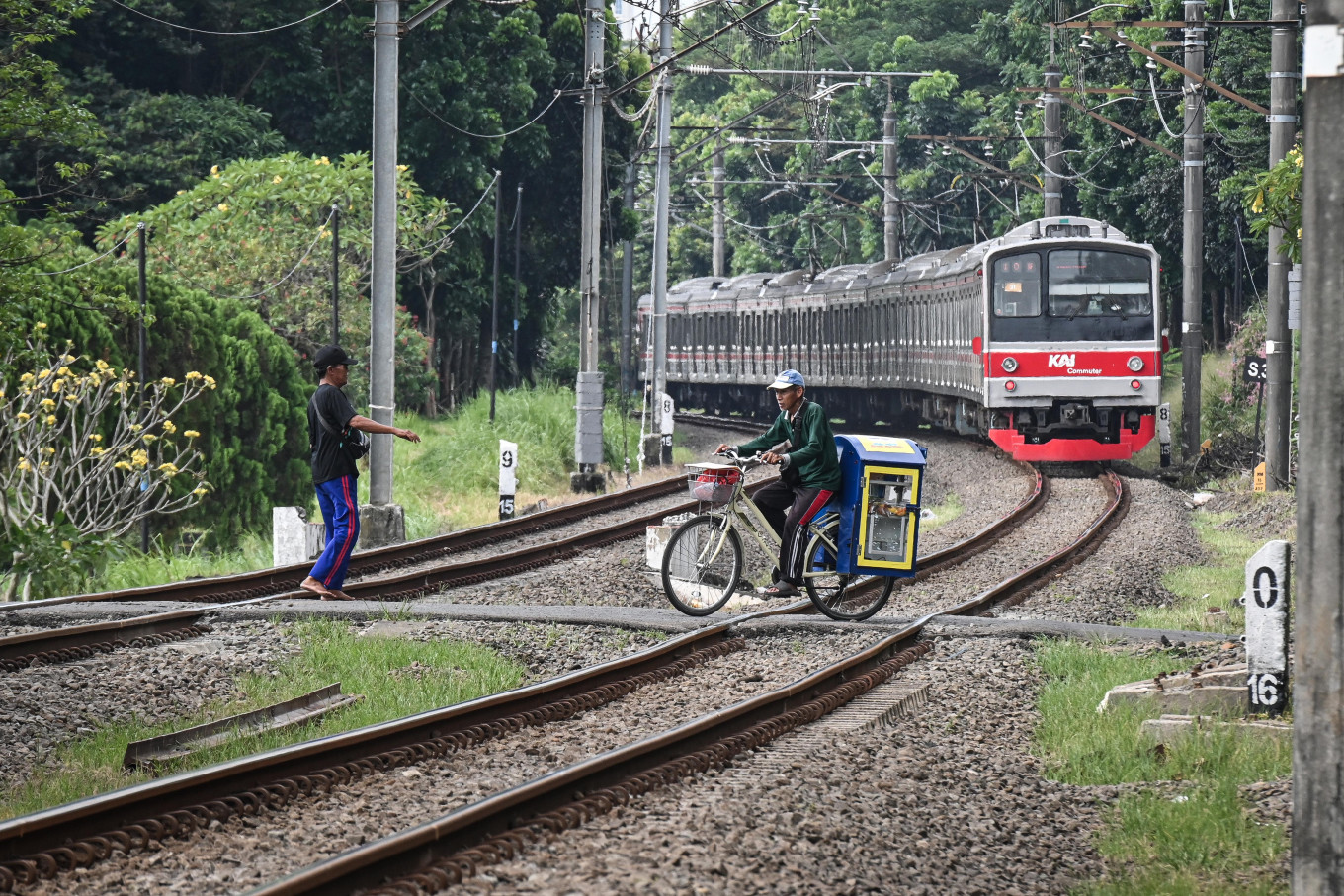 Deadly shortcut: People cross railway tracks on May 3 in the Tanah Kusir area of Kebayoran Lama, South Jakarta. State-owned railway company Kereta Api Indonesia (KAI) said 130 of the 423 railway crossings in its Daop 1 Jakarta operational area remain unguarded, prompting plans for joint enforcement with local authorities to improve transportation and public safety. (Antara/Sulthony Hasanuddin)
G
ermany is backing the first phase of Indonesia’s Surabaya Regional Railway Line (SRRL) project with 236 million euros (US$256 million) in financing, as the country prepares to begin construction of the commuter rail line next year.
The initiative, part of the European Union's broader Global Gateway strategy, aims to develop the Greater Surabaya commuter corridor into the region’s first electrified rail line.
"We are proud to contribute to Indonesia's sustainable mobility ambitions through initiatives such as the Surabaya Regional Railway Line," designated Deputy Head of Mission at the German Embassy in Jakarta Oliver Sperling said in a statement on Wednesday.
Sperling said Germany and Indonesia had built a long-standing partnership in transport infrastructure and that German and European companies stood ready to support Indonesia's transition toward climate-resilient transport systems by bringing engineering expertise, innovative technologies and long-lasting infrastructure solutions.
Read also: East Java, UK govt to launch Surabaya LRT feasibility study next month
The financing, provided through Germany's state-owned KfW Development Bank will fund the first phase of the Surabaya Regional Railway Line (SRRL), which aims to modernize, double-track and fully electrify the commuter corridor linking Surabaya with neighboring Sidoarjo.

The financing package comprises a concessional loan of approximately 230 million euros and a 6-million-euro technical assistance grant from KfW, alongside counterpart funding from the Indonesian government.