The Jakarta Post
Please Update your browser
Your browser is out of date, and may not be compatible with our website. A list of the most popular web browsers can be found below.
Just click on the icons to get to the download page.


Popular Reads
Top Results
No results found. Please check your search term and try again
Can't find what you're looking for?
View all search results
Popular Reads
Top Results
No results found. Please check your search term and try again
Can't find what you're looking for?
View all search resultsJapan bond jitters overshadow Takaichi's first economic policy roadmap
As government bond yields crept up to multi-decade highs since June, the administration was forced to tweak the blueprint's language on monetary policy several times.
Change text size
Gift Premium Articles
to Anyone
Share the best of The Jakarta Post with friends, family, or colleagues. As a subscriber, you can gift 3 to 5 articles each month that anyone can read—no subscription needed!
 Set as preferred source
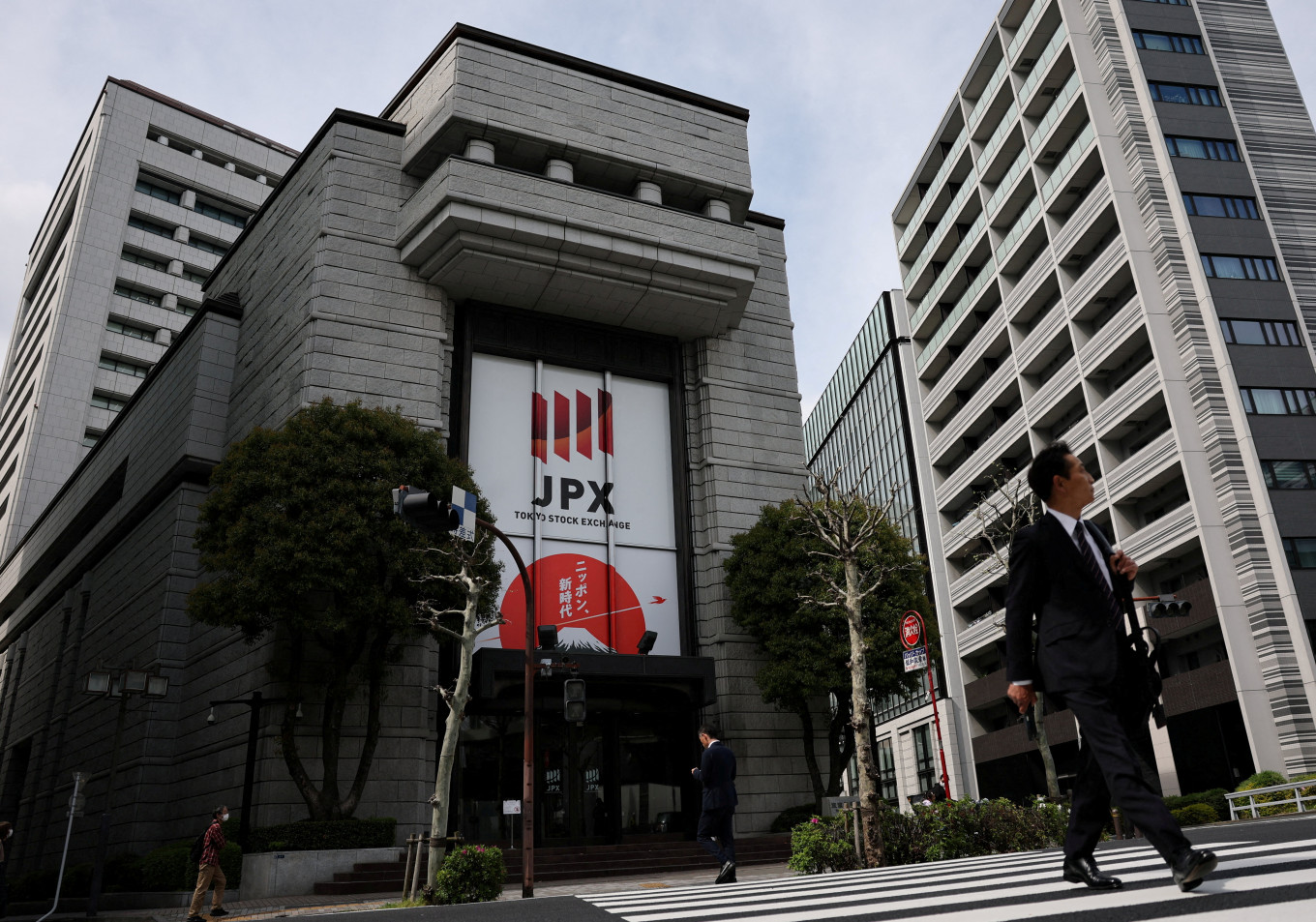 A man walks out of the Tokyo Stock Exchange building in Tokyo on April 6, 2026. (Reuters/Issei Kato)
J
apanese Prime Minister Sanae Takaichi vowed to boost investment in growth areas in her first economic blueprint finalized on Tuesday, a pledge overshadowed by rising bond yields reflecting concerns that the government could meddle in monetary policy.
Takaichi's administration has struggled to shed market perceptions it could ramp up spending and pressure the Bank of Japan (BOJ) to delay interest rate hikes to curb the cost of funding Japan's already huge debt.
As government bond yields crept up to multi-decade highs since June, the administration was forced to tweak the blueprint's language on monetary policy several times.
A phrase in an early draft calling for monetary policy "that bolsters private demand" disappeared as long-term rates rose.
After a later version tying monetary policy to government efforts to boost growth jolted markets, revisions were made to clarify that the central bank sets policy "to achieve stable price rises."
The final blueprint retained language urging the BOJ to align its policy with that of the government, but inserted a footnote referring to a clause in law stipulating the need to protect the BOJ's independence in setting policy.

"To achieve a strong economy, it is very important for monetary policy to be conducted appropriately to see stable price rises," said the final blueprint, which was approved by the cabinet on Tuesday.
Japan's law grants the central bank independence from political interference, but also requires close coordination with the government's economic policy.
Takaichi is known as a fan of "Abenomics," a mix of big fiscal spending and monetary easing via massive bond issuance deployed by former premier Shinzo Abe to pull Japan out of prolonged deflation.
"Under the Takaichi administration, the government will take the initiative and, together with the private sector, invest in strategic areas, thereby ending the trend of under-investment that has mired Japan," the blueprint said.
Japan will seek to work with the private sector to channel resources into strategic industries, with combined public and private investment projected to exceed 370 trillion yen ($2.28 trillion) through fiscal 2040, it said.
Ditching language used in previous administrations pledging to restore fiscal health, Takaichi's blueprint vowed to balance the need to boost growth and achieve "fiscal sustainability."
Since taking office in October, Takaichi has vowed to boost spending to revitalize the economy. Her administration has also signaled reservations over the BOJ's interest rate hikes.
The focus on big spending and low rates has pushed up bond yields on market concern Japan could see its already tattered finances worsen and be too late in dealing with inflation risks.
After hitting a three-decade high of 2.9% on July 9, the yield on the benchmark 10-year Japanese government bond (JGB) retreated somewhat and stood at 2.73% on Tuesday.
"We've guided economic and fiscal policy paying due heed to fiscal sustainability and the need to maintain market trust. We will continue to do so based on this blueprint," Takaichi said on Tuesday in a meeting of a panel debating the blueprint.
But some analysts say tweaks in language alone would do little to alleviate market concerns over Takaichi's policies.
"The administration wants the BOJ to keep rates low so that it can issue more debt," said former BOJ board member Seiji Adachi. "That's not a good message to send to markets."
The BOJ exited an aggressive stimulus program in 2024 and hiked interest rates several times including in June. It has signalled its readiness to keep raising its policy rate, which, at 1%, is still low compared to other advanced economies.