The Jakarta Post
Please Update your browser
Your browser is out of date, and may not be compatible with our website. A list of the most popular web browsers can be found below.
Just click on the icons to get to the download page.


Popular Reads
Top Results
No results found. Please check your search term and try again
Can't find what you're looking for?
View all search results
Popular Reads
Top Results
No results found. Please check your search term and try again
Can't find what you're looking for?
View all search resultsOil falls, stocks waver as investors eye US-Iran talks
Change text size
Gift Premium Articles
to Anyone
Share the best of The Jakarta Post with friends, family, or colleagues. As a subscriber, you can gift 3 to 5 articles each month that anyone can read—no subscription needed!
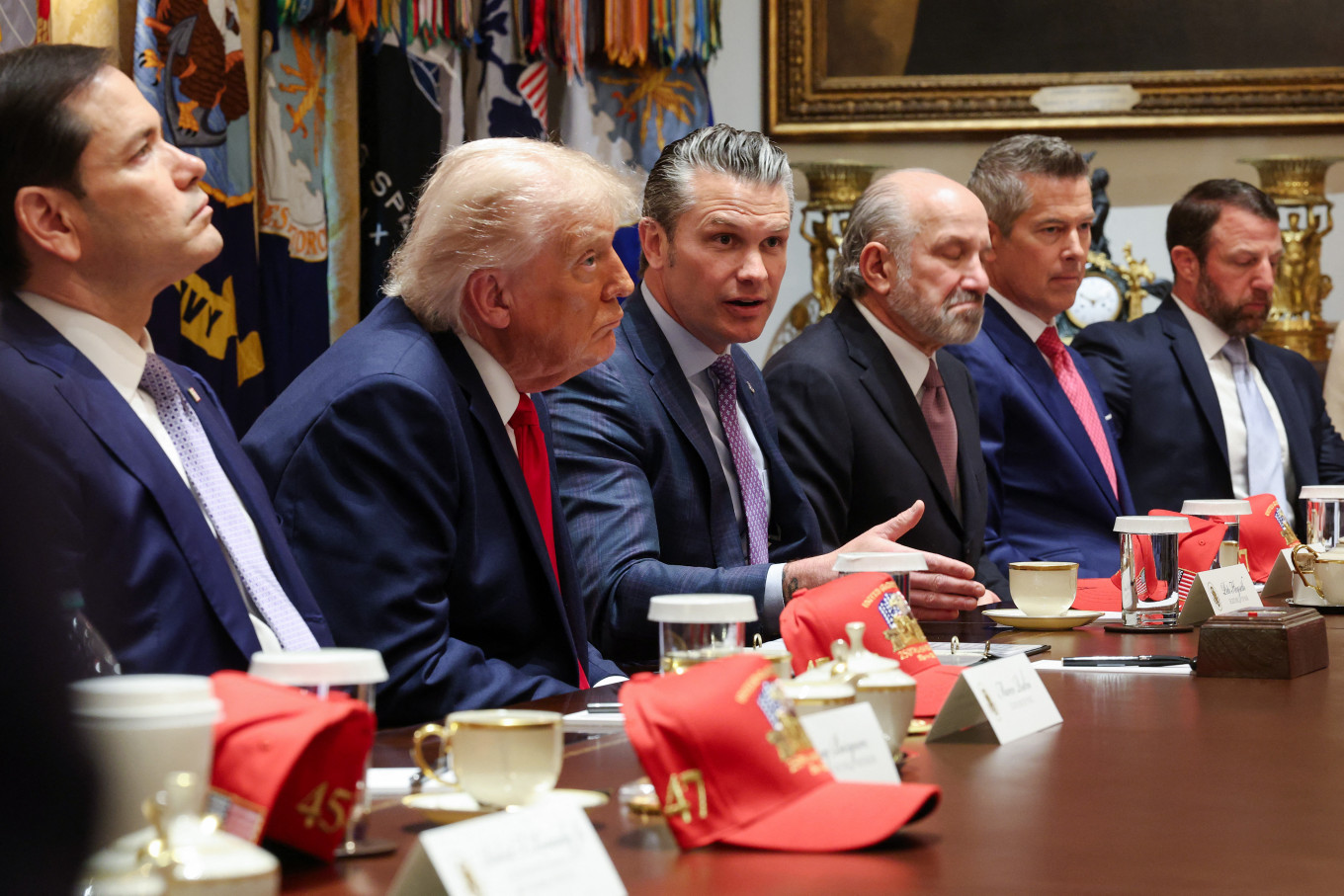 US Secretary of War Pete Hegseth (center) speaks as (left to right) US Secretary of State Marco Rubio, US President Donald Trump, US Commerce Secretary Howard Lutnick, US Transportation Secretary Sean Duffy and US Secretary of Homeland Security Markwayne Mullin listen during a Cabinet meeting in the Cabinet Room of the White House on May 27, 2026 in Washington, DC. (AFP /Win McNamee/Getty Images)
O
il prices fell Wednesday while stock markets diverged over conflicting headlines on talks between Iran and the US to reopen the Strait of Hormuz to Gulf crude shipments.
Hopes of an imminent deal to avoid further hostilities in the Mideast war had bolstered optimism earlier in the session, with benchmark oil contracts falling more than 5 percent.
But a White House statement rejecting an Iranian report about a framework deal prompted caution, even though analysts say most investors still expect the negotiations to bear fruit.
"The hope will be that this is finally the week when a real breakthrough is achieved, but should negotiations fail then we could see market patience wear thin," said AJ Bell investment director Russ Mould.
He noted, however, that "Even if an agreement is reached, it will take time to get energy infrastructure fully back online and shipments flowing through the Strait of Hormuz at anywhere near pre-war levels."
Investors appeared willing to look past the conflicting headlines, buoyed also by another surge for tech stocks on expectations the AI rollout will continue to propel earnings in the sector.

In Asia, South Korean chipmaker SK hynix jumped 11 percent to hit a $1-trillion market capitalization, placing it alongside regional tech heavyweights Samsung Electronics and TSMC.
The gains followed a strong session on Wall Street on Tuesday, where the S&P 500 and Nasdaq notched fresh record highs as US chipmaker Micron piled on nearly 20 percent to also hit a $1-trillion market cap.
"The tech boom is back," said Kathleen Brooks, research director at trading group XTB.
The Middle East war, which began in late February, has effectively halted tanker and cargo traffic in the Hormuz strait, a vital oil and gas trading corridor, driving up energy prices and stoking global inflation.
Economists warn that central banks may have to raise interest rates if inflation persists, increasing borrowing costs and potentially weighing on economic growth.
Iran's Revolutionary Guards said Wednesday that a return to war with the United States was unlikely, despite new US airstrikes on Iranian targets even though a ceasefire is in place.
The restoration of internet services by the Iranian authorities on Tuesday after a three-month shutdown was also taken as a positive sign that tensions were easing, investors said.